

If you’re managing opioid use disorder with Suboxone (buprenorphine/naloxone), you’ve likely discovered that getting your prescription renewed isn’t as simple as calling in a refill. The rules around how Suboxone prescription is renewed can feel strict, even confusing, especially when you’re already working hard to stay on track. But understanding exactly how the process works puts you back in control. This guide walks you through the regulations, the clinical steps your provider follows, and practical strategies to keep your treatment moving forward without interruption.
Table of Contents
- Understanding Suboxone prescription regulations and refill limits
- The clinical workflow behind renewing your Suboxone prescription
- Exceptions and flexibility in Suboxone prescription renewals
- Practical tips for managing your Suboxone prescription renewal smoothly
- Summary and how to apply Suboxone renewal knowledge to your recovery journey
- Why patient-centered flexibility in Suboxone renewal is key to long-term success
- Find expert Suboxone prescription renewal support at Maryland Addiction Treatment
- Frequently asked questions
Understanding Suboxone prescription regulations and refill limits
The rules governing Suboxone renewals exist for a reason, and knowing them makes the whole process far less frustrating.
Buprenorphine is a Schedule III controlled substance, meaning it carries recognized medical value but also potential for misuse. Legally, Schedule III prescriptions allow up to five refills within six months. In practice, however, most Suboxone providers renew prescriptions monthly, because that frequency allows them to monitor your recovery closely and catch any concerns early.
This is sometimes called the 28-day rule. Rather than dispensing a large supply upfront, providers limit each prescription to roughly a one-month supply. Here is why that structure actually works in your favor:
- Monthly check-ins support your recovery. Regular visits give your provider a clear picture of how you’re doing, not just with medication, but with your overall wellbeing.
- Smaller supplies reduce risk. A 28-day supply limits the amount of medication that could be lost, stolen, or misused.
- Early refill attempts can cause delays. Most pharmacies will not fill a Suboxone prescription before the designated fill date, and repeated early attempts can flag your file.
- Missed appointments create gaps. If you skip a scheduled visit, your provider cannot legally issue the next prescription without reassessing you first.
Understanding long-term Suboxone effects also helps put these monthly touchpoints in perspective. They are not just paperwork checkboxes. They are part of active, ongoing care.
The clinical workflow behind renewing your Suboxone prescription
Now that you understand the regulatory foundation, here is exactly what happens during the Suboxone prescription renewal process from a clinical standpoint.
Providers require regular patient visits and assessments before authorizing each refill. That visit is not optional and is not simply a formality. Your provider is evaluating several things before signing off on your next prescription.
What happens at a typical renewal visit:
- Treatment progress review. Your provider will ask about cravings, sleep, mood, and day-to-day functioning. Recovery is about more than not using opioids, and this conversation reflects that.
- Drug screening. Most providers request periodic urine drug screens to confirm Suboxone compliance and screen for other substances. This protects you as much as it protects the practice.
- Prescription issuance with a “do not fill before” date. Your new prescription is written out but includes a date restriction. Your pharmacy will not fill it before that date, which prevents overlapping supplies.
- Assessment of any side effects or concerns. If something about your medication is not working well, this is the time to bring it up. Dosage adjustments are common and normal.
- Coordination with counseling or therapy. Many providers want to know whether you’re engaged in behavioral support alongside your medication, since Suboxone and relapse prevention work best together.
If you are just getting started and want to understand what the initial phase looks like, reading about starting Suboxone treatment gives useful context for how renewals fit into the bigger picture.
Pro Tip: Schedule your next appointment before you leave each visit. Do not wait until your prescription is almost gone to call for a slot. Providers get booked, and a two-day gap in Suboxone can trigger withdrawal symptoms that set your recovery back significantly.
Exceptions and flexibility in Suboxone prescription renewals
The renewal process has more flexibility built into it than most patients realize. Federal regulations do allow for exceptions to the standard opioid treatment program rules, and your provider can formally request them on your behalf.
Providers can submit exception requests to SAMHSA (Substance Abuse and Mental Health Services Administration) or relevant state authorities using Form SMA-168. These exceptions allow for adjustments like unsupervised take-home doses or extended prescription intervals when standard monthly visits are not feasible.
Common situations where exceptions may be considered include:
- Transportation barriers. If you live in a rural area or lack reliable transportation, your provider can document this and request adjusted dispensing.
- Employment conflicts. Shift workers or those with inflexible schedules may qualify for modified visit timing.
- Medical conditions or disabilities. Physical limitations that make travel difficult are a recognized basis for an exception request.
- Travel. If you’re traveling for an extended period, your provider can request authorization to supply a longer supply or coordinate with another prescriber.
The key point here is that you have to tell your provider. Exceptions are not granted automatically. Providers cannot advocate for what they don’t know about. If any of these situations apply to you, bring it up directly at your next visit. A good provider will work with you.
If cost or insurance coverage is a concern on top of all this, it’s worth exploring whether Medicaid covers Suboxone treatment in your state, which can remove a major barrier to consistent renewals.
Practical tips for managing your Suboxone prescription renewal smoothly
Understanding the rules is one thing. Staying on top of renewing suboxone prescription in real life is another. These practical steps make a measurable difference.

Treatment interruptions from missed renewals can trigger withdrawal or relapse, and that risk is entirely preventable with a little planning.
Here is what consistent, successful Suboxone patients tend to do differently:
- Schedule your next appointment before your current supply runs out. Aim to book your renewal visit at least one week before your prescription ends. Pharmacy delays happen. Provider schedules fill up. Give yourself a buffer.
- Keep a simple medication log. Note when you took your dose, any symptoms you noticed, and questions for your provider. This makes your monthly visit more productive and shows your provider you’re engaged.
- Communicate travel or scheduling conflicts early. Do not wait until the day before your appointment to mention you’ll be out of town. Give your provider as much lead time as possible to arrange alternatives.
- Attend all follow-up assessments. Drug screenings and progress reviews are not obstacles. They are checkpoints that protect your prescription access and your health.
- Know your pharmacy’s timeline. Some pharmacies take 24 to 48 hours to fill Suboxone prescriptions, especially when stock is limited. Factor that into your planning.
If you’re looking for a clinic that makes scheduling easier and fits around your life, accessible Suboxone clinics are worth knowing about. Location and logistics should not be a reason your treatment gets interrupted.
Pro Tip: When possible, align your Suboxone renewal visit with other healthcare appointments. Combining a primary care check-in with your addiction medicine visit saves time and gives your care team a fuller view of your overall health, which leads to better treatment decisions overall.
Summary and how to apply Suboxone renewal knowledge to your recovery journey
Putting all of this together, here is a clear picture of what suboxone prescription guidelines require and what you can do to stay ahead of them.
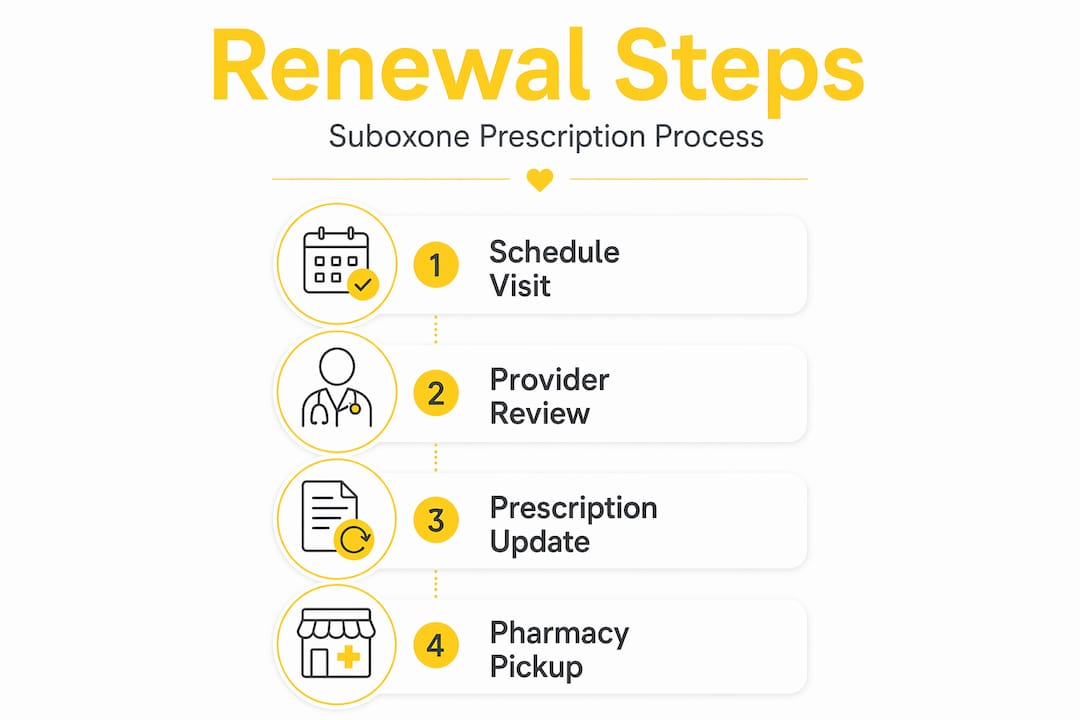
Continuity of Suboxone treatment supports recovery stability, and the renewal process, while structured, is designed to serve both your safety and your long-term success. The system is not trying to make things harder. It is trying to keep you well.
| Aspect | Standard requirement | Flexibility available |
|---|---|---|
| Renewal interval | Every 28 to 30 days | Exception requests may extend this |
| Provider visit required | Yes, before each refill | Telehealth visits often accepted |
| Drug screening | Periodic, at provider discretion | Frequency may decrease with stable progress |
| Prescription supply | Approximately 28-day supply | Extended supplies possible with exceptions |
| Exception process | Formal request via Form SMA-168 | Approved by SAMHSA or state authority |
The suboxone renewal requirements are consistent, but your life is not one-size-fits-all. Understanding the difference between what is fixed and what is flexible is genuinely empowering. Monthly visits can feel like a burden when things are going well, but they are also your built-in connection to care, a regular opportunity to address anything that is not working.
Learning about the broader benefits of Suboxone in recovery reinforces why staying consistent with renewals matters. The medication is only part of what drives lasting change.
Why patient-centered flexibility in Suboxone renewal is key to long-term success
Here is something most articles on this topic won’t say plainly: the rules around Suboxone renewal are necessary, but the way they are applied can either support recovery or quietly undermine it.
Rigid adherence to protocols without regard for individual circumstances creates a system where the most vulnerable patients are the ones most likely to fall through the cracks. Someone working two jobs who can’t get time off for a monthly appointment is not failing at recovery. They are navigating a system that was not built with their life in mind.
The providers who see the best long-term outcomes are not the ones who check every box mechanically. They are the ones who know when a phone call can substitute for an in-person visit during a difficult week, when to submit an exception request without waiting for a patient to ask, and when a frank conversation about life stress matters more than a urine screen. The impact Suboxone has on recovery is well documented, but that impact is maximized in a relationship built on trust, not surveillance.
“Continuity in care combined with personalized flexibility is what truly supports recovery beyond just medication.”
That quote captures something we believe at our core. Recovery is not a compliance exercise. It is a sustained, deeply human process. The renewal system should serve that process, not compete with it. Patients who feel respected and understood stay in treatment longer. Patients who feel judged or inconvenienced find reasons to disengage. The clinical outcomes follow directly from that dynamic.
Find expert Suboxone prescription renewal support at Maryland Addiction Treatment
Now that you have a clear picture of the renewal process, the next step is working with a provider who treats you as a whole person, not just a prescription to manage.

At our Suboxone treatment clinic, we offer both in-person and telehealth services to fit your schedule and reduce barriers to consistent care. Our providers take time to understand what is happening in your life, not just your medication history. We coordinate Suboxone renewal with mental health support, primary care, and counseling because recovery works best when your whole health is addressed together. If you’re ready to experience what genuinely patient-centered medication-assisted treatment in Maryland looks like, we’re here for that conversation.
Frequently asked questions
How often do I need to renew my Suboxone prescription?
Typically, Suboxone prescriptions are renewed every 28 to 30 days, and a medical visit is required before each refill to confirm that monthly check-ins remain safe and appropriate for your current stage of recovery.
Can I get exceptions to the monthly Suboxone refill rule?
Yes, providers can submit formal exception requests to federal and state authorities to allow adjusted dispensing when circumstances warrant it, using Form SMA-168 to SAMHSA to document the medical or logistical justification.
What happens if I miss my Suboxone renewal appointment?
Missing your renewal appointment may delay your prescription refill, creating a gap in medication that can trigger withdrawal or relapse risk, so contact your provider as soon as possible to reschedule and avoid a break in treatment.
Can telehealth be used to renew my Suboxone prescription?
Yes, many providers now offer telehealth visits for Suboxone renewal, making it easier to stay consistent with your care from home and reducing barriers related to transportation, work, or disability.

