
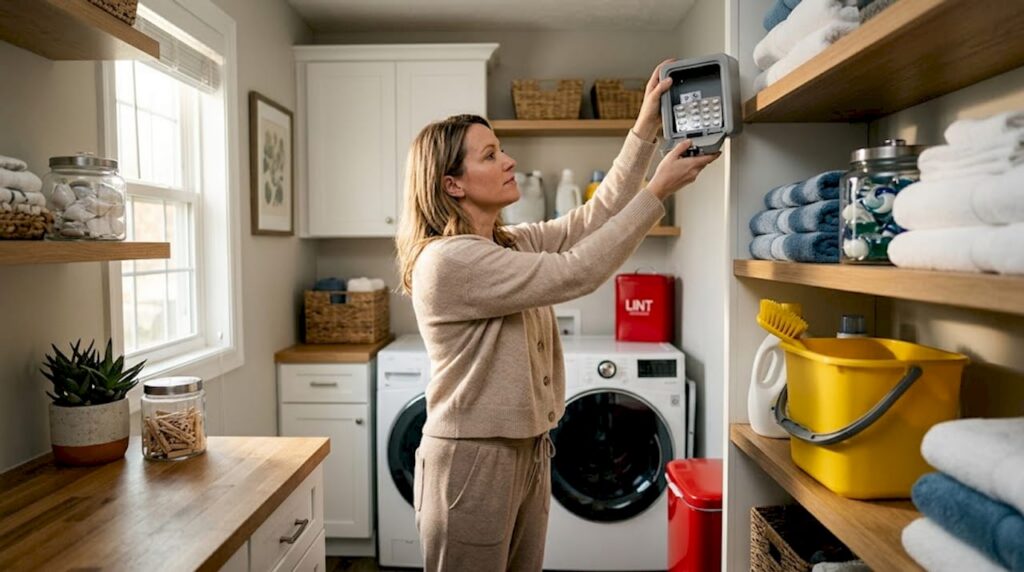
Storing suboxone safely home is not just a box to check on your treatment plan. It is a genuine safety responsibility that protects everyone under your roof. Suboxone contains buprenorphine, a powerful opioid partial agonist, and unsecured Suboxone poses deadly risks to children, visitors, and anyone in your home who has not built an opioid tolerance. This guide covers exactly where to keep Suboxone safely, how to lock it down properly, how to track it, and what to do when you no longer need it.
Table of Contents
- Key takeaways
- Storing suboxone safely home: conditions that matter
- Lockboxes and the right height: securing your supply
- Tracking, handling, and disposing of Suboxone
- Emergency preparedness: naloxone and household education
- My honest take on medication security at home
- Your treatment deserves real support
- FAQ
Key takeaways
| Point | Details |
|---|---|
| Store at the right temperature | Keep Suboxone between 68 and 77°F, away from heat, light, and moisture. |
| Use a lockbox, not just height | Locking mechanisms stop access that high shelves alone cannot prevent. |
| Track every dose | A simple pill or film count log helps you catch missing medication fast. |
| Dispose of extras properly | Use DEA-authorized take-back sites to prevent diversion and environmental harm. |
| Keep naloxone at home | Having naloxone nearby is a critical backup safety measure for any household with Suboxone. |
Storing suboxone safely home: conditions that matter
Before you think about locks and shelves, you need to get the environment right. Improper storage conditions can degrade your medication, which affects its effectiveness and your recovery.
Suboxone should be stored at room temperature, specifically between 68 and 77°F (20 to 25°C). Brief temperature excursions up to 86°F are acceptable, but consistent heat exposure is not. Think of a parked car in summer or a bathroom cabinet near a hot shower. Both are poor choices.
Here is what to avoid and why:
- Humidity: Moisture causes Suboxone film strips to degrade. Bathrooms, even with good ventilation, cycle through steam regularly.
- Direct light: UV exposure accelerates chemical breakdown in the film or tablet.
- Heat sources: Windowsills, stovetops, and radiators create temperature spikes that compromise potency.
- Kitchen and bathroom storage: Storing Suboxone in kitchens or common bathrooms is discouraged because of high foot traffic, visitor access, and unfavorable environmental conditions.
The best location is a cool, dry, low-traffic room in your home. A bedroom closet shelf or a bedroom dresser drawer, combined with a lockbox, checks all of these boxes at once.
| Storage Location | Environmental Risk | Access Risk |
|---|---|---|
| Bathroom cabinet | High humidity, temperature swings | High, visitor access |
| Kitchen counter or cabinet | Heat, humidity, traffic | High, visitor access |
| Bedroom closet with lockbox | Low humidity, stable temp | Low, controlled access |
| Living room shelf | Moderate, light exposure | High, open to all |
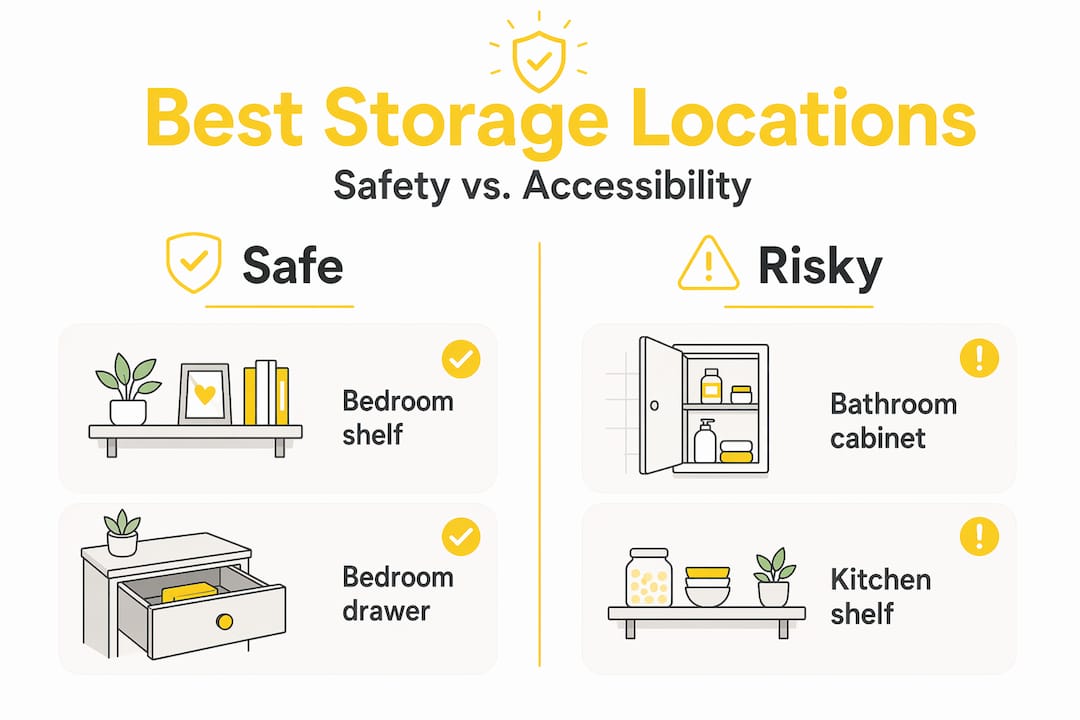
Pro Tip: Always keep Suboxone in its original packaging to preserve dosing information and safety warnings. Transferring strips or tablets to an unlabeled container increases the risk of dosing errors and eliminates critical safety information.
Lockboxes and the right height: securing your supply
You may have heard that keeping medication “out of reach” is enough. It is not. Children can and do climb. A determined child can reach a high shelf using a chair, a stool, or even a stack of books.
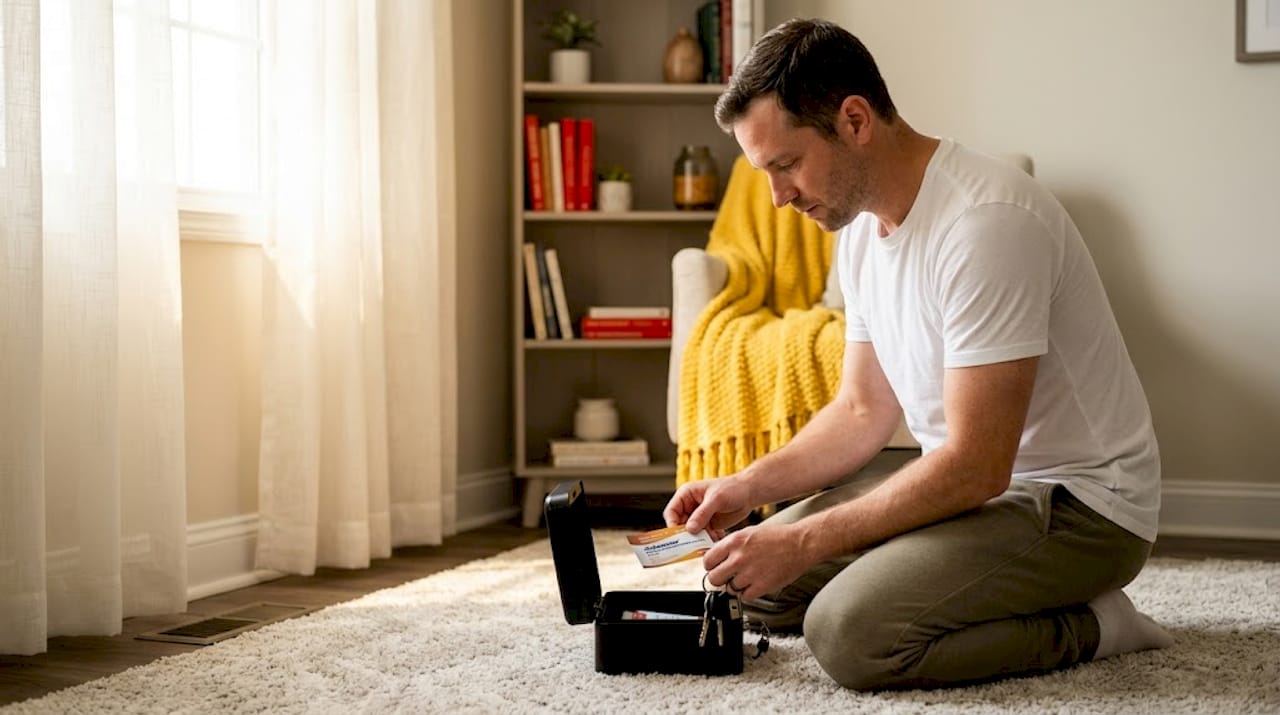
Storing narcotics at least 4 feet off the ground reduces child access by over 70%. That is significant, but it still leaves a gap. Height is a deterrent, not a barrier. A lockbox is a barrier.
Here is how to implement both effectively:
- Choose a lockbox rated ANSI Grade 2 or better. Grade 2 lockboxes provide meaningful resistance to forced entry, offering enough delay to deter unauthorized access by children or opportunistic visitors.
- Place the lockbox at or above 4 feet from the floor. Mount it to a shelf, secure it to a fixed surface inside a closet, or use a cable lock to anchor it to a heavy piece of furniture.
- Set a combination or key lock you will actually use consistently. A lockbox you leave open “just for convenience” provides zero protection.
- Store the key or write the combination in a separate secure location. Do not tape it to the box or leave it in the same drawer.
- Consider a box with an emergency release option. Lockboxes with emergency release codes allow emergency responders to access medication in a crisis without compromising your day-to-day security.
Pro Tip: The phrase “out of reach” is a common misconception that creates a false sense of security. A locked container provides a physical barrier that height alone cannot guarantee, especially in a home with curious children or unpredictable visitors. Use both methods together, not one or the other.
Once your lockbox is in place, your next job is maintaining the routine. Opening it, taking your dose, and relocking it every single time has to become automatic. That habit is what transforms a good safety setup into real protection.
Tracking, handling, and disposing of Suboxone
Secure storage is step one. Ongoing monitoring is step two. These two practices work together to protect both your medication and your household.
Start with a simple tracking log. Pill counts and logs help you identify missing medication early before a small problem becomes a serious one. A small notebook kept with your lockbox (outside it, not inside) where you record the date and your current film or tablet count takes less than 30 seconds per day.
Other safe handling habits that matter:
- Never transfer Suboxone to unlabeled containers. Pill organizers without labels are convenient but remove all dosing and safety information from sight.
- Wash your hands before and after handling Suboxone film. Residue from the buprenorphine film can transfer to surfaces and be accidentally ingested by others.
- Dose in a private area. Using your medication in a common room can normalize it for children or invite questions from visitors that reveal where it is stored.
- Do not leave doses sitting out. Prepare your dose and take it immediately. Do not set it down on a counter or table.
When it comes to disposal, the risks of getting it wrong are real. Proper disposal via DEA-authorized take-back sites prevents diversion and environmental harm. Expired or leftover Suboxone thrown in the trash or flushed down a toilet can be retrieved, misused, or contribute to water supply contamination.
| Disposal Method | Safety Level | Recommendation |
|---|---|---|
| DEA take-back site | High | Best option, use whenever available |
| FDA-approved flush list | Medium | Acceptable if no take-back site nearby |
| Household trash (mixed with kitty litter, coffee grounds) | Low | Last resort only, seal in a bag |
| Flushing without guidance | Very Low | Avoid, environmental and diversion risk |
You can find your nearest DEA take-back location at the DEA’s official website or by calling 1-800-882-9539.
Emergency preparedness: naloxone and household education
Secure storage significantly reduces risk. It does not eliminate it entirely. Accidents happen, and if someone in your home does accidentally ingest Suboxone, you need to be ready.
Naloxone availability is critical because accidental ingestion of Suboxone can be fatal for opioid-naïve individuals, meaning anyone who does not regularly take opioids. A child who swallows a single film strip faces a life-threatening situation. Having naloxone at home is not an overreaction. It is a standard safety measure.
Signs of opioid overdose to recognize immediately:
- Slow, shallow, or stopped breathing
- Unconsciousness or unresponsiveness
- Blue or gray lips or fingertips
- Pinpoint pupils
- Gurgling or snoring sounds
Naloxone (brand name Narcan) reverses opioid overdose quickly and is available at most pharmacies without a prescription in many states. Patients should keep naloxone readily available at home as a standard part of responsible Suboxone management.
Beyond having naloxone on hand, educate your household. Every adult in your home should know:
- What Suboxone is and why it must not be handled by others
- Where the naloxone is kept and how to use it
- When to call 911 and not to wait to see if someone “comes around”
Secure storage and naloxone access are two sides of the same coin. One prevents accidental exposure. The other addresses it when prevention is not enough. You need both.
Check out Mdmatt’s guidance on Suboxone support systems for more on building a safety net around your treatment.
My honest take on medication security at home
I have seen a pattern that comes up repeatedly. Patients do everything right in their treatment plan but underestimate what “secure” actually means in their own home. Someone puts their Suboxone in a high cabinet, feels satisfied, and moves on. Then a grandchild visits, a nephew comes to stay for a weekend, or a bathroom gets remodeled and the medication ends up temporarily on the kitchen counter.
In my experience, the gap between perceived security and actual security is wider than most people realize. A high shelf is not a lock. A drawer is not a lock. A lock is a lock.
What I have also observed is that patients who commit to a lockbox routine early in their treatment do not find it burdensome after a few weeks. It becomes as automatic as brushing your teeth. The inconvenience fades quickly. The protection it provides does not.
My honest advice is this: do not wait until something goes wrong to upgrade your storage setup. Start with a basic, affordable lockbox. Get it mounted above 4 feet. Keep the count log. You do not have to get it perfect from day one. Incremental improvement matters. Each step you take toward better security is a real step toward protecting the people you care about most.
Understanding Suboxone’s long-term role in your recovery makes it easier to treat it with the level of seriousness it deserves.
— Cory
Your treatment deserves real support
Safe Suboxone storage is one piece of a larger picture. When your medication is managed well and your treatment is guided by compassionate, experienced providers, recovery becomes far more sustainable.

At Mdmatt, the team approaches opioid use disorder with genuine care, treating every patient with dignity from the first appointment forward. Whether you are just starting medication-assisted treatment or looking to strengthen your existing care plan, Mdmatt offers in-person and telehealth treatment services to meet you where you are. Visit the Suboxone treatment clinic page to learn more about what personalized, patient-centered care looks like and take the next step in your recovery with a team that is truly in your corner.
FAQ
Where is the safest place to keep Suboxone at home?
The safest place is inside a locked container, rated ANSI Grade 2 or better, stored at or above 4 feet from the floor in a cool, dry room away from kitchens and bathrooms.
What temperature should Suboxone be stored at?
Suboxone should be stored at room temperature between 68 and 77°F (20 to 25°C), away from heat, moisture, and direct light to maintain its effectiveness.
Can I store Suboxone in a bathroom cabinet?
No. Bathrooms are discouraged due to humidity from showers, temperature changes, and easy access by visitors. A bedroom closet with a lockbox is a much safer choice.
What should I do with expired or unused Suboxone?
Take it to a DEA-authorized medication take-back site. This prevents diversion and keeps expired opioids out of the hands of others. If no site is available, follow FDA flush guidelines.
Do I need naloxone at home if I take Suboxone?
Yes. Naloxone should be kept accessible in any home where Suboxone is present. Accidental ingestion by a child or opioid-naïve person can be fatal, and naloxone can reverse an overdose quickly while you wait for emergency services.

