

If you’ve started Suboxone and suddenly feel like you can’t keep your eyes open, you are not alone. Understanding why Suboxone makes you tired is one of the most common questions patients ask, and it deserves a real answer. This isn’t just a minor inconvenience to push through. Suboxone fatigue causes real disruption to daily life, work, and confidence in the treatment itself. The good news is that once you understand what’s driving the tiredness, you gain real tools to manage it and keep your recovery on track.
Table of Contents
- Key takeaways
- Why Suboxone makes you tired: the pharmacology explained
- Fatigue, dizziness, and sleep changes on Suboxone
- When fatigue becomes a safety concern
- How dose timing and adequacy affect your energy
- Practical ways to manage Suboxone fatigue
- My take on Suboxone fatigue and why patients give up too soon
- Get expert support for Suboxone side effects
- FAQ
Key takeaways
| Point | Details |
|---|---|
| Buprenorphine slows the brain | Suboxone’s main ingredient acts on opioid receptors and depresses the central nervous system, causing fatigue. |
| Fatigue usually fades | Most Suboxone tiredness effects improve within a few weeks as your body adjusts to the medication. |
| Dangerous sedation is different | Severe drowsiness with slow breathing or difficulty waking is a medical emergency, not a normal side effect. |
| Persistent fatigue may signal under-dosing | If tiredness comes with cravings or mood swings, your dose may need clinical reassessment. |
| Lifestyle changes help significantly | Avoiding alcohol, exercising moderately, and practicing good sleep hygiene can reduce Suboxone and sleepiness problems. |
Why Suboxone makes you tired: the pharmacology explained
Suboxone contains two active ingredients: buprenorphine and naloxone. Most of the sedation you feel comes from buprenorphine. It is a partial opioid agonist, meaning it activates opioid receptors in your brain, but not at full strength the way heroin or oxycodone would. Even so, that partial activation has real effects on your central nervous system.
Buprenorphine encourages GABA production in the brain. GABA is an inhibitory neurotransmitter, which means it slows brain activity down. Less brain activity means less alertness. That is the direct path from taking Suboxone to feeling like you want to lie down.
Here is what makes buprenorphine different from a full opioid agonist. Its partial agonist effect produces weaker opioid-like effects than full agonists such as morphine or methadone. The ceiling effect of buprenorphine limits how much respiratory depression it can cause, which is a major safety advantage. But it does not eliminate sedation entirely.
The naloxone component in Suboxone is there to deter misuse. When taken as prescribed under the tongue, naloxone is barely absorbed and plays no meaningful role in how tired you feel. All of the Suboxone fatigue causes trace back to buprenorphine acting on opioid receptors and slowing your central nervous system.
Key points about the pharmacology of Suboxone sedation:
- Buprenorphine binds to mu-opioid receptors, triggering a sedating response
- GABA activity increases, reducing overall brain alertness
- Drowsiness and fatigue are listed as common buprenorphine side effects by SAMHSA
- Naloxone does not contribute to sedation when Suboxone is used correctly
- Sedation is strongest at the start of treatment before your body adapts
Pro Tip: Take your Suboxone dose at night if your prescriber approves. Many patients find that timing the dose before bed lets the peak sedation work in their favor while they sleep, leaving them more alert during the day.
Fatigue, dizziness, and sleep changes on Suboxone
Tiredness from Suboxone rarely shows up alone. It often travels with a cluster of related symptoms that can compound how worn down you feel throughout the day.

Dizziness and disturbances in attention are both recognized buprenorphine side effects. When you feel dizzy, your brain is spending extra energy on orientation and balance, which drains your mental stamina. When your attention is scattered and you cannot focus, tasks take longer and feel more exhausting. Both symptoms feed directly into the overall experience of Suboxone and sleepiness.
One pattern that surprises many patients is the combination of daytime fatigue and nighttime insomnia. It seems contradictory. You feel exhausted all day but cannot fall asleep or stay asleep at night. This happens because buprenorphine can disrupt normal sleep architecture, particularly the stages of deep, restorative sleep. You may be sleeping hours-wise, but not getting the quality that actually refreshes you.
Dose adjustment periods are especially disruptive to sleep and mood. When your blood level of buprenorphine dips between doses, you may experience a mild partial withdrawal state. That means irritability, anxiety, and a disrupted sleep-wake cycle, all of which worsen daytime fatigue. Recognizing this pattern helps you have a productive conversation with your prescriber.
Here is how to tell the difference between adjustment symptoms and something that needs attention:
- Normal adjustment (first 2 to 4 weeks): Drowsiness that is manageable, no significant breathing difficulty, improves gradually over time.
- Under-dosing symptoms: Fatigue paired with cravings, irritability, muscle aches, or anxiety between doses.
- Over-dosing symptoms: Extreme sedation shortly after taking medication, difficulty staying awake, feeling “too heavy.”
- Sleep disturbance alone: Waking repeatedly at night, vivid dreams, daytime fatigue without other withdrawal signs.
Pro Tip: Keep a simple daily log for two weeks. Note when you take your dose, how tired you feel at different times of day, sleep quality, and any cravings. This gives your prescriber concrete data to work with instead of a vague “I’ve been tired.”
When fatigue becomes a safety concern
Most Suboxone sedation issues are uncomfortable but not dangerous. There is a line, though, and you need to know where it is.
The serious risk happens when Suboxone is combined with other substances that also slow the central nervous system. Benzodiazepines like Xanax or Valium, alcohol, sleep aids, and certain antihistamines all add to the sedating effect of buprenorphine. The combined effect can cause life-threatening drowsiness and respiratory depression. This is not a theoretical concern. It is a documented danger that your prescriber will emphasize, and it deserves your full attention.
Watch for these warning signs that go beyond normal tiredness:
- Difficulty staying awake even when you want to be alert
- Breathing that feels slow, shallow, or labored
- Lips or fingertips turning blue or gray
- Someone cannot wake you up or you are unresponsive
- Confusion so severe you cannot follow a simple conversation
If you or someone near you experiences severe difficulty waking, very slow breathing, or blue-tinged lips while on Suboxone, call 911 immediately. This is a medical emergency, not a wait-and-see situation.
Clinicians assess wakefulness, breathing, and CNS depressant co-use when evaluating extreme tiredness in patients on buprenorphine. If you are seeing a provider and experience any of these symptoms, do not wait for your next scheduled appointment. Contact them immediately or go to an emergency room.
Learning how to start Suboxone treatment safely includes understanding these risks upfront, so you know what to watch for from day one.
How dose timing and adequacy affect your energy
Not all Suboxone fatigue is the same. Some of it comes from the medication working as intended. Some of it comes from the medication not working well enough.
When your dose is too high for your current tolerance, you will feel sedated shortly after taking it. When your dose is too low, your blood levels may drop between doses, creating a partial withdrawal state. That state brings fatigue, anxiety, poor sleep, and cravings. The tricky part is that both problems can make you feel exhausted, just through different mechanisms.
Mood and sleep disturbances that persist are a recognized signal that clinical reassessment may be needed. The table below helps you distinguish fatigue patterns and what they might mean.
| Fatigue pattern | Likely cause | What to do |
|---|---|---|
| Drowsy 1 to 2 hours after taking dose | Dose may be too high | Talk to prescriber about timing or dose adjustment |
| Fatigued and irritable between doses | Possible partial withdrawal or low dose | Request clinical reassessment promptly |
| Tired all day without obvious triggers | Body still adjusting to medication | Monitor for 2 to 4 weeks; log symptoms |
| Fatigue improving week by week | Normal adaptation process | Continue current plan, stay in contact with provider |
Stable Suboxone dosing improves treatment retention and reduces relapse risk. That is why self-adjusting your dose is not the answer. Splitting doses, taking extra, or skipping doses to “test” your fatigue will make your blood levels erratic and your symptoms harder to read. Work with your prescriber. Understanding why your Suboxone dose varies is a much better path forward than guessing.
Practical ways to manage Suboxone fatigue
The fact that fatigue is a known side effect does not mean you have to accept it without pushback. Several practical changes can significantly reduce how tired you feel on a daily basis.
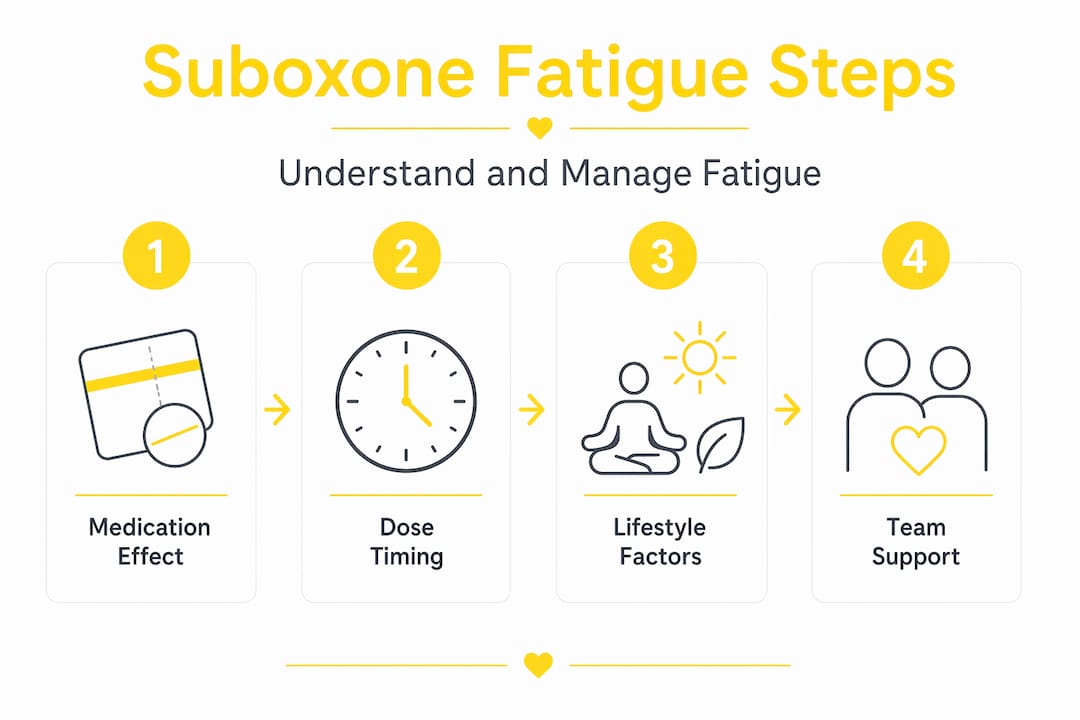
Avoid anything that adds to the sedating effect of buprenorphine. Alcohol is the most common culprit. Even one or two drinks dramatically increase Suboxone sedation issues. Benzodiazepines and sleep aids carry the same risk unless your prescriber has explicitly approved their use alongside Suboxone. Over-the-counter antihistamines like diphenhydramine (Benadryl) can also compound your tiredness more than you might expect.
Exercise is one of the most underused tools for managing Suboxone and sleepiness. Light to moderate activity, such as a 20 to 30 minute walk, increases norepinephrine and dopamine, both of which counteract CNS-induced fatigue. A safe recovery exercise routine does not need to be intense to be effective. Consistency matters more than effort level.
Sleep hygiene makes a bigger difference than most people realize. Keep a consistent sleep and wake time, even on weekends. Avoid screens for at least 30 minutes before bed. Keep your room cool and dark. These steps do not fix buprenorphine-disrupted sleep architecture on their own, but they remove every obstacle that is within your control.
- Stay well hydrated throughout the day. Dehydration worsens cognitive fatigue noticeably.
- Avoid heavy meals right after taking your dose, since digestion pulls blood flow and adds to sedation.
- Caffeine in moderate amounts (one or two cups of coffee in the morning) can offset early-day drowsiness safely.
- Many side effects reduce within 2 to 4 weeks as your body adjusts to the medication.
Pro Tip: Open communication with your prescriber about fatigue is one of the most effective tools you have. Clinicians can adjust dose timing, split daily doses, or explore supportive strategies. They cannot help if they do not know what you are experiencing.
My take on Suboxone fatigue and why patients give up too soon
I have seen many patients who were doing everything right in their recovery, and then fatigue convinced them to stop their Suboxone. That is one of the most painful outcomes I observe, because the tiredness they were experiencing was almost always temporary and manageable with the right support.
What I have learned is that patients rarely stop because of fatigue alone. They stop because fatigue feels like a signal that something is wrong, that the medication is not right for them, or that their body is rejecting it. That interpretation is understandable but usually incorrect.
The first two to four weeks of Suboxone treatment are genuinely hard. Your brain is recalibrating after significant opioid exposure, and buprenorphine is doing real neurological work during that period. Some fatigue is the cost of stabilization. The patients I see push through that window and adjust their lifestyle even slightly, including sleep habits, caffeine timing, and dose scheduling, tend to find that the tiredness becomes much more manageable.
What I wish more patients knew is that persistent fatigue after stabilization is actually useful information. It tells you the dose needs adjustment, or that something else is going on, whether that is depression, poor sleep quality, or a life stressor that is draining their energy reserves. Fatigue is data. Use it to have better conversations with your provider instead of quietly suffering or deciding to stop.
Recovery asks a lot of you. Patience during side effect adjustment is part of that ask. You deserve support that takes these experiences seriously rather than dismissing them.
— Cory
Get expert support for Suboxone side effects
Dealing with Suboxone fatigue on your own is harder than it needs to be. At Mdmatt, we treat every patient with the dignity and honesty that real recovery requires, including honest conversations about what side effects feel like and what to do about them.

Our Suboxone treatment clinic provides medically supervised medication-assisted treatment with ongoing dose management and side effect monitoring built into every care plan. Whether you are dealing with persistent tiredness, sleep disruptions, or questions about whether your dose is right, our clinical team is here to give you clear, personalized answers.
We also offer telehealth treatment services for patients who need flexible access to care without traveling to an office. You can receive the same level of clinical oversight and compassionate support from wherever you feel most comfortable. If fatigue or any other Suboxone concern is affecting your recovery, reach out to Mdmatt today.
FAQ
Why does Suboxone make you so tired?
Suboxone’s main ingredient, buprenorphine, is a partial opioid agonist that increases GABA activity in the brain, slowing down central nervous system function and causing drowsiness and fatigue, especially during the first weeks of treatment.
How long does Suboxone fatigue last?
For most patients, Suboxone side effects like sleepiness reduce noticeably within two to four weeks as the body adapts to the medication. Fatigue that persists beyond this window may indicate a dosing issue worth discussing with your prescriber.
Can Suboxone cause insomnia even if it makes you tired?
Yes. Buprenorphine can disrupt normal sleep architecture, leading to daytime fatigue alongside nighttime sleep disturbances. This combination is a recognized side effect and often improves with dose timing adjustments and consistent sleep hygiene practices.
When is Suboxone drowsiness dangerous?
Drowsiness becomes dangerous when it is accompanied by slow or shallow breathing, inability to stay awake, or blue-tinted lips. These symptoms are most likely if Suboxone is combined with alcohol, benzodiazepines, or other CNS depressants, and require immediate emergency care.
Should I stop taking Suboxone if I feel too tired?
No. Stopping Suboxone abruptly due to fatigue risks withdrawal and relapse. Instead, contact your prescriber to discuss whether a dose adjustment, timing change, or supportive strategy can address the tiredness safely while keeping your treatment on track.

