

Suboxone causes sweating by directly disrupting the autonomic nervous system and the hypothalamus, the brain region responsible for regulating body temperature. This side effect, clinically called hyperhidrosis, is a recognized adverse effect of buprenorphine/naloxone and affects a meaningful number of patients in Medication-Assisted Treatment (MAT). If you are currently taking Suboxone or considering it, understanding why this happens puts you in a much stronger position to manage it. Sweating is not always just an annoyance. Sometimes it signals a dose timing issue, a drug interaction, or in rare cases, something that needs urgent medical attention. Knowing the difference matters.
Why Suboxone causes sweating: the physiology explained
Suboxone contains two active ingredients: buprenorphine, a partial opioid agonist, and naloxone, an opioid antagonist. Buprenorphine binds to mu-opioid receptors throughout the brain and body, and this binding directly influences the hypothalamus, which acts as your body’s internal thermostat. When the hypothalamus receives altered signals from opioid receptor activity, it can misread your core temperature and trigger sweating as a cooling response, even when you are not actually overheated.
Beyond the hypothalamus, buprenorphine disrupts norepinephrine signaling in the autonomic nervous system. Norepinephrine controls the fight-or-flight response, including sweat gland activation. When this signaling is altered, your sweat glands can fire unpredictably. This is why some patients sweat heavily at rest, during sleep, or even in cool environments.

Histamine release is another contributing factor. Opioid medications, including buprenorphine, can trigger mild histamine responses in some individuals, which causes flushing and sweating as secondary effects. This reaction varies from person to person, which explains why two patients on identical Suboxone doses can have very different sweating experiences.
Common patterns patients report include:
- Sweating within one to two hours of taking a dose, as blood levels peak
- Night sweats that wake them from sleep, often near the time for their next dose
- Generalized dampness throughout the day that does not correlate with physical activity
- Sweating that worsens in warm rooms or under heavy bedding
Pro Tip: Keep a simple log of when you sweat relative to when you take your dose. This single habit gives your prescriber the clearest possible picture of what is driving your symptoms.
Understanding the long-term effects of Suboxone on the body helps contextualize why sweating can persist even after weeks on a stable dose.
What is the difference between Suboxone side effect sweating and withdrawal sweating?
This is one of the most common points of confusion for patients, and getting it right changes how you and your doctor respond. The two types of sweating have different causes, different timing, and different solutions.
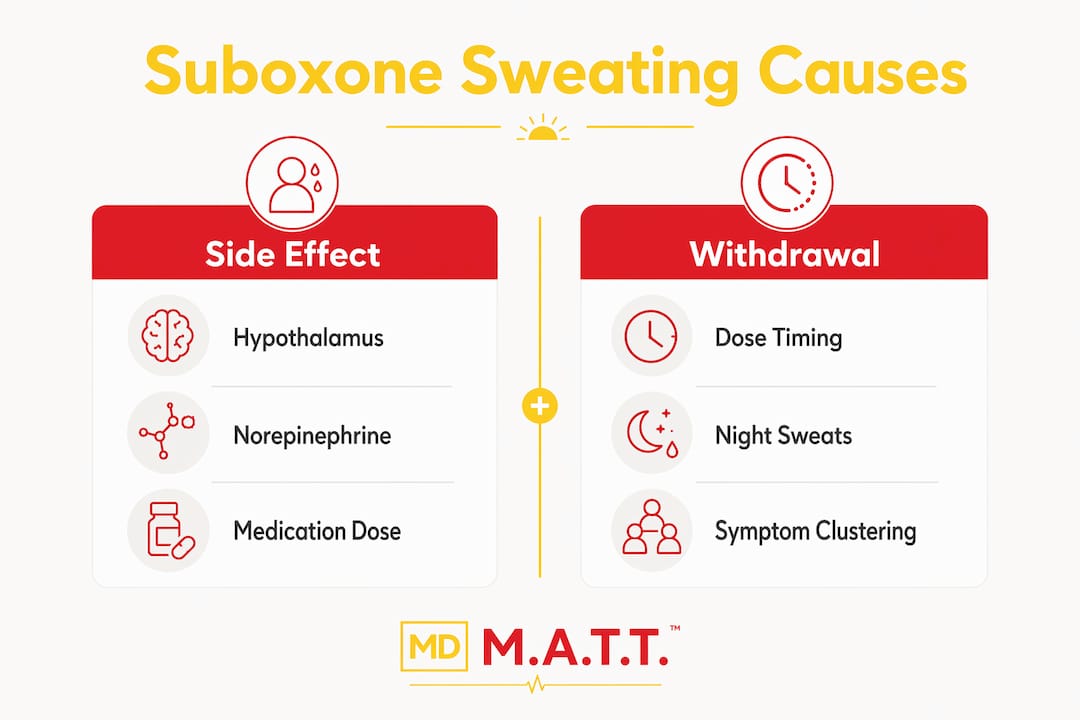
Medication-induced hyperhidrosis occurs because Suboxone is actively working in your system. It tends to appear shortly after dosing, when buprenorphine blood levels are at their peak. The sweating may be uncomfortable, but it typically occurs without other distressing symptoms. You feel medically stable, just damp.
Withdrawal-related sweating is a different experience entirely. Sweating that worsens at night or near your next dose strongly suggests that your buprenorphine level has dropped below the therapeutic threshold. This is called partial withdrawal, and it happens when the dose wears off before the next one is due.
| Feature | Medication side effect | Partial withdrawal |
|---|---|---|
| Timing | Shortly after dosing (peak levels) | Hours before next dose or overnight |
| Other symptoms | Minimal; patient feels stable | Restlessness, goosebumps, anxiety, yawning |
| Cause | Direct autonomic nervous system effect | Sub-therapeutic buprenorphine levels |
| Response needed | Lifestyle adjustments, monitoring | Dose timing or dose adjustment with prescriber |
Signs that your sweating is withdrawal-related rather than a simple Suboxone sweating side effect include:
- Restlessness or an inability to get comfortable
- Goosebumps or chills alongside the sweating
- Anxiety that spikes in the hours before your next dose
- Yawning, watery eyes, or muscle aches accompanying the sweat
Symptom timing is the most reliable diagnostic tool clinicians use to separate these two causes. If your sweating clusters with the symptoms above and consistently occurs late in your dosing cycle, that is a conversation to have with your prescriber about adjusting your schedule or dose.
When should sweating during Suboxone treatment concern you?
Most sweating on Suboxone is uncomfortable but not dangerous. There are specific situations, however, where sweating signals something that requires immediate medical attention.
- Sweating with fever and confusion. This combination can indicate serotonin syndrome, a potentially life-threatening reaction caused by excess serotonin activity. Patients taking Suboxone alongside SSRIs, SNRIs, or other serotonergic medications carry a higher risk.
- Sweating with breathing difficulty. Respiratory depression is the most serious risk with opioid medications. If sweating accompanies slow or labored breathing, call 911 immediately.
- Sweating with agitation and restlessness. When these symptoms cluster together, they can signal either overdose or a serious withdrawal reaction. Neither should be managed at home.
- Sweating with extreme drowsiness or unresponsiveness. This pattern points toward toxicity and requires emergency evaluation.
Urgent evaluation is necessary when sweating occurs alongside neurological or respiratory symptoms, as these clusters indicate overdose or serotonin syndrome rather than routine side effects. The distinction matters because the treatment response is completely different.
Pro Tip: If you take any antidepressant alongside Suboxone, review the serotonin interaction risks with your prescriber. Serotonin syndrome can develop gradually, and sweating is often one of the first signs.
Isolated sweating without any of the warning symptoms above does not require emergency care. It does, however, deserve a conversation with your treatment provider so you can rule out contributing factors and find relief.
What practical strategies help manage sweating related to Suboxone treatment?
Managing excessive sweating on Suboxone involves a combination of environmental adjustments, lifestyle changes, and honest communication with your prescriber. Most patients find meaningful relief through a few targeted changes.
Environmental and lifestyle adjustments are the first line of response:
- Lower your bedroom temperature at night. A room set between 65 and 68 degrees Fahrenheit significantly reduces night sweat severity for most patients.
- Switch to moisture-wicking bedding and sleepwear. Materials like bamboo or microfiber pull sweat away from the skin and reduce the waking-up-soaked experience.
- Stay well hydrated throughout the day. Sweating depletes fluids, and dehydration can make you feel worse overall during treatment.
- Reduce caffeine and nicotine intake. Both substances can worsen sweating by stimulating the autonomic nervous system independently of Suboxone.
Dose timing conversations with your prescriber are worth having if your sweating is worst at night or before your next dose. Splitting a once-daily dose into two smaller doses taken morning and evening can stabilize buprenorphine blood levels and reduce the peaks and troughs that drive both types of sweating.
Medication interactions deserve attention as well. SSRIs, SNRIs, and drugs like oxybutynin can worsen hyperhidrosis in patients on Suboxone. If you started a new medication around the same time your sweating worsened, bring that timeline to your prescriber.
Clinical-strength antiperspirants containing aluminum chloride, applied to problem areas at night, provide real relief for many patients. This is a simple, low-risk option worth trying before pursuing prescription interventions.
Pro Tip: Before your next appointment, write down the three most bothersome times you sweat, what time of day they occur, and what you had taken that day. Three data points are more useful to your doctor than a general complaint of “sweating a lot.”
Tracking your symptoms relative to your dose schedule also helps your prescriber understand whether a Suboxone-related fatigue pattern is compounding your sweating, since both side effects often share the same physiological roots.
Key takeaways
Suboxone causes sweating primarily through autonomic nervous system disruption, and distinguishing peak-dose hyperhidrosis from partial withdrawal sweating determines the right clinical response.
| Point | Details |
|---|---|
| Primary cause | Buprenorphine disrupts hypothalamus and norepinephrine signaling, triggering hyperhidrosis. |
| Timing is diagnostic | Sweating after dosing points to medication effects; sweating before the next dose signals partial withdrawal. |
| Serious warning signs | Sweating with fever, confusion, or breathing trouble requires immediate emergency evaluation. |
| Drug interactions matter | SSRIs, SNRIs, and stimulants like caffeine can significantly worsen sweating on Suboxone. |
| Management starts simply | Dose timing adjustments, hydration, and cooler sleep environments resolve most cases. |
What I’ve learned about sweating and Suboxone after years in practice
The patients who struggle most with sweating on Suboxone are almost always the ones who never mention it to their prescriber. They assume it is just something they have to live with, or they worry that complaining about a side effect will somehow jeopardize their treatment. That silence is a real problem.
In my experience, the majority of Suboxone-related sweating is fixable or at least significantly reducible. The fix is almost never stopping the medication. It is usually a dose timing adjustment, a conversation about a co-prescribed antidepressant, or a few simple changes to sleep environment. Patients who track their symptoms and bring that information to their appointments get better outcomes. It is that straightforward.
What I also see regularly is patients misreading partial withdrawal sweating as a sign that Suboxone is not working for them. It is actually the opposite signal. It means the medication is working, but the dosing schedule needs refinement. That reframe matters enormously for how patients feel about their treatment.
Sweating is not a sign of weakness, failure, or that something is fundamentally wrong with your body. It is a predictable physiological response to a medication that is doing its job of stabilizing opioid receptors. Your job is to notice when it happens, track the pattern, and communicate it. That is all.
— Cory
Managing Suboxone side effects with expert support at Mdmatt

Sweating, fatigue, and other Suboxone side effects are manageable with the right clinical support. At Mdmatt, the team specializes in Medication-Assisted Treatment for opioid use disorder, with a patient-centered approach that takes side effects seriously. Whether you are just starting Suboxone or have been on it for years and want to address persistent symptoms, Mdmatt offers both in-person and telehealth treatment options to fit your life. You deserve care that treats the whole person, not just the diagnosis. Reach out to Mdmatt to schedule a consultation and get the support you need to stay comfortable and committed to your recovery.
FAQ
Why does Suboxone make you sweat so much?
Suboxone causes sweating by altering hypothalamus function and disrupting norepinephrine signaling in the autonomic nervous system, which triggers sweat glands even without physical exertion. This is a recognized side effect of buprenorphine/naloxone and varies in severity between patients.
Is sweating on Suboxone a sign of withdrawal?
Sweating that occurs near your next scheduled dose or overnight often signals partial withdrawal, meaning buprenorphine levels have dropped below the therapeutic threshold. Sweating shortly after taking your dose is more likely a direct medication side effect rather than withdrawal.
When is sweating on Suboxone a medical emergency?
Sweating combined with fever, confusion, agitation, or breathing difficulty requires immediate emergency evaluation, as these symptom clusters can indicate serotonin syndrome or opioid overdose. Isolated sweating without these warning signs is not an emergency but should be discussed with your prescriber.
Can other medications make Suboxone sweating worse?
Yes. SSRIs, SNRIs, and stimulants like caffeine and nicotine can worsen sweating in patients taking Suboxone by independently activating the autonomic nervous system. Review all co-prescribed medications with your provider if your sweating has worsened after starting a new drug.
What is the fastest way to reduce night sweats from Suboxone?
Lowering your bedroom temperature, switching to moisture-wicking bedding, and staying well hydrated are the most immediate steps. If night sweats persist, ask your prescriber about splitting your daily dose to stabilize buprenorphine blood levels overnight.

