

Dry mouth from Suboxone, known clinically as xerostomia, is a direct result of the sublingual film’s acidic chemistry combined with buprenorphine’s effect on local oral tissues. If you are taking Suboxone as part of your Medication-Assisted Treatment (MAT) for opioid use disorder, noticing that your mouth feels persistently dry is not unusual. Understanding why this happens puts you in a much stronger position to protect your teeth and stay comfortable throughout treatment. This article breaks down the biological and chemical reasons behind Suboxone mouth dryness and gives you practical tools to manage it without compromising your recovery.
Why does Suboxone cause dry mouth?
Suboxone causes dry mouth through two overlapping mechanisms: the acidic environment created by its sublingual film and the direct effect of buprenorphine on oral mucosal tissue. The sublingual film dissolves over 5 to 10 minutes, during which it releases an acidic solution with a pH around 3.4, roughly the same acidity as orange juice. That sustained acid exposure suppresses saliva production and irritates the soft tissue lining your mouth.
Buprenorphine does not simply pass through your mouth on its way into your bloodstream. Buprenorphine is retained in oral mucosal tissue after sublingual dosing, which means the drying effect continues well past the moment the film fully dissolves. This is why many patients describe a persistent dryness that lasts hours rather than just the few minutes it takes to dose. The combination of local acid exposure and tissue retention makes Suboxone’s dry mouth side effects more prolonged than what you might experience from swallowing a standard pill.
Standard dosing instructions also make the problem worse in a specific way. Patients are advised not to eat, drink, or rinse immediately after placing the film under the tongue. This is necessary for proper absorption, but it means the acidic residue sits on your teeth and gums without any dilution. The result is a concentrated, acidic microenvironment that reduces saliva flow at exactly the moment your mouth needs it most.
Here is what is happening at each stage of dosing:
- Film placement: The film begins dissolving and releasing an acidic solution directly onto oral tissues.
- Dissolution phase (5 to 10 minutes): Saliva production is suppressed by the acidic pH, and buprenorphine begins absorbing into the mucosa.
- Post-dose window: Patients avoid rinsing, leaving acid residue on enamel and soft tissue.
- Extended retention phase: Buprenorphine remains in oral tissues, prolonging dryness sensations beyond the dissolution window.
Pro Tip: Wait the recommended time for full absorption, then rinse your mouth gently with plain water. This removes acid residue without interfering with the medication’s effectiveness and gives your saliva a chance to recover.
What saliva does and why losing it matters
Saliva is not just moisture. It is your mouth’s primary defense system, and understanding what it does makes clear why decreased salivary flow raises your risk of tooth decay, enamel erosion, and oral infections. Saliva neutralizes acids, washes away food particles, delivers antimicrobial proteins, and remineralizes enamel after acid exposure. When Suboxone reduces that flow, all of those protective functions weaken simultaneously.
The most immediate consequence is a drop in oral pH. Without saliva buffering the acid left by the Suboxone film, your mouth stays acidic for longer after each dose. Bacteria that cause cavities, particularly Streptococcus mutans, thrive in low-pH environments. Reduced saliva leads to accelerated enamel demineralization and a measurably higher risk of rapid decay. Patients who have been on Suboxone for extended periods without proactive dental care sometimes experience decay patterns that dentists describe as unusually aggressive.
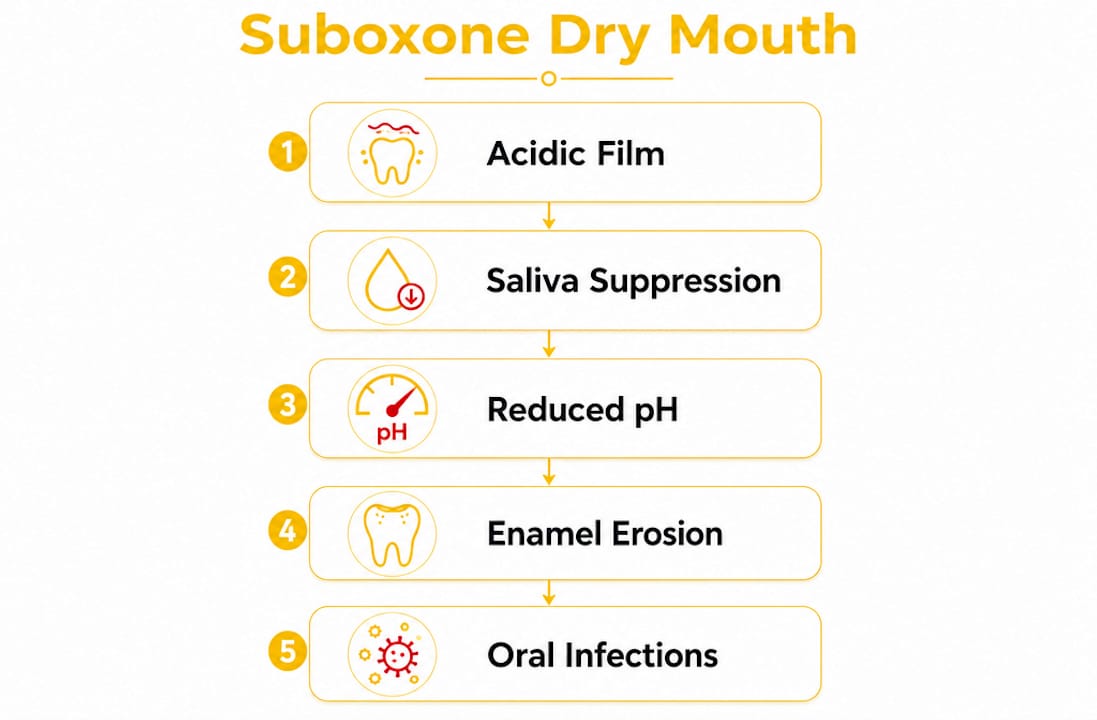
Gum disease and oral fungal infections like candidiasis are also more common when saliva is chronically reduced. The antimicrobial proteins in saliva, including lactoferrin and lysozyme, keep bacterial and fungal populations in check. Without adequate saliva, those populations grow unchecked along the gumline and on the tongue. This is not a cosmetic problem. Untreated gum disease is linked to systemic inflammation and can complicate overall health management.
| Saliva function | Effect of dry mouth |
|---|---|
| Acid neutralization | Oral pH drops, increasing enamel erosion risk |
| Antimicrobial activity | Bacterial and fungal overgrowth along gumline and tongue |
| Enamel remineralization | Demineralization accelerates, cavities form faster |
| Food particle clearance | Debris accumulates, feeding decay-causing bacteria |
| Tissue lubrication | Soft tissue irritation, soreness, and difficulty speaking |
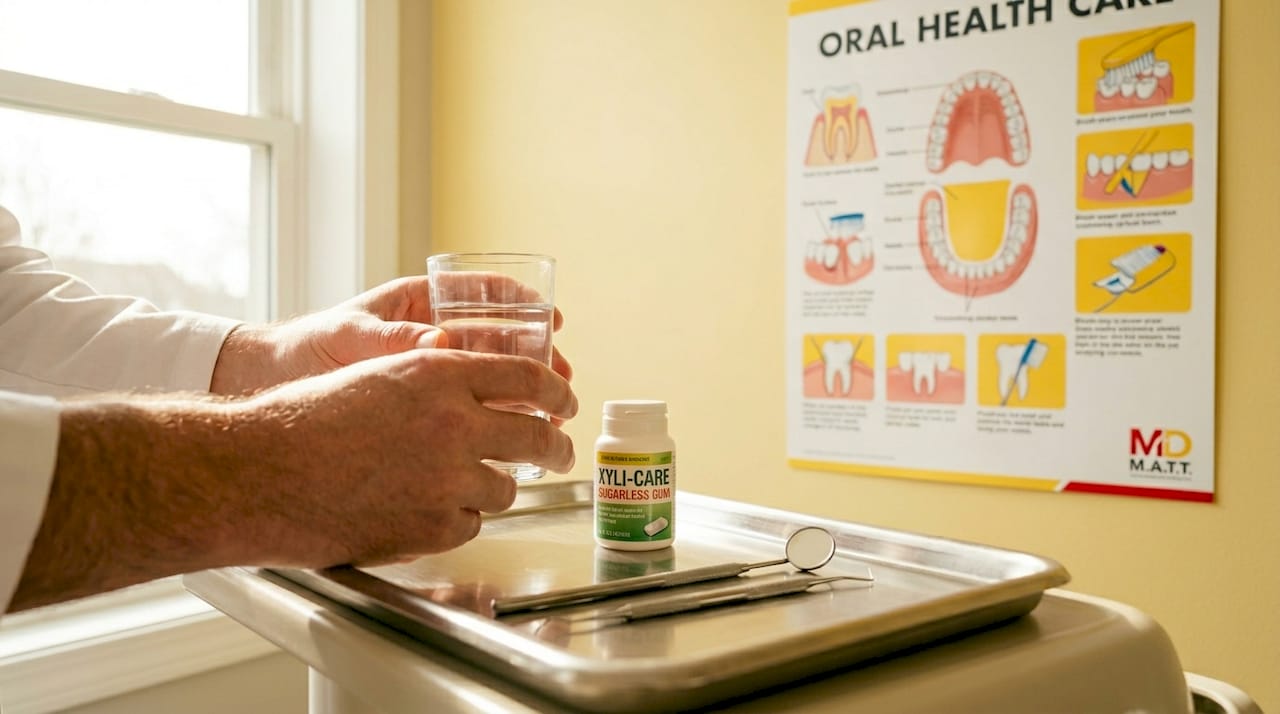
Pro Tip: Chewing sugarless gum containing xylitol between doses stimulates saliva production without adding sugar. The MSD Manual recommends xylitol gum specifically for managing medication-related dry mouth, and xylitol itself has been shown to reduce cavity-causing bacteria.
How does Suboxone dry mouth compare to other medication causes?
Suboxone is not the only medication that causes xerostomia, but its mechanism is distinct from the most common drug-related dry mouth causes. Most medication-related dry mouth comes from anticholinergic effects, where drugs block the nerve signals that tell salivary glands to produce saliva. Antihistamines, tricyclic antidepressants, bladder medications like oxybutynin, and many antipsychotics work this way. Suboxone’s primary mechanism is different: it creates a local acidic environment that suppresses saliva at the site of administration rather than blocking gland function systemically.
That distinction matters practically. Anticholinergic dry mouth tends to be constant throughout the day because the gland suppression is systemic. Suboxone-induced dry mouth, by contrast, peaks during the dissolution period and in the hours immediately following dosing. This means management strategies can be timed around doses in a way that is not possible with anticholinergic medications.
Other causes worth knowing about include:
- Sjögren’s syndrome: An autoimmune condition that destroys salivary gland tissue, causing severe and permanent dry mouth unrelated to any medication.
- Chemotherapy and radiation: Radiation to the head and neck can permanently damage salivary glands. Chemotherapy-induced dry mouth typically resolves after treatment ends.
- Mouth breathing: Chronic mouth breathing, often from nasal congestion or sleep apnea, dries oral tissues through evaporation rather than reduced gland output.
- Polypharmacy: Taking multiple medications simultaneously compounds dry mouth risk. If you are on Suboxone alongside antidepressants or other drugs with anticholinergic properties, your risk increases significantly.
Persistent dry mouth should prompt a medical evaluation to identify all contributing factors, not just Suboxone. If your symptoms feel severe or are not responding to basic management, tell your prescribing physician. There may be other medications or conditions adding to the problem.
Practical ways to manage dry mouth with Suboxone
Managing dry mouth on Suboxone requires addressing both the immediate discomfort and the longer-term dental risks. The good news is that most strategies are straightforward and do not require stopping your medication. Consistent habits make a meaningful difference, and starting them early in treatment is far easier than reversing dental damage later.
-
Rinse after dosing. Once the film has fully dissolved and absorption is complete, rinse your mouth with plain water. This removes acidic residue from your teeth and gums without affecting how the medication works.
-
Stay hydrated throughout the day. Sipping water regularly keeps oral tissues moist and helps compensate for reduced saliva flow. Avoid sugary drinks, which feed decay-causing bacteria, and limit caffeine and alcohol, both of which worsen dehydration.
-
Use xylitol products. Sugarless gum or mints containing xylitol stimulate saliva and actively reduce Streptococcus mutans populations. Carry them with you and use them between doses.
-
Avoid tobacco and alcohol-based mouthwashes. Tobacco reduces saliva production independently of Suboxone. Alcohol-based mouthwashes dry out oral tissues further. Switch to an alcohol-free fluoride rinse instead.
-
See your dentist regularly. Patients on Suboxone benefit from dental visits every six months at minimum, and some dentists recommend every three to four months for patients with active dry mouth. Fluoride treatments and prescription-strength fluoride toothpaste provide extra enamel protection.
-
Ask about saliva substitutes. Over-the-counter products like Biotène oral rinse or Oasis Moisturizing Mouth Spray provide temporary relief by mimicking saliva’s lubricating properties. They do not replace saliva’s protective functions, but they reduce discomfort significantly.
Pro Tip: Tell your dentist you are on Suboxone before any treatment. This allows them to tailor their approach, including recommending fluoride varnish applications and monitoring for early decay patterns associated with xerostomia.
You can also learn more about other Suboxone side effects to get a fuller picture of what to expect and how to stay ahead of them during treatment.
Key takeaways
Suboxone causes dry mouth through a combination of local acid exposure from its sublingual film and buprenorphine’s retention in oral tissue, making proactive dental care a non-negotiable part of treatment.
| Point | Details |
|---|---|
| Acidic film mechanism | Suboxone’s pH of ~3.4 suppresses saliva and erodes enamel during and after dosing. |
| Buprenorphine retention | Buprenorphine stays in oral tissue post-dose, prolonging dryness beyond the dissolution window. |
| Saliva loss consequences | Reduced saliva raises cavity risk, enables bacterial overgrowth, and accelerates enamel demineralization. |
| Timing-based management | Rinsing after absorption and using xylitol products are the most targeted interventions available. |
| Dental care is required | Regular dental visits with fluoride treatments are a clinical necessity, not optional, for patients on Suboxone. |
What I’ve learned from working with Suboxone patients
Dry mouth is one of the most consistently underreported side effects I see in patients on Suboxone. People going through recovery are managing so much at once that a dry mouth can feel trivial by comparison. But the dental consequences are not trivial, and I have seen patients develop significant decay within a year of starting treatment simply because no one told them what to watch for.
The most important shift I try to make with patients is reframing dry mouth as a manageable side effect rather than a reason to doubt the treatment. Suboxone works. It saves lives. The oral health risks are real, but they are also preventable with the right habits in place from day one. A patient who rinses after dosing, chews xylitol gum, and sees their dentist twice a year is in a fundamentally different position than one who does none of those things.
I also want to be direct about something: if your dry mouth is severe, constant, or accompanied by rapid dental deterioration, that warrants a conversation with your prescriber, not just your dentist. There may be contributing factors, including other medications or underlying conditions, that can be addressed. You deserve care that looks at the whole picture. At Mdmatt, that is exactly the approach we take. Recovery is not just about stopping opioid use. It is about building a life where your health, including your oral health, is protected and supported.
— Cory
Suboxone treatment with side effect support at Mdmatt
Dry mouth is a real and manageable part of Suboxone treatment, and you should not have to figure it out alone.

At Mdmatt, our Suboxone treatment clinic provides Medication-Assisted Treatment with the kind of patient-centered guidance that addresses side effects like xerostomia from the start. We counsel patients on oral health protection, hydration strategies, and when to involve a dentist, because we know that sustainable recovery depends on your whole health, not just your prescription. If you are in Maryland and want care that treats you with dignity and takes every part of your wellbeing seriously, reach out to our team today.
FAQ
What causes dry mouth when taking Suboxone?
Suboxone causes dry mouth because its sublingual film creates an acidic oral environment with a pH around 3.4, which suppresses saliva production during and after dissolution. Buprenorphine is also retained in oral tissue post-dose, prolonging the dryness beyond the few minutes it takes the film to dissolve.
Is Suboxone dry mouth permanent?
Suboxone-related dry mouth is not permanent in most cases. Medication-related xerostomia typically resolves when the contributing drug is stopped, though any dental damage that occurred during treatment may persist if preventive care was not in place.
Can dry mouth from Suboxone damage my teeth?
Yes. Reduced saliva from Suboxone use lowers oral pH and removes the protective buffering that prevents enamel erosion. Decreased salivary flow promotes bacterial growth and accelerates cavity formation, making regular dental care and fluoride use critical for anyone on long-term Suboxone therapy.
How do I manage dry mouth while on Suboxone?
Rinse your mouth with water after the film fully dissolves, chew xylitol-containing sugarless gum between doses, avoid alcohol and tobacco, and see your dentist every three to six months. The MSD Manual recommends xylitol gum and sugarless candy as first-line options for managing medication-related dry mouth symptoms.
Should I stop taking Suboxone because of dry mouth?
No. Dry mouth is a manageable side effect, and stopping Suboxone without medical guidance carries serious risks for people in recovery from opioid use disorder. Talk to your prescriber about your symptoms so they can help you address contributing factors and protect your oral health while continuing your treatment.

