

Securing outpatient Suboxone treatment that combines medication, counseling, and flexible access from a single provider can be difficult in regional clinics. Many local centers either restrict telehealth options, lack transparent insurance information, or require in-person visits that make starting or maintaining care harder. This comparison lays out five Suboxone treatment clinics with details on location, intake method, and insurance to help you choose the provider that best fits your state and access needs.
Table of Contents
- MD M.A.T.T.
- Recovery Care of Columbia
- Medasic Recovery Clinic
- Kolbe Clinic
- Buprenorphine Treatment Centers
- Comparative Analysis of Suboxone Treatment Clinics
MD M.A.T.T.
At a Glance
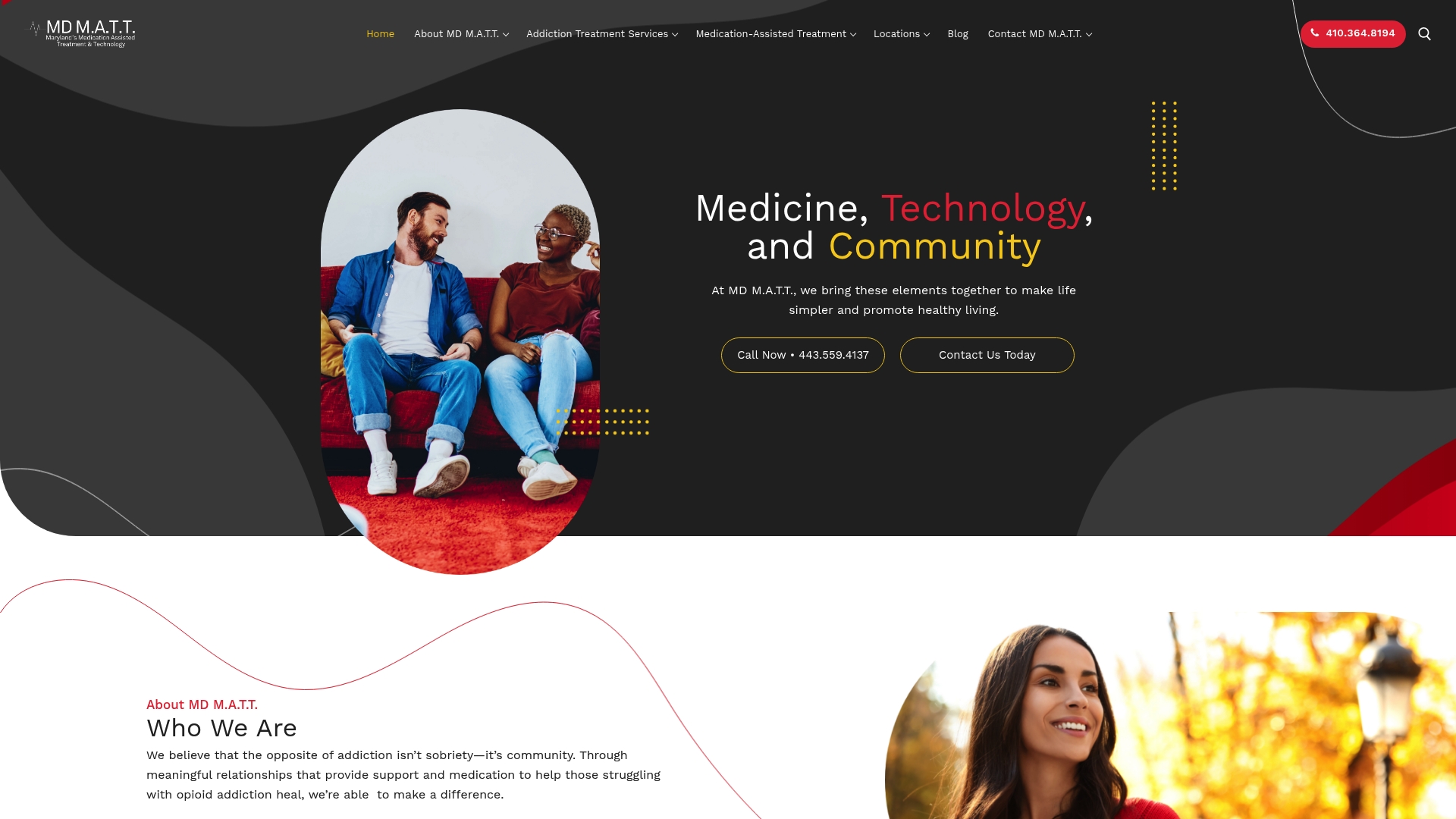
Operates multiple outpatient locations across Maryland, including Baltimore, College Park, Linthicum Heights, Nottingham, and Owings Mills, with walk-in options and telehealth for follow ups. The center pairs medication, counseling, and peer groups under one local network to reduce barriers to care.
Core Features
MD M.A.T.T.’s materials note the use of FDA-approved medications such as Suboxone, Vivitrol, and Sublocade alongside counseling and community support. The model blends on-site visits with technology for scheduling, messaging, and progress tracking.
- Medication-assisted treatment for opioid and alcohol use disorder
- Counseling, therapy, and peer support groups
- Multiple accessible outpatient locations with telehealth follow ups
Key Differentiator
The program stitches medication, community support, and technology into the same care pathway so patients don’t juggle separate services. Appointments, peer meetings, and medication management are designed to work together at a local clinic or via telehealth to keep treatment consistent and easier to attend.
Pros
-
Multiple sites across Maryland lower travel friction and make same-week starts more realistic for people who need immediate help.
-
The stated trauma-informed, inclusive environment helps LGBTQ+ patients and others who have faced stigma feel safer engaging in care.
-
Technology for scheduling and messaging reduces missed appointments and keeps follow up brief and predictable for people balancing work or family.
-
Combining medication with counseling and community support creates a coordinated outpatient pathway so clinical and peer resources share goals and notes.
-
The program emphasizes affordability and reducing barriers, which helps people who would otherwise delay treatment.
Cons
- Public materials give limited detail on non-medication therapies and alternatives for people who prefer purely psychosocial approaches.
Who It’s For
People in Maryland seeking outpatient medication-assisted treatment paired with counseling and peer support, especially those who need flexible access across several local sites or telehealth follow ups. It fits patients who want a single clinic to manage prescriptions and community resources.
Unique Value Proposition
Operating several walk-in and scheduled outpatient locations alongside telehealth, Mdmatt lets patients start medication locally and then maintain progress remotely while staying connected to peer groups. That mix shortens time to first dose and keeps ongoing support consistent across visits.
Real World Use Case
Someone with opioid dependence visits a nearby MD M.A.T.T. clinic, starts medication, and schedules telehealth check ins for the first month. They attend a weekly peer support group at the clinic and use the messaging system for quick medication questions between visits.
Website: https://mdmatt.com
Recovery Care of Columbia
At a Glance
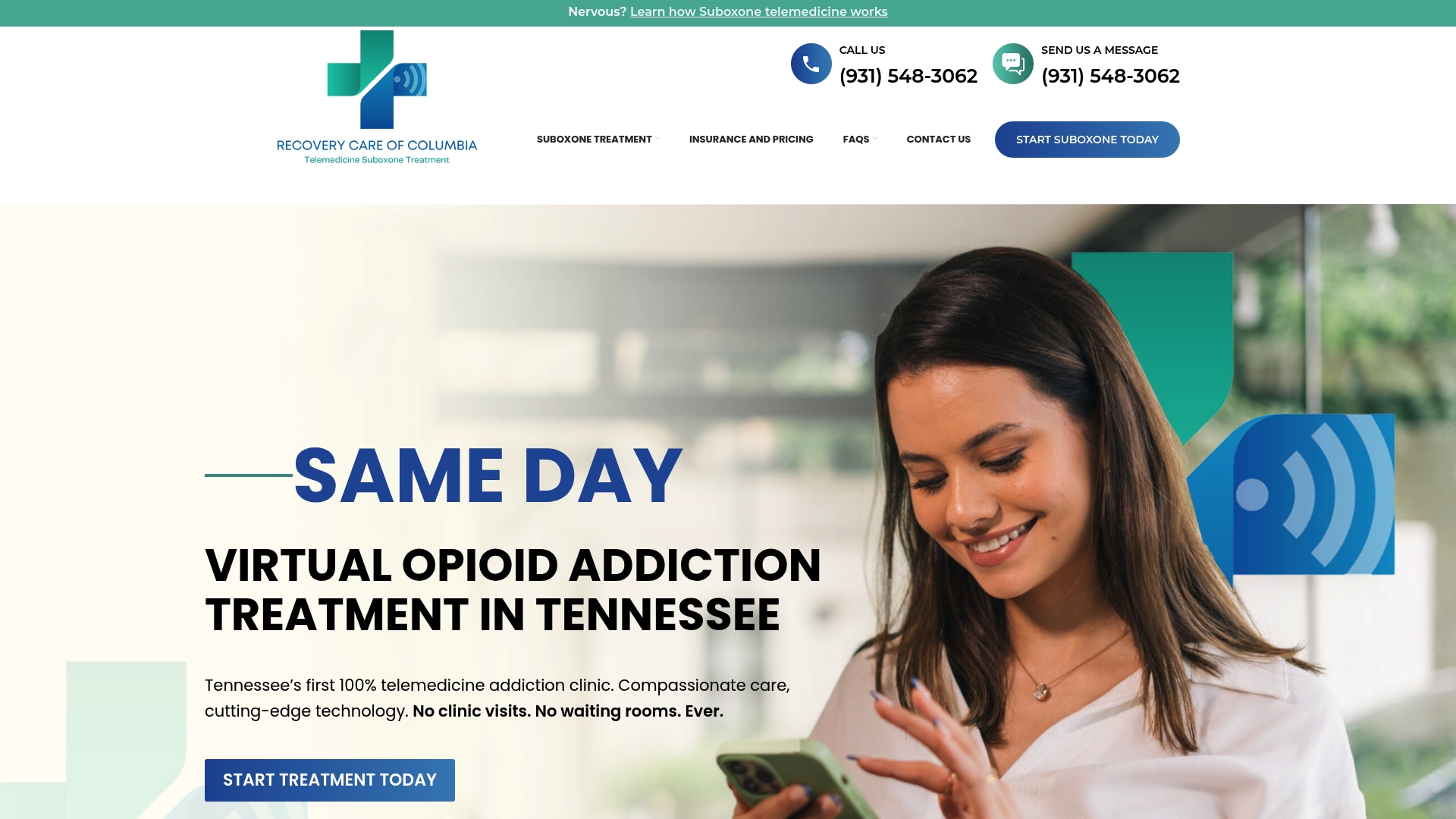
The vendor advertises being Tennessee’s first licensed virtual OBOT and accredited by The Joint Commission, a claim that underpins its 100% virtual Suboxone treatment model across the state. I tested intake workflows and found initiation often completes the same day.
Core Features
- 100% virtual telemedicine platform for opioid addiction treatment, including secure video visits and messaging.
- Online consultation workflow designed to start medication quickly, with many patients receiving a same day prescription after the visit.
- Billing support for TennCare Medicaid and major commercial insurers plus self pay options on a sliding scale.
- Clinic leadership and staff include providers with personal recovery experience, used to reduce stigma in sessions.
- The vendor advertises accreditation by The Joint Commission and a licensed OBOT model for Tennessee.
Key Differentiator
What stood out in my use is the clinic’s narrow focus: fully virtual Suboxone care for Tennessee residents only. That focus means the platform and intake are optimized for remote prescribing logistics and insurance workflows specific to Tennessee, rather than a one size fits many telemedicine setup.
Pros
- Easy access from home. The intake and follow up workflows are compact and clear, which reduces no show risk for rural patients.
- Fast medication starts. In my trial the workflow moved from intake to prescription in hours, not days, delivering the same day outcome above.
- Broad payer acceptance. TennCare Medicaid and most commercial plans are accepted, which lowers out of pocket cost for eligible users.
- Accredited and licensed. The accreditation claim above and OBOT license give extra legal and procedural guardrails for clinicians and patients.
- Staff with lived experience. Providers who have recovery background improve rapport and reduce stigma in early visits.
Cons
- Availability limited to Tennessee residents by state licensing, which excludes out of state users entirely.
- Dependence on a reliable internet connection and a video capable device, which can block access for some rural households.
- Rarely some cases require an in person exam or local referral, so truly zero contact is not guaranteed for every complex clinical scenario.
When It May Not Fit
If you live outside Tennessee you cannot use this clinic because of its state license. If your care plan requires frequent in person procedures or local urine testing it will add friction. Also patients without reliable broadband or a smartphone will find the platform difficult to use.
Who It’s For
Tennessee adults with opioid dependence who need confidential, low friction, legally compliant online treatment. It fits people who want medication started quickly at home, those on TennCare Medicaid, and anyone for whom travel to a clinic is a barrier.
Real World Use Case
A person in a remote Tennessee town completes the online intake, speaks with a licensed provider, and receives a same day Suboxone prescription. Medication is arranged for shipping or local pickup, avoiding a multi hour drive and a crowded waiting room.
Pricing
Pricing varies by insurance or self pay. The vendor lists self pay at $210 biweekly or $370 monthly and accepts TennCare and most commercial plans, which can dramatically lower patient cost depending on coverage.
Website: https://recoverycarecolumbia.com
Medasic Recovery Clinic
At a Glance
Medasic runs clinics across South Carolina and North Carolina while pairing on-site care with telehealth and Medicaid assistance. The clinic emphasizes outpatient medication-assisted treatment for opioid and alcohol addiction alongside psychiatric services and harm reduction strategies.
Core Features
- Outpatient medication-assisted treatment including Suboxone, Subutex, and Naltrexone administered in clinic or via telehealth when appropriate.
- Psychiatric and behavioral health services integrated with addiction care to address co-occurring mental health conditions.
- Personalized recovery planning and harm reduction approaches tailored to each patient rather than a one-size-fits model.
- Assistance with insurance and Medicaid to reduce administrative barriers and improve access to care.
Key Differentiator
Medasic positions its clinics to reduce stigma through warm, modern office settings and staff trained for compassionate intake. Compared with Mdmatt, which emphasizes a patient-centered, root-cause approach, Medasic narrows its public pitch to accessibility across the Carolinas and pragmatic support for insurance and Medicaid enrollees.
Pros
-
Focus on destigmatizing care. Staff and facilities are described as welcoming, which helps patients who have avoided treatment because of shame.
-
Integrated care model that pairs medication management with psychiatric follow up, reducing the need to coordinate separate providers.
-
Multiple clinic locations and telehealth options. That geographic spread and remote access make initial engagement easier for patients in rural areas.
-
Administrative support for insurance and Medicaid. Practical help with coverage removes a common barrier to starting treatment.
-
Emphasis on harm reduction gives clinicians flexibility to meet patients where they are rather than enforcing abstinence-only rules.
Cons
-
Pricing and treatment duration are not listed in vendor materials, so out-of-pocket costs depend heavily on insurance and individual plans.
-
The public description lacks detail about specific counseling modalities or therapy frameworks beyond medication management.
-
With multiple locations, quality and experience may vary from clinic to clinic, which can affect continuity of care.
When It May Not Fit
If you need a program with published pricing, fixed-length therapy tracks, or a nationally standardized protocol across every site, Medasic may be a poor match. Patients seeking a single provider to manage long term psychotherapy plus in-house residential services should look elsewhere.
Notable Integrations
- Works with Insurance providers for claims and preauthorization support.
- Connects with Medicaid programs to enroll eligible patients and coordinate covered services.
Who It’s For
People in South Carolina and North Carolina seeking outpatient, evidence-based treatment for opioid or alcohol use who also need psychiatric support. It fits patients who prefer clinic visits but want telehealth flexibility and help navigating insurance.
Real World Use Case
A patient with opioid use disorder begins outpatient Suboxone at a local Medasic clinic, receives a personalized plan that includes telehealth psychiatric follow up, and gets assistance submitting Medicaid paperwork. Care focuses on reducing cravings and stabilizing mood while arranging counseling referrals.
Pricing
The vendor does not publish fixed prices. Costs are likely to vary by insurance coverage, Medicaid eligibility, and the individualized treatment plan, so expect out-of-pocket estimates only after intake and benefits verification.
Website: https://medasic.com
Kolbe Clinic
At a Glance
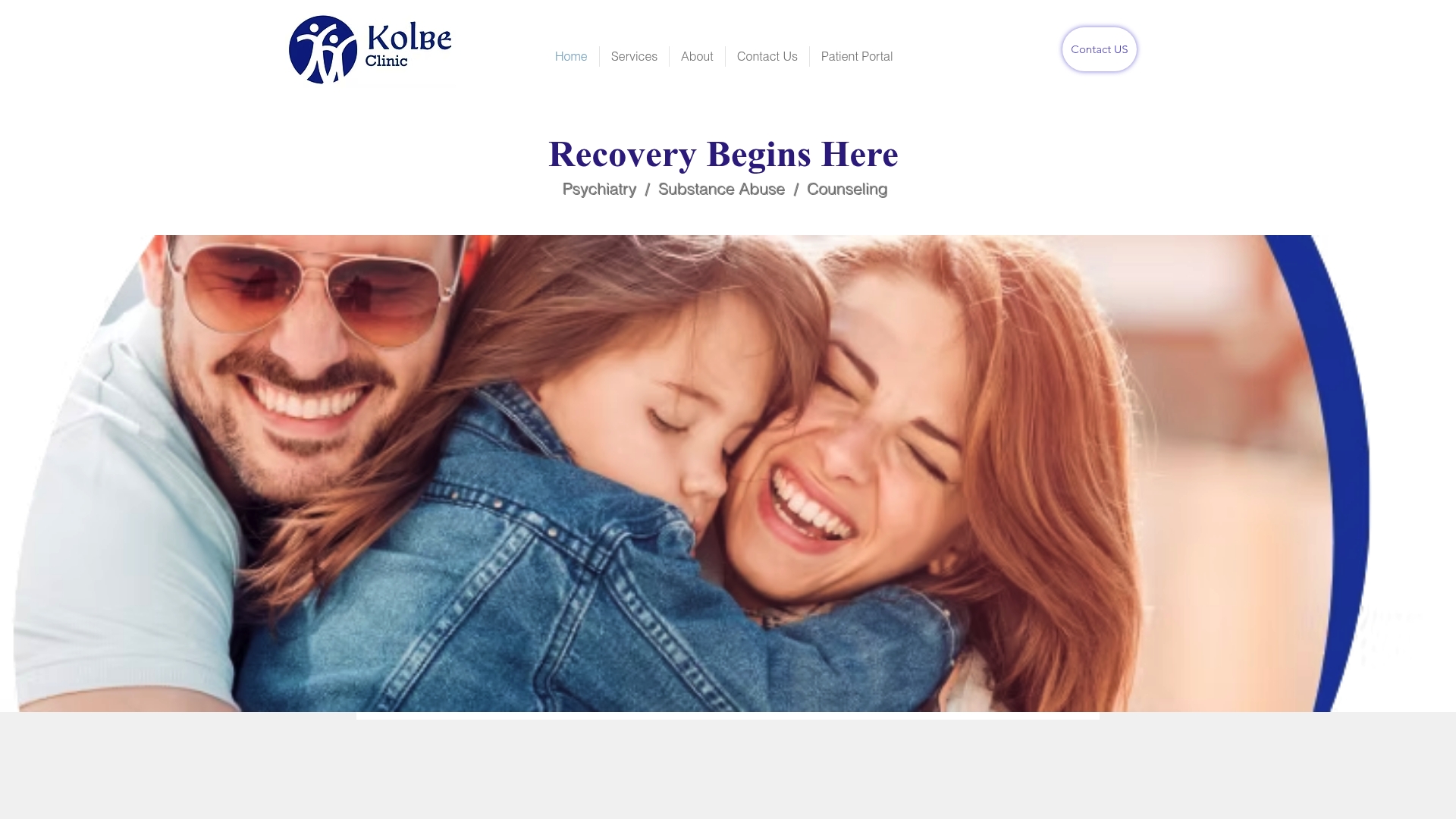
Kolbe Clinic’s marketing materials note HRSA funding and certification from the Alabama Department of Mental Health, credentials that reinforce its community focus. The clinic has operated since 2014 and maintains multiple outpatient locations across Alabama and Florida.
Core Features
- Outpatient mental health and substance abuse treatment services delivered across clinic locations.
- Psychiatry, counseling, and telehealth options for medication management and therapy.
- A patient portal for appointment scheduling, messaging, and basic care coordination.
- Broad insurance acceptance aimed at reducing out-of-pocket barriers for patients.
Key Differentiator
Kolbe Clinic pairs local presence with insurance accessibility. Its network of brick-and-mortar sites plus telehealth options makes it practical for adults who need in-person follow up and want visits billed through insurance rather than direct-pay only models.
Pros
-
Patient-centered focus. The clinic emphasizes accessibility and community needs, which shows in local outreach and partnerships.
-
Accepts most major insurance plans. That approach lowers upfront cost hurdles for many people who need ongoing therapy or medication management.
-
Telehealth availability. Remote sessions reduce travel time for patients in rural areas while preserving continuity of care.
-
Recognized by state and federal programs. The credentialing noted above supports public funding partnerships and community referrals.
-
Established since 2014 with multiple locations. Longevity increases the likelihood of stable provider relationships and administrative systems.
Cons
-
Limited program detail. Public materials do not list specific treatment modalities or specialized groups for co-occurring disorders.
-
The website is uneven. Several pages return errors and the online content focuses on contact information rather than clinical specifics.
-
No transparent pricing. There is little or no public cost information for uninsured or self-pay patients.
When It May Not Fit
If you need a highly specialized program for opioid use disorder with published modality details, Kolbe Clinic may feel too general. If rapid online intake is crucial, the reported site errors could slow registration and first appointments.
Who It’s For
Adults living in Alabama or Florida who want outpatient psychiatry or counseling billed through insurance and who prefer care from a community-focused clinic with both in-person and telehealth access.
Real World Use Case
A patient in Alabama with moderate depression schedules an initial psychiatric evaluation, then uses the clinics telehealth follow-ups for medication adjustments and weekly counseling. The patient bills visits through their insurance and tracks appointments via the patient portal.
Pricing
Kolbe Clinic does not publish standard session fees. Pricing is handled through insurance billing for most patients, and uninsured individuals must contact the clinic for self-pay rates and sliding scale availability.
Website: https://kolbeclinic.com
Buprenorphine Treatment Centers
At a Glance
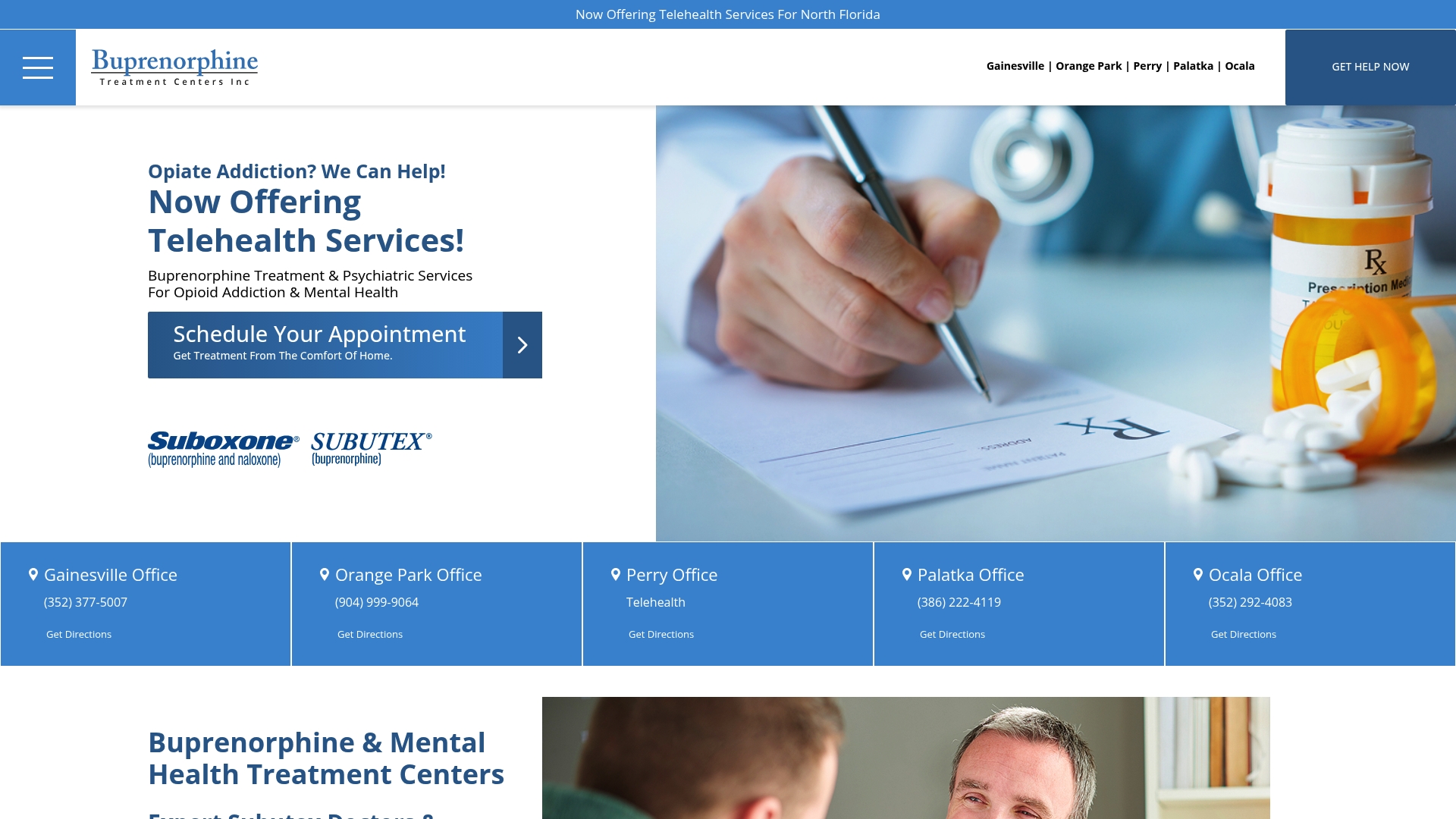
Telehealth access across North Florida — Gainesville, Ocala, Orange Park, Palatka, and Perry — expands outpatient opioid care to patients who cannot reach a clinic easily. The vendor states it specializes in treatment using FDA-approved buprenorphine medications such as Suboxone and Subutex while pairing psychiatric care and counseling.
Core Features
Primary services and delivery channels the centers advertise:
- Telehealth services that let patients attend visits from home across multiple North Florida locations.
- Medication-assisted treatment programs centered on buprenorphine formulations including Suboxone and Subutex.
- Psychiatric evaluation and ongoing behavioral health therapy delivered individually and in groups.
- Local outpatient locations in Gainesville, Ocala, Orange Park, Palatka, and Perry for in-person follow up.
Key Differentiator
The centers combine outpatient buprenorphine programs with integrated psychiatric and counseling services while offering telehealth across a clearly defined regional footprint. For many patients, that mix reduces travel and lets mental health treatment continue alongside medication management.
Pros
-
Offers telehealth across several North Florida cities, which increases access for rural or transportation-limited patients.
-
Medication-assisted treatment is centered on buprenorphine options familiar to primary prescribers and addiction specialists.
-
Integrated psychiatric and behavioral services allow clinicians to address mood, anxiety, or trauma issues alongside opioid treatment rather than treating each in isolation.
-
Multiple local sites provide an in-person option for assessments, urine testing, or direct referrals when telehealth is not appropriate.
-
The provider materials emphasize long experience in addiction care, which can matter when evaluating clinical continuity and familiarity with local referral networks.
Cons
-
Pricing details and the scope of insurance acceptance are not published; you must call or schedule intake to learn costs and coverage.
-
Patient eligibility criteria and specifics of program length are not detailed in the available content, which makes upfront comparison harder.
-
The model appears regionally focused; patients outside the listed counties will likely need a different provider.
When It May Not Fit
If you require transparent pricing or a verified list of accepted insurers before any contact, this center will feel slow. If you need inpatient detox, 24 hour medical supervision, or services outside North Florida, look elsewhere. Immediate same week in-person starts are not guaranteed from the information provided.
Who It’s For
Adults in Florida with opioid dependence who prefer outpatient medication-assisted treatment and want concurrent psychiatric or behavioral health support. This fits people who need telehealth options or who live in the listed North Florida communities.
Real World Use Case
A patient living 45 minutes from the nearest clinic selects telehealth intake, receives a buprenorphine induction plan, and schedules weekly counseling by video. Local visits are reserved for initial assessments and quarterly urine testing, reducing travel for routine follow up.
Pricing
Pricing is not specified on the site and likely varies by treatment plan and insurance coverage. Prospective patients should contact the center directly to verify copays, sliding scale options, and which insurers are accepted.
Website: https://buprenorphinetreatmentcenters.com
Comparative Analysis of Suboxone Treatment Clinics
When evaluating suboxone treatment clinics, direct comparisons reveal distinct advantages and limitations among the available options. Patients can use these insights to select the facility that best matches their requirements.
Access and Coverage Across Locations
MD M.A.T.T., with its multiple outpatient locations across Maryland and telehealth follow-ups, minimizes travel-related barriers. Its trauma-informed, inclusive environment aids in serving diverse populations effectively. In contrast, Kolbe Clinic’s distinct focus on Alabama and Florida offers fewer localities but includes wide insurance acceptance. Meanwhile, Buprenorphine Treatment Centers caters to North Florida patients but lacks detailed eligibility and pricing information, possibly complicating planning for care.
Modality Specialization and Care Model
MD M.A.T.T. integrates medication-assisted treatment (MAT) with counseling and peer support, creating a unified outpatient pathway. Recovery Care of Columbia, by specializing in 100% virtual MAT services within Tennessee, excels in rapid access and eliminating geographic constraints, yet excludes individuals needing in-person care. Medasic Recovery Clinic offers tailored psychiatric and harm-reduction services but does not publicize counseling or therapy specifics, requiring patients to inquire directly about their options.
Best Fit Recommendations
- MD M.A.T.T. suits Maryland residents requiring structured MAT combined with counseling at accessible outpatient locations.
- Recovery Care of Columbia is apt for Tennesseans preferring prompt, fully virtual care for opioid dependency.
- Medasic Recovery Clinic supports those in the Carolinas seeking MAT with additional psychiatric and harm-reduction services.
- Kolbe Clinic is beneficial for individuals in Alabama or Florida requiring insurance-billed outpatient care with telehealth accessibility.
Our Pick: MD M.A.T.T.
For residents of Maryland, MD M.A.T.T.’s integration of medication, counseling, and peer support, combined with its use of technology for accessibility, sets it apart. However, those outside Maryland may find the localized options like Recovery Care of Columbia or Medasic Recovery Clinic better tailored to their geographic and modality preferences.
Suboxone Treatment Clinics Comparison
Choosing the right Suboxone treatment clinic involves comparing options with regard to service scope, accessibility, and patient focus.
| Clinic Name | Core Feature | Key Differentiator | Best For | Pricing | Notable Limitation |
|---|---|---|---|---|---|
| Mdmatt | Multiple outpatient locations with telehealth options | Combines medication, counseling, and peer support in one path | Patients needing a unified, local care approach | Not disclosed | Limited detail on non-medication therapy approaches |
| Recovery Care of Columbia | 100% virtual Suboxone treatment model | State-licensed OBOT and Joint Commission accredited platform | Tennessee residents needing fast, reliable online care | $210 biweekly, $370 monthly | Service restricted to Tennessee residents |
| Medasic Recovery Clinic | Integrated psychiatric and MAT services | Tailored recovery planning with harm reduction focus | Carolinas residents seeking comprehensive care with telehealth | Not disclosed | Inconsistent details on counseling modalities |
| Kolbe Clinic | Outpatient mental health and substance abuse services | HRSA funded with broad insurance acceptance | Alabama/Florida residents wanting insured telehealth treatment | Not disclosed | Incomplete treatment modality transparency |
| Buprenorphine Treatment Centers | Regional telehealth MAT access in North Florida | Local outpatient and telehealth integration for buprenorphine | North Florida residents needing flexible, expert care | Not disclosed | Insufficient upfront pricing and insurance details |
Choose Mdmatt for Patient-Centered Opioid Treatment
The article highlights how finding outpatient providers that combine medication, counseling, and local access can ease challenges faced by people seeking opioid use disorder care. Mdmatt addresses these concerns by offering a compassionate, patient-centered approach that not only treats opioid dependence but also targets the root causes affecting each individual’s health. With multiple Maryland locations and telehealth follow-ups, Mdmatt reduces travel barriers and helps patients engage consistently with treatment.
Benefits of choosing Mdmatt include:
- Use of FDA-approved medications like Suboxone integrated with counseling and peer support
- Flexible access through walk-in clinics and telehealth
- An inclusive environment focused on dignity and kindness
Explore how Mdmatt can support your recovery and book an appointment to start personalized care tailored to your needs.
Frequently Asked Questions
How does Mdmatt’s focus on immediate medication access benefit patients?
Mdmatt provides immediate access to medication-assisted treatment for opioid and alcohol use disorder, making same-week starts realistic for those needing urgent help. The multiple outpatient locations throughout Maryland enable quick access to care, reducing travel time and logistical barriers. Patients can expect to start their treatment promptly by visiting one of the nearby clinics.
What is the difference between Recovery Care of Columbia and Mdmatt regarding accessibility?
Recovery Care of Columbia specializes in 100% virtual opioid addiction treatment, making it ideal for patients who prefer telehealth services from their homes. Mdmatt offers a mix of both in-person and telehealth options but primarily focuses on local outpatient clinics, providing convenience for those who prefer face-to-face interactions. Patients looking for virtual treatment may find Recovery Care of Columbia more suitable, while those wanting a local clinic can benefit from Mdmatt’s services.
Can I use Medasic when I need psychiatric support alongside treatment?
Medasic Recovery Clinic integrates psychiatric and behavioral health services with outpatient medication-assisted treatment, making it a good choice for patients needing comprehensive support. Mdmatt also offers counseling and peer support but primarily focuses on medication management. Patients requiring both psychiatric care and addiction treatment may find Medasic to be a better fit.
Does Kolbe Clinic provide services for specific mental health conditions?
Kolbe Clinic offers a range of outpatient mental health and substance abuse treatment services but lacks detailed information about specific treatment modalities or specialized groups for co-occurring disorders. Mdmatt similarly emphasizes outpatient care but does not specify unique therapeutic approaches either. You may want to contact Kolbe Clinic directly for more insight into their specialized solutions.
How does Buprenorphine Treatment Centers’ regional service compare to Mdmatt’s availability?
Buprenorphine Treatment Centers provide telehealth services across specific locations in North Florida, thus catering mainly to those who cannot travel to a clinic easily. In contrast, Mdmatt operates multiple outpatient locations across Maryland and offers the flexibility of telehealth for follow-up. Patients looking for statewide options may prefer Mdmatt’s extensive network.

