

Accessing outpatient opioid addiction treatment that combines medication management, therapy, and quick enrollment is often hindered by long waitlists, insurance barriers, or having to coordinate care across multiple providers. Many clinics lack same-day appointments, restrict telehealth access, or give unclear pricing and staffing transparency, making it difficult to start and stick with a recovery plan. This guide breaks down key differences in access, services, medication options, and insurance between six leading outpatient opioid addiction clinics so you can choose a provider that meets your needs without delay.
Table of Contents
- MD M.A.T.T.
- MATClinics
- GHR Center For Addiction
- Ruth Clinic
- 2nd Chance Clinics
- Mathers Recovery
- Comparative Analysis of Outpatient Opioid Addiction Clinics
MD M.A.T.T.
At a Glance
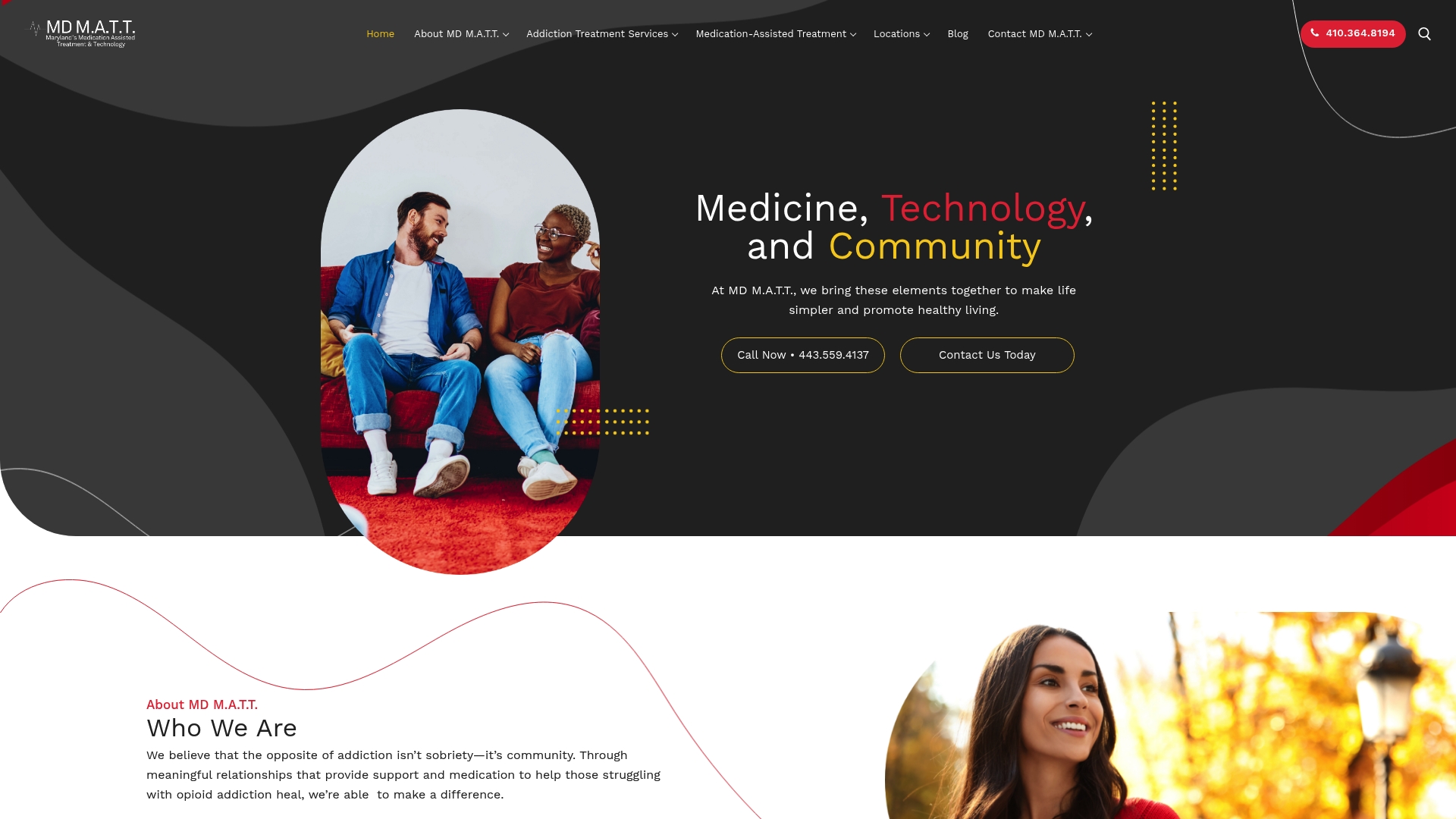
MD M.A.T.T. advertises same-day appointments and telehealth options tied to in-person community groups across five Maryland locations. That combination targets quick access while keeping local peer support central to treatment.
Core Features
The vendor notes use of FDA-approved medications such as Suboxone, Vivitrol, and Sublocade alongside counseling and behavioral therapies. Those medications form the medical backbone of outpatient care.
Community support groups and peer networks run alongside individual counseling. Same-day visits and telehealth options are available to shorten the gap between asking for help and receiving care.
Key Differentiator
MD M.A.T.T. links technology and community at the clinic level. Telehealth and same-day scheduling are designed to plug patients directly into local peer groups and counseling without forcing a wait for intake or referral.
Pros
-
Combined medication, therapy, and peer support creates multiple treatment touchpoints rather than a single-service clinic. That reduces the number of separate providers you must coordinate with.
-
Multiple convenient locations across Maryland make follow-up and group attendance realistic for people in Baltimore, College Park, Linthicum Heights, Nottingham, and Owings Mills.
-
LGBTQ-friendly services lower a common barrier to care for sexual and gender minority patients, making clinical conversations less likely to stop at intake.
-
The use of telehealth and same-day access improves initial engagement. For many people with opioid dependence, that responsiveness determines whether they show up for the first prescription or counseling session.
-
The clinic accepts insurance which can reduce out-of-pocket cost and makes long-term participation more feasible for working adults.
Cons
- Limited publicly available third-party data on long-term outcomes or relapse rates makes it hard to compare effectiveness against other providers.
Who It’s For
Adults in Maryland seeking outpatient opioid treatment who want fast access and local peer support. This fits people who value combining medication management with regular counseling and community meetings rather than separate services spread across systems.
Unique Value Proposition
Same-day appointments and integrated telehealth that immediately connect patients to local peer groups change the early treatment math. Instead of waiting days for intake and then hunting for a support group, you can start medication management and join community meetings in the same week.
That structure reduces the number of handoffs and keeps initial momentum in recovery.
Real World Use Case
A Baltimore resident calls in feeling ready to stop using opioids. They book a same-day appointment, begin medication-assisted treatment with one of the clinic medications, and join a local support group within days. Regular telehealth check-ins replace some commute time while counseling continues in person.
Website: https://mdmatt.com
MATClinics
At a Glance
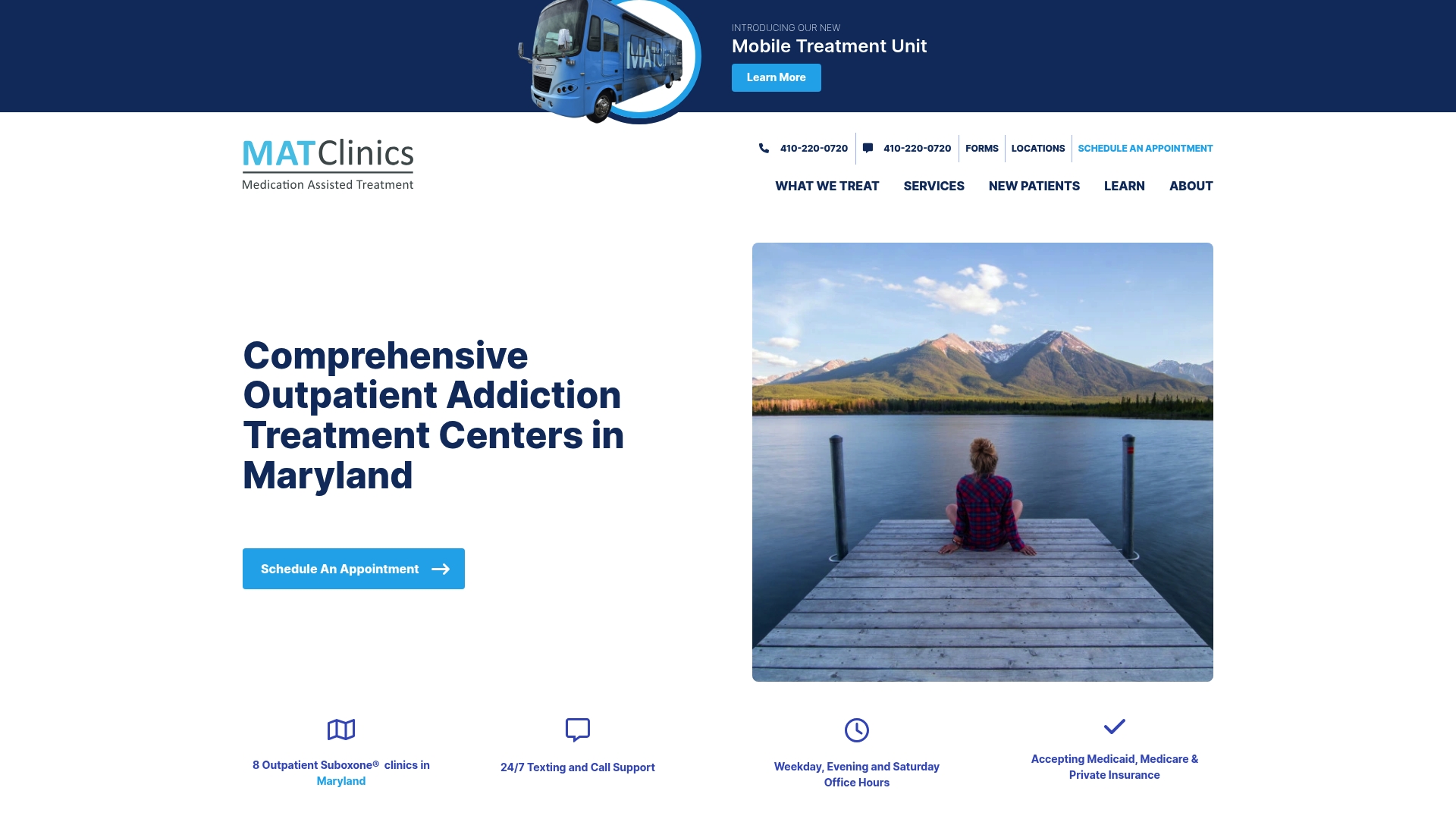
MATClinics’ marketing materials highlight a mobile treatment unit that brings medication-assisted treatment and counseling directly to underserved Maryland neighborhoods. The network is family-owned, runs multiple clinic locations, and advertises evening and Saturday hours with same-day appointment options.
Core Features
-
Medication-assisted treatment; the vendor’s materials reference FDA-approved medications such as Suboxone®, Sublocade®, Vivitrol®, Brixadi®, and Zubsolv® for opioid and alcohol use disorders.
-
Behavioral health services including individual counseling, group therapy, psychiatry, and case management integrated with medication management.
-
A mobile treatment unit plus multiple physical clinics that offer telemedicine and in-person visits, with extended hours to improve access for people who work or lack daytime transport.
-
Patient resources: support groups, crisis support, educational materials, and online intake forms intended to speed enrollment.
Key Differentiator
The mobile treatment unit is the clearest on-the-ground advantage. Bringing medication and therapy to parking lots, community centers, or rural stops reduces travel barriers and gets treatment to people who otherwise have limited options in Maryland.
Pros
-
The clinics emphasize patient education and family resources, which helps loved ones understand medication options and recovery steps.
-
In-person and telemedicine options increase practical access for patients balancing work, childcare, or transportation constraints.
-
Multiple locations and extended hours support same-day starts, which can be decisive when someone is ready to begin treatment.
-
The family-owned structure generally creates a consistent local leadership presence and a point of accountability for patients and referring clinicians.
-
MATClinics accepts Medicaid, Medicare, and private insurance, lowering out-of-pocket barriers for many patients.
Cons
-
There is limited third-party patient feedback available; the site and materials are primarily informational rather than a community-rated review source.
-
Little publicly available detail on long-term outcomes or patient satisfaction metrics makes independent evaluation harder.
-
Technology partnerships are not spelled out beyond telemedicine and online forms, so interoperability with external electronic health record workflows is unclear.
When It May Not Fit
If you want a provider with a large archive of independent patient reviews or a national research footprint, MATClinics looks more like a regional service hub than a publicly audited program. Also, those needing integrated EHR exports for third-party care networks should confirm capabilities directly.
Who It’s For
People in Maryland seeking outpatient medication-assisted treatment for opioid, alcohol, or stimulant use disorder who value flexible scheduling, insurance coverage options, and local access points including mobile services.
Real World Use Case
A person in suburban Maryland calls or uses the website, books a same-day appointment, and begins outpatient MAT with a buprenorphine regimen plus weekly counseling. If transport is limited, the mobile unit or telemedicine visit fills the gap until ongoing in-person care is arranged.
Pricing
Not applicable — informational only. MATClinics states it accepts Medicaid, Medicare, and private insurance; exact patient costs will depend on plan coverage, specific medications chosen, and whether services are delivered via the mobile unit, telemedicine, or in-clinic.
Website: https://matclinics.com
GHR Center For Addiction
At a Glance
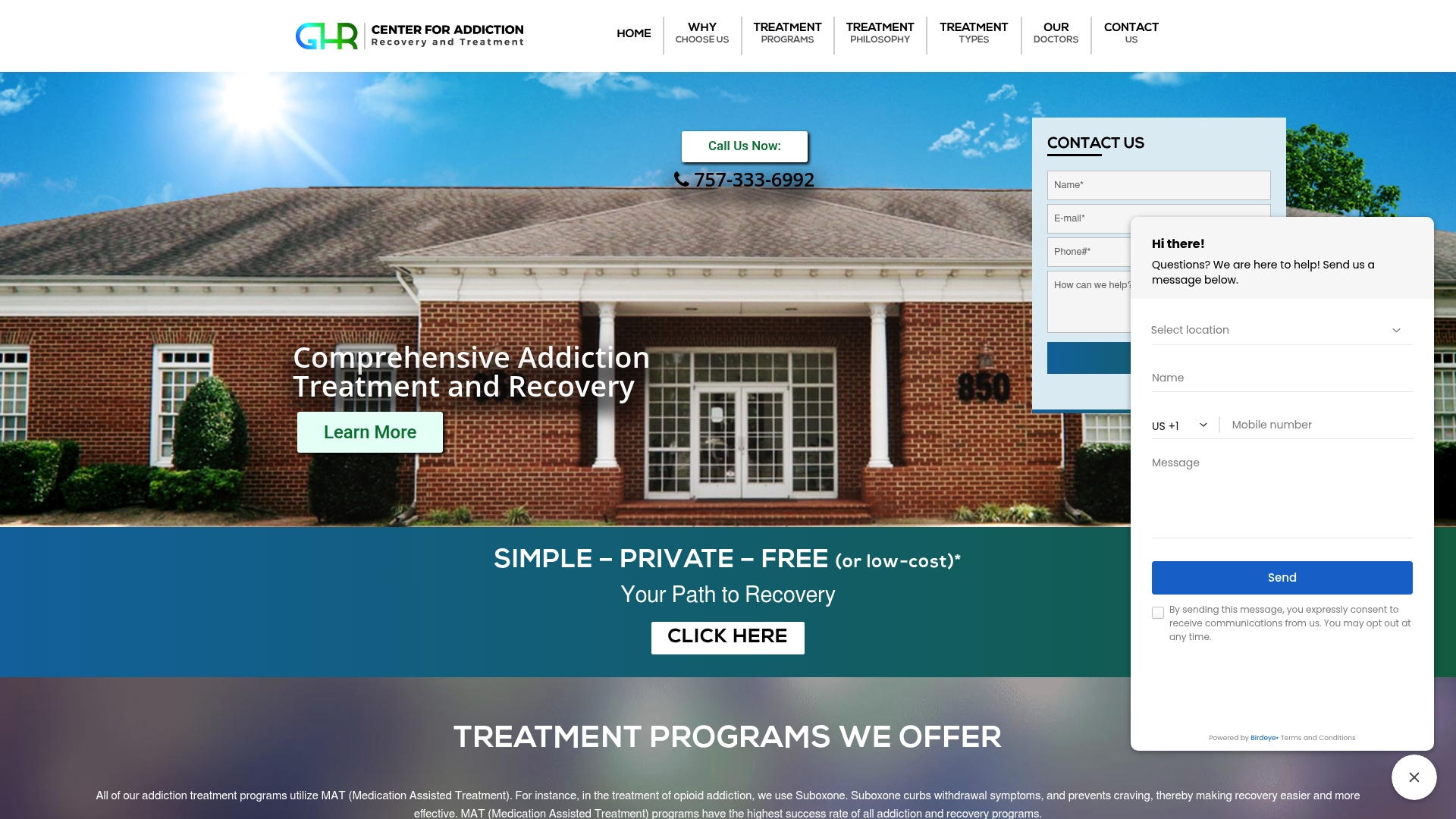
Accepts Medicaid and Medicare along with most major private insurers — a concrete access advantage for many patients in Norfolk, VA. The vendor advertises Gold Card status and a treatment emphasis on Medication Assisted Treatment using Suboxone.
Core Features
Multidisciplinary clinics with medical, behavioral health, and family therapy teams deliver coordinated care tailored to each patient.
- Medication Assisted Treatment (MAT) with Suboxone for opioid dependence.
- Levels of care spanning SBIRT, intensive outpatient (IOP), OBOT/OTP, and structured aftercare programs.
- Psychopharmacological management for co-occurring mental health conditions plus specialized group therapy for trauma, anger, and mindfulness.
Key Differentiator
GHR Center For Addiction pairs on-site medical management with a full therapy roster and broad insurance acceptance, which suits patients who need clinic-based structure rather than primarily remote management. That clinic-first model contrasts with Mdmatt’s outpatient doctor office approach, which centers on ongoing medication management and psychiatry in an outpatient setting.
Pros
- Removes a common cost barrier by accepting Medicaid and Medicare, making ongoing treatment more attainable for insured patients.
- Integrated care teams let clinicians coordinate medication, individual therapy, and family work without fragmented referrals.
- The MAT focus above shortens the path to starting stabilization medications when clinically appropriate, rather than requiring multiple external referrals.
- Dedicated groups for co-occurring disorders and trauma provide targeted skills training alongside medication management.
- Aftercare programs keep patients connected after formal treatment ends, supporting relapse prevention and continuity of care.
Cons
- The center provides limited publicly available data on specific patient outcomes or documented success rates.
- No published details on program duration or exact out‑of‑pocket costs; prospective patients must contact the clinic or insurers for estimates.
- People without insurance coverage may face barriers because the model relies heavily on payor reimbursement.
When It May Not Fit
If you live outside the Norfolk, VA area or need a purely telehealth solution, this clinic-first model will not match your needs. If transparent, published outcome metrics or fixed program prices are a priority, you will likely need to request that information directly before enrolling.
Who It’s For
Adults in Norfolk struggling with opioid or other substance dependence who also need simultaneous mental health care and prefer in-person, team-based treatment. Family members seeking therapy and patients who rely on Medicaid or Medicare will find the access model particularly relevant.
Real World Use Case
A patient with opioid dependence plus depression begins MAT at the clinic, attends individual psychotherapy and family sessions, and transitions into an aftercare group. The team adjusts psychotropic medication and coordinates follow-up care to reduce relapse risk.
Pricing
Not applicable — informational only. The center does not publish fixed program prices online; costs vary by level of care and insurance coverage. Prospective patients should contact billing or check insurer benefits for outpatient and intensive services.
Website: https://treatmentva.com
Ruth Clinic
At a Glance
Ruth Clinic accepts most major insurances, TennCare, and offers self-pay plans, which makes outpatient access in Columbia, Tennessee easier for many patients. The practice pairs medication management with counseling under one local roof.
Core Features
According to the clinic, they offer Medication-Assisted Treatment (MAT) alongside counseling and medical oversight.
- Medication management using medications such as buprenorphine in monitored settings.
- Individual and group therapy sessions run by licensed counselors and nurses.
- Ongoing medical review and health monitoring customized to patient needs.
- Educational resources and a learning center that support relapse prevention and lifestyle change.
Key Differentiator
Ruth Clinic centers treatment on tailored recovery plans that combine medication management and therapy within a judgment-free outpatient setting. The coordination between physicians, counselors, and nurses aims to keep medical oversight and psychosocial support tightly aligned.
Pros
- Provides an integrated medical and counseling approach so patients do not have to stitch together separate providers.
- Personalized treatment plans adapt over the course of recovery rather than following a single template.
- Insurance-friendly intake accepts most major carriers and TennCare, lowering financial barriers for many local adults.
- Staffed by physicians, counselors, and nurses experienced in addiction care, which helps with continuity of care.
- The clinic emphasizes patient education and lifestyle support alongside pharmacologic treatment.
Cons
- Public information lacks granular detail on specific medication protocols and dosing schedules.
- No clear mention of complementary or alternative therapies beyond medication and counseling.
- Material available online focuses on services and staff rather than measurable long-term outcomes or published success rates.
When It May Not Fit
If you need inpatient detox, residential treatment, or an intensive day program, Ruth Clinic’s outpatient focus will not meet that need. Patients seeking explicitly holistic or alternative modalities may find the service mix limited compared with specialty centers.
Who It’s For
Adults in Columbia, Tennessee who prefer outpatient care and want both medication and therapy coordinated by a local practice. This fits people who need insurance-based options or straightforward self-pay plans and who value a structured medical follow-up.
Real World Use Case
A patient schedules an intake, completes a medical review, and begins buprenorphine under supervision. They attend weekly individual therapy and a peer group while clinicians monitor vitals and adjust medication. Educational sessions reinforce relapse prevention strategies.
Pricing
The clinic does not publish flat rates publicly. Payment comes through most major insurers, TennCare, or a self-pay arrangement set at intake and based on services used.
Website: https://ruthclinic.com
2nd Chance Clinics
At a Glance
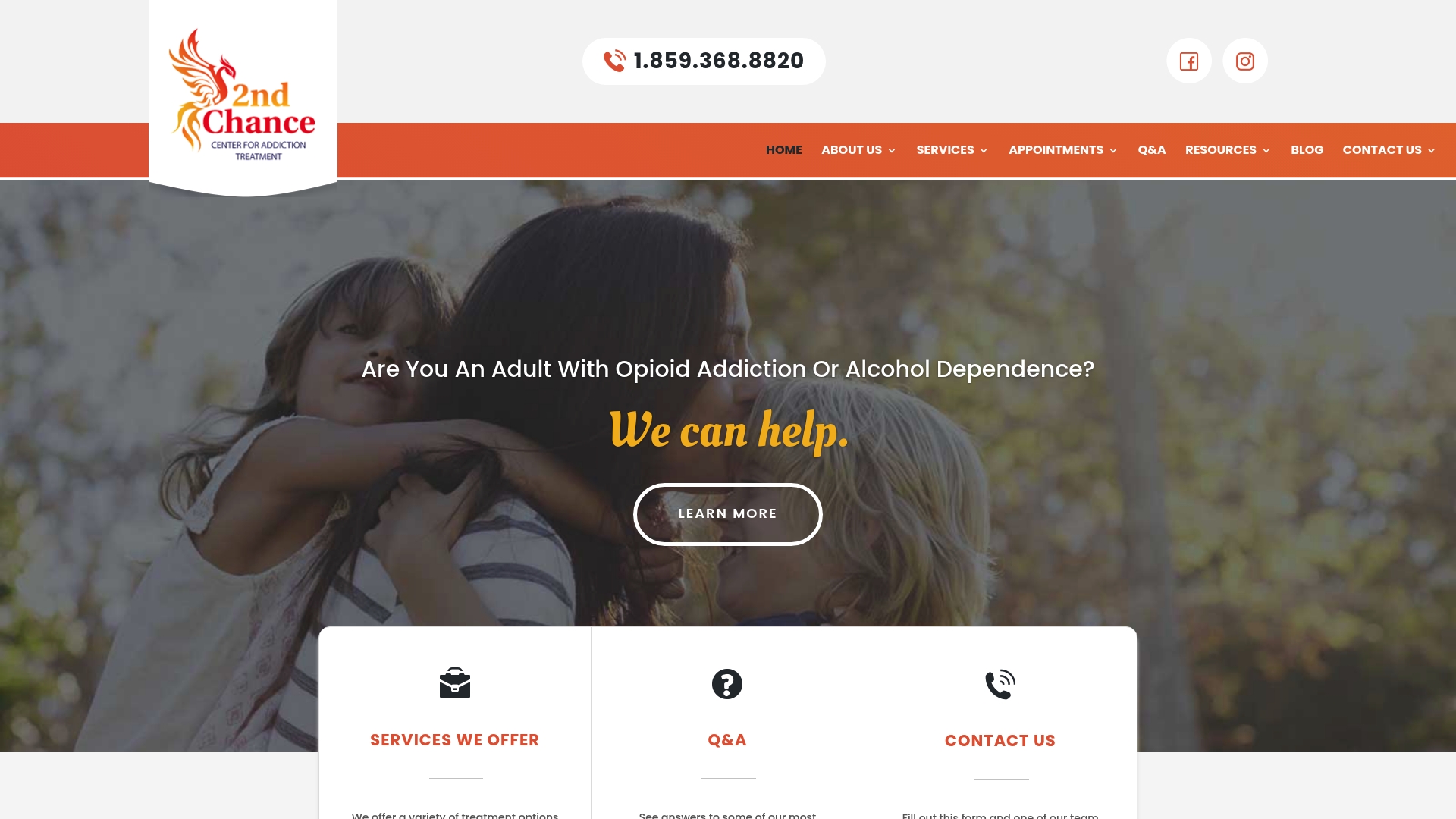
2nd Chance Clinics reports CARF accreditation and operates multiple treatment sites in Lexington and Somerset, Kentucky. The chain has grown since 2012 to focus on opioid addiction and alcohol dependence with combined medical and counseling services in a community-oriented setting.
Core Features
- Medication Assisted Treatment (MAT) programs that pair medication with counseling for opioid and alcohol dependence.
- Individual and group substance use counseling offered onsite.
- Clinical management of behavioral and medical comorbidities to support whole-person care.
- Multiple physical facilities in Lexington and Somerset designed for outpatient addiction treatment.
Key Differentiator
The main distinguishing point is the clinic network’s emphasis on accredited, in-person care across two Kentucky locations. That accreditation claim above signals an organizational focus on standardized processes and external review rather than a purely informal recovery program.
Pros
- Experienced clinical team and the CARF accreditation claim support trust for people seeking documented standards in care.
- Offers a broad suite of treatment options for opioid and alcohol dependence, combining medication with counseling under one roof.
- Multiple locations reduce travel burden for residents in central and southern Kentucky, which matters for frequent clinic visits.
- Patient testimonials and a community focus suggest a supportive environment that helps retention in early recovery.
- Expanded facilities since 2012 indicate operational scale and capacity to accept more patients than a single-site practice.
Cons
- The website provides limited detail on specific treatment modalities, medication protocols, or technologies used in care delivery.
- No pricing or explicit information about insurance acceptance and sliding scale fees appears online, which complicates cost planning.
- Primary focus on opioid and alcohol dependence means specialized treatments for stimulant or behavioral addictions may be limited.
When It May Not Fit
If you need clear, upfront pricing or a published list of accepted insurers, this clinic will frustrate you. If your substance use concern is outside opioid or alcohol dependence, look for providers that explicitly list care for stimulants, gambling, or process addictions. The online materials lack program-level detail for people who want exact clinical protocols before contacting intake.
Who It’s For
Adults living in Kentucky seeking outpatient medication assisted treatment combined with counseling. This fits people who prefer in-person visits, value external accreditation, and want a community-focused clinic rather than an exclusively telehealth or peer-led program.
Real World Use Case
A person with opioid dependence enrolls in MAT, sees a prescriber for medication management, and attends weekly individual counseling at the Lexington site. Over months they address co-occurring anxiety with coordinated medical follow up and gradual reduction in illicit opioid use.
Pricing
The website lists informational content only and does not publish pricing. Prospective patients should contact intake directly to ask about insurance, self-pay options, or sliding scale fees given the absence of online cost details.
Website: https://2ndchanceclinics.com
Mathers Recovery
At a Glance
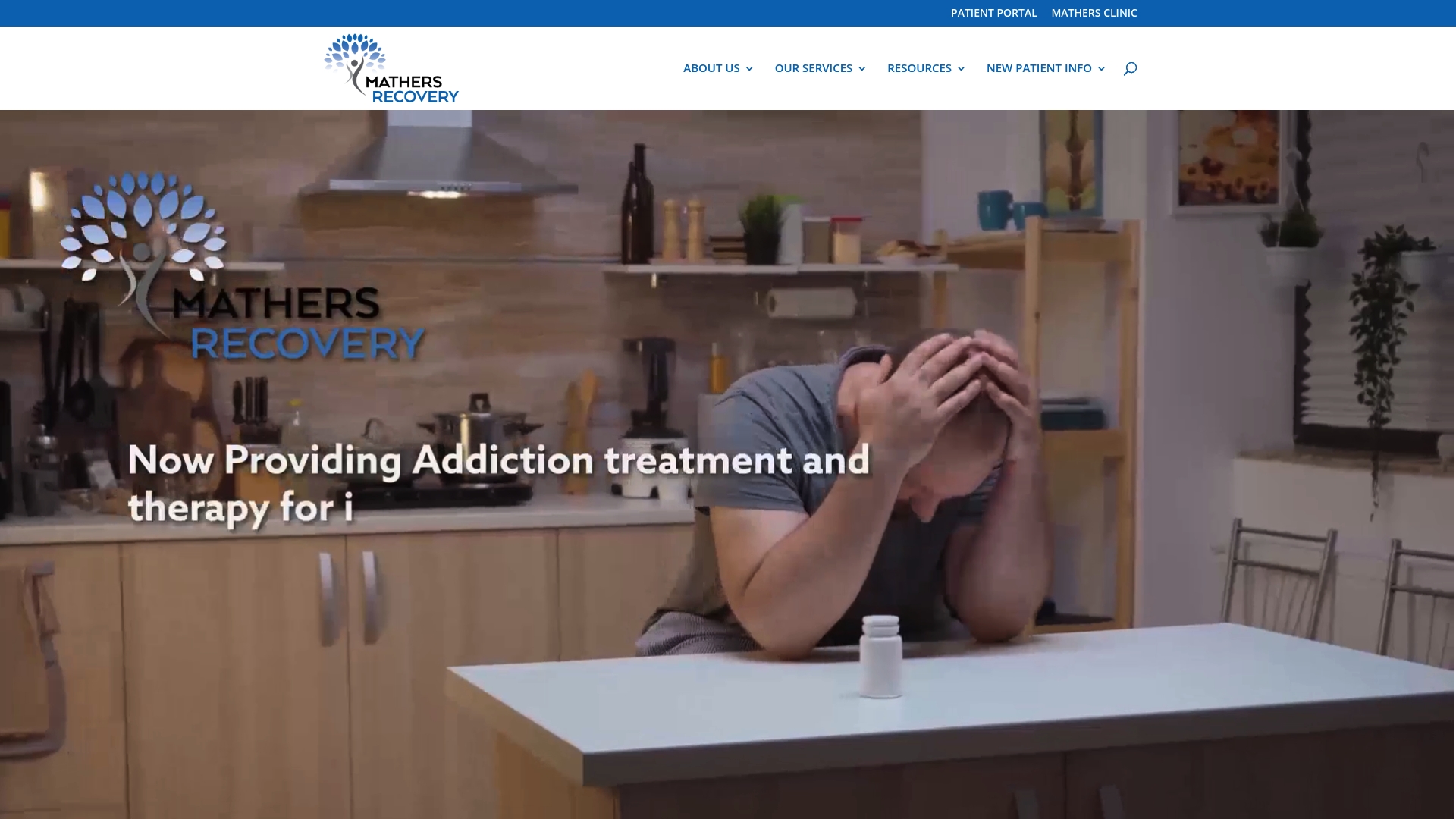
Mathers Recovery reports a long-term recovery success rate nearing 80%, and runs outpatient clinics that let clients stay at home while receiving medication and counseling in Illinois.
The reported figure above is a vendor claim; treat it as self-reported while you verify details with the clinic.
Core Features
Mathers Recovery advertises evidence-based, clinically proven medication-assisted treatment alongside outpatient detox and counseling in community clinics.
Services listed include Methadone, Suboxone, Vivitrol programs, outpatient detoxification, psycho-social rehabilitation, and counseling aimed at keeping clients in their normal routines.
Key Differentiator
The provider’s defining attribute is a concentrated, in-person outpatient model with multiple Illinois locations rather than a remote-first or inpatient-only approach.
That geographic focus on Elgin and Fox Lake supports regular clinic visits, which suits people who want local, community-based care rather than long residential stays.
Pros
-
High recovery claim gives prospective clients a clear performance signal to investigate further; the success figure above is an explicit marketing point.
-
Staying out of hospital or inpatient rehab lets clients continue work, school, and family obligations while receiving treatment.
-
Multiple clinic locations in Illinois reduce travel time for regular medication dosing and counseling sessions for nearby residents.
-
Broad service mix combines medication-assisted treatment, outpatient detox, and counseling, so clinicians can tailor plans without sending clients to separate providers.
-
Explicit mention of specialized tracks for pregnant people, young adults, and older clients indicates experience with different care needs.
Cons
-
Public content provides limited information about pricing and insurance coverage, so out-of-pocket cost is unclear until you contact the clinic.
-
The materials lack detailed information about telehealth or integrated digital tools; that may matter if you need remote follow-up.
-
Not structured for clients who require inpatient or intensive residential programs; those needing 24-hour medical supervision will need a different provider.
When It May Not Fit
If you need a national telehealth option or live outside Illinois, Mathers Recovery’s clinic-centered model is a poor match.
If cost transparency or documented telehealth pathways are priorities, the gaps listed above make this less suitable until you confirm payment and remote-care options directly with the clinic.
Who It’s For
Adults in Illinois who prefer outpatient, clinic-based opioid dependence treatment and who want to remain at home while attending regular medication and counseling appointments.
People who need local, in-person dosing and community-based support will find the model aligned with their needs; those requiring residential care are not the intended audience.
Real World Use Case
A client in Elgin starts Suboxone at a Mathers Recovery clinic, attends twice-weekly counseling and monthly medical reviews, completes outpatient detox when appropriate, and keeps a full work schedule while following a clinician-supervised plan.
That practical scenario illustrates how the clinic model preserves daily life while providing structured medical and psychosocial care.
Website: https://themathersrecovery.com
Comparative Analysis of Outpatient Opioid Addiction Clinics
When evaluating various outpatient clinics for opioid addiction treatment, choosing an option tailored to individual and geographic needs can significantly impact recovery outcomes. Each of the analyzed providers offers unique strengths, yet the choice inevitably depends on patient priorities and circumstances.
Timeliness of Initial Access
MD M.A.T.T. excels in providing same-day appointment availability combined with telehealth solutions, optimizing the immediacy of care initiation for Maryland residents. In contrast, MATClinics also supports same-day enrollment but further enhances accessibility via a mobile treatment unit that serves geographically underserved communities, a vital feature for patients facing transportation challenges. For those prioritizing quick intake within Maryland’s suburbs, these options ensure negligible delays between asking for help and receiving care.
Geographic and Community Focus
While MD M.A.T.T. focuses on building in-person peer support networks tailored to Maryland locations, competitors such as Ruth Clinic and Mathers Recovery extend their services beyond one state, targeting residents in Tennessee and Illinois, respectively. This state-specific emphasis of MD M.A.T.T. may disadvantage individuals moving between states, a scenario better addressed by broader location footprints.
Best Fit Scenarios
- MD M.A.T.T.: Maryland residents prioritizing immediate care access with integrated local community support networks.
- MATClinics: Individuals requiring flexible geographic accessibility through features like a mobile clinic addressing transportation barriers.
- Mathers Recovery: Illinois-based patients who value established in-person care experiences within their locality.
- Ruth Clinic: Individuals located in Tennessee looking for structured outpatient support and medication management offerings.
Our Pick
MD M.A.T.T.’s unique integration of same-day appointments with telehealth tied to local counseling groups distinguishes it as a prime choice for Maryland residents requiring a rapid and structured system for treatment initiation. However, if remote locations or cross-state treatments are fundamental, alternative choices like MATClinics or Mathers Recovery should be examined carefully.
Outpatient Opioid Addiction Clinics Comparison
Selecting the right outpatient opioid addiction clinic involves assessing features such as integration of services, accessibility, and support structures.
| Clinic Name | Core Feature | Key Differentiator | Best For | Notable Limitation |
|---|---|---|---|---|
| Mdmatt | Combined medication and therapy with telehealth | Local peer group integration | Adults in Maryland seeking fast, localized care | Limited public third-party data on long-term outcomes |
| MATClinics | Mobile treatment unit and counseling | Mobile unit addresses transport barriers | Patients needing on-site mobile services | Limited third-party patient feedback |
| GHR Center For Addiction | Multidisciplinary care and behavioral health | Full therapy roster with Medicaid and Medicare | Patients requiring Medicaid coverage | Insurance reliance may limit options for uninsured |
| Ruth Clinic | Medication management and personalized plans | Tailored recovery plans for individuals | Tennessee residents preferring outpatient care | Limited details on therapy breadth and practices |
| Mathers Recovery | High-adjusted in-person outpatient care | High recovery rates for localized clinic visits | Illinois residents preferring outpatient models | Inexplicit pricing and unclear remote care services |
Discover a Patient-Centered Alternative to foundationmedicalgroup.org with Mdmatt
When seeking foundationmedicalgroup.org alternatives for opioid use disorder treatment, quick access combined with compassionate care is essential. Mdmatt offers same-day appointments and a patient-centered outpatient doctors office that treats opioid use disorder with dignity and kindness. Their integrated approach addresses not just the addiction, but the underlying struggles impacting mental health and life balance.
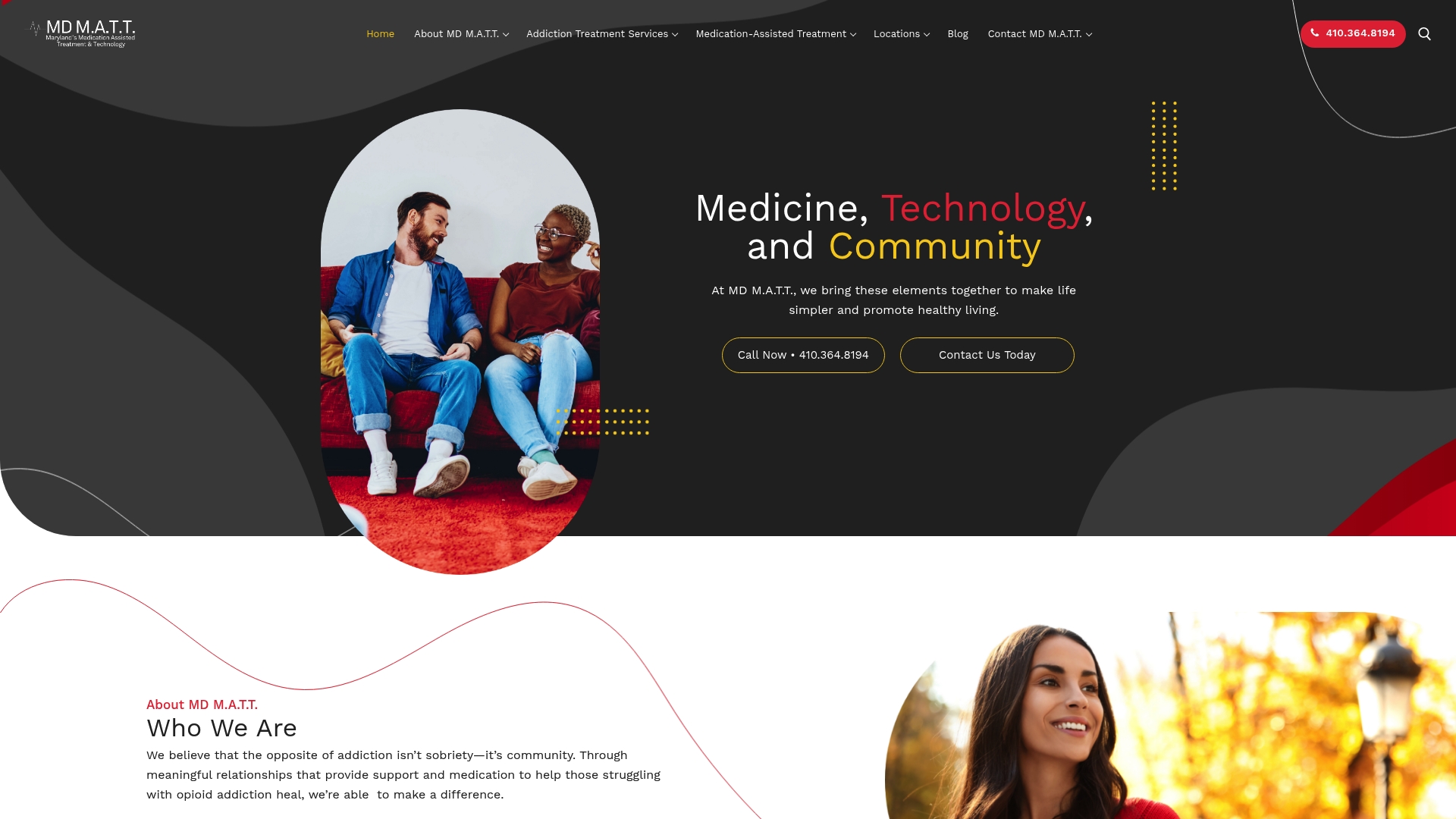
Choose Mdmatt to experience FDA-approved medication-assisted treatment alongside psychiatry and counseling—all designed around your unique needs. Don’t wait to get connected with a provider who helps you fight the root causes of addiction while supporting your full recovery. Visit Mdmatt to book your appointment and start your path toward lasting healing today.
Frequently Asked Questions
How does Mdmatt’s approach to same-day appointments benefit patients seeking opioid addiction treatment?
Mdmatt offers same-day appointments designed to shorten the gap between seeking help and receiving care. This feature is crucial for individuals who might delay treatment due to long waiting times, as it allows them to initiate medication-assisted treatment and join local support groups within days.
What is the difference between MATClinics’ mobile treatment unit and Mdmatt’s services?
MATClinics emphasizes its mobile treatment unit, bringing medication-assisted treatment directly to underserved neighborhoods. In contrast, Mdmatt focuses on integrating telehealth and community peer support to facilitate same-day access and closer ties to local recovery resources, benefiting those who prefer immediate engagement in their recovery process.
Does Ruth Clinic provide personalized treatment plans like Mdmatt?
Yes, Ruth Clinic creates tailored recovery plans combining medication management and therapy. Mdmatt also emphasizes customized treatment paths, catering to patient-specific needs with a responsive care model, ensuring that no patient feels lost during their recovery.
Can Mathers Recovery support patients needing outpatient detox while maintaining a regular schedule?
Mathers Recovery specializes in outpatient detoxification that allows clients to stay engaged with their work or family obligations. Mdmatt provides a similar approach, enabling patients to participate in outpatient care without disrupting their daily lives, ensuring continuity in personal responsibilities during treatment.
How does Mdmatt’s acceptance of insurance affect out-of-pocket expenses compared to GHR Center For Addiction?
Mdmatt’s acceptance of insurance can significantly reduce out-of-pocket costs, making it feasible for working adults to participate long-term. GHR Center For Addiction also accepts Medicaid and Medicare, providing a comparable option, but the specific financial impact depends on individual insurance plans and the services accessed.

