A sober support network is defined as a group of sober individuals who provide emotional, psychological, and practical support to help someone maintain long-term recovery from a substance use disorder. The clinical term for this concept is “recovery support,” and it encompasses peers, sponsors, family members, therapists, and sober social groups. Research confirms that peer-based recovery communities significantly improve hope, empowerment, and reduce relapse risk. No single treatment approach works in isolation. A well-built sober support network is one of the most reliable tools for staying sober over time.
What is a sober support network made of?
A sober support network draws from three distinct categories of support: peer-led mutual aid, professional services, and sober-active communities. Each category plays a different role, and the strongest networks combine all three.
Peer-led mutual aid groups
Mutual aid groups are the backbone of most recovery support systems. 12-step programs and alternatives like SMART Recovery are available both in-person and online, which increases access for people in rural or underserved areas. SMART Recovery uses a secular, science-based approach that works well alongside Medication-Assisted Treatment (MAT) like Suboxone. This matters because not every person in recovery connects with a spiritual framework, and having options reduces the chance of dropping out of support entirely.

Professional counseling and therapy
Professional services include individual counseling, psychiatry, and addiction-focused therapy. These relationships provide clinical structure that peer groups cannot. A licensed counselor helps you identify the root causes driving substance use, not just the symptoms. Mdmatt’s individual counseling services are built around exactly this approach, treating the whole person rather than just the diagnosis.
Sober-active communities
Sober-active communities are groups organized around shared activities like hiking, fitness, art, or volunteering, all within a sober environment. Peer-driven models built on shared lived experience create stronger psychological safety than clinician-led settings alone. The “people helping people” ethos turns recovery into a social process, not just an abstinence goal. This distinction matters because social connection is a core human need, and meeting that need in a sober context reinforces recovery identity.
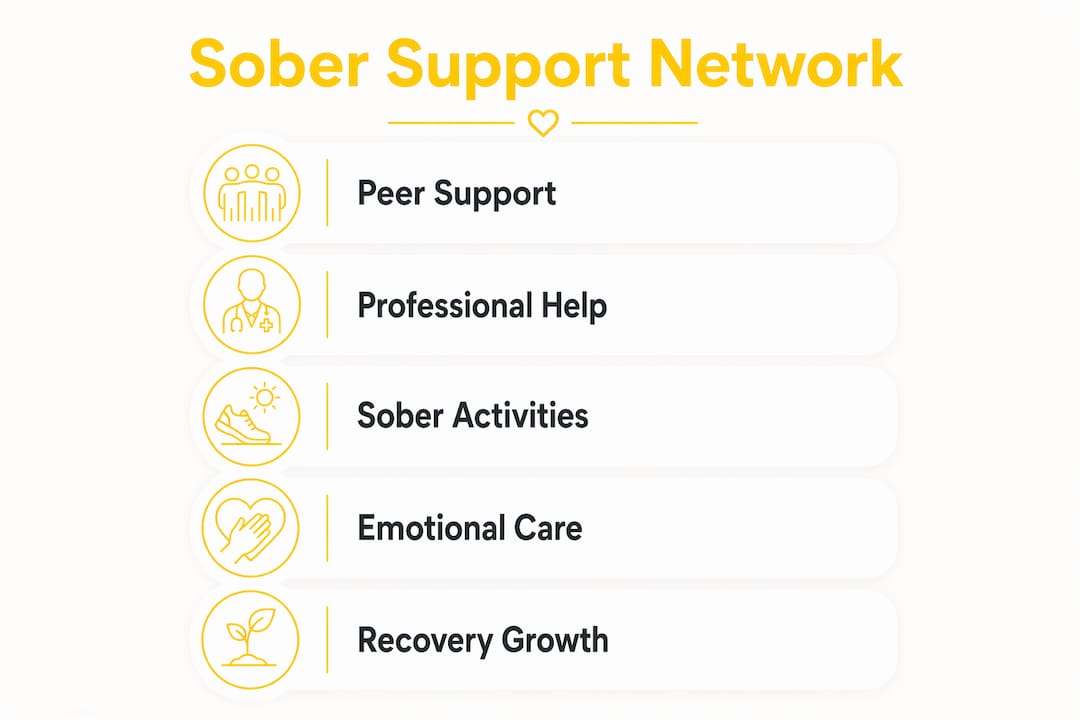
Pro Tip: When you first build your network, aim to include at least one person from each category: a peer who has lived experience, a professional who provides clinical guidance, and a sober social contact who makes sobriety feel worth living.
How does participation improve recovery outcomes?
Participation in a sober support network produces measurable improvements in mental health, physical health, and long-term sobriety. The mechanism behind this is psychological safety. When you feel safe being honest about your struggles without fear of judgment, you are more likely to ask for help before a crisis point.
“Psychological safety mediates the effect of sober network attendance on improved mental and physical health outcomes.” — Frontiers in Public Health, 2025
This finding is significant. It means the benefit of attending support groups is not just about information or accountability. It is about the emotional environment those groups create. When that environment feels safe, people open up, stay engaged, and build what researchers call “recovery capital.”
Recovery capital refers to the internal and external resources a person accumulates to support their sobriety. These resources include self-esteem, stable housing, employment, and social connections. A strong sober support network directly builds recovery capital by providing relationships that reinforce a sober identity. You can read more about this concept in Mdmatt’s guide on recovery capital and why it matters for long-term outcomes.
Sober-active communities go further by facilitating recovery as a social flourishing process. This is a meaningful shift from the older clinical model that measured success only by abstinence. Improved hope, motivation, and a sense of belonging are outcomes that show up consistently when people participate in these communities.
How to build a sober support network that actually works
Building an effective recovery support system requires honest self-assessment and deliberate action. Here is a practical framework to get started.
- Assess your current support. Write down every person in your life who actively supports your sobriety. Be honest about who might be a trigger rather than a support.
- Identify gaps. If you have no professional support, prioritize finding a counselor or treatment provider. If you have no peer connections, look for a local or online mutual aid group.
- Engage with multiple support types. Attend at least one peer meeting per week. Schedule regular sessions with a therapist or counselor. Join one sober social activity monthly.
- Remove relapse triggers from your network. Networks must be dynamic, not static lists of contacts. Relationships that consistently expose you to substance use or high-risk situations need to be reduced or ended.
- Use online resources. SMART Recovery and 12-step programs both offer online meetings, which removes transportation and scheduling barriers. Mdmatt also offers telehealth treatment services for patients who cannot attend in person.
- Refresh your network regularly. Recovery needs change over time. A sponsor who was helpful in early recovery may not meet your needs at two years sober. Revisit your network every few months and make adjustments.
Pro Tip: Keep a simple weekly check-in habit. Every Sunday, ask yourself: “Did I connect with at least one person in my sober network this week?” If the answer is no, make one call or send one message before the day ends.
Diversity in support types is critical to building a recovery identity and reducing relapse risk. Relying on a single source of support, even a very good one, creates vulnerability. Think of your network the way you would think of a balanced diet. No single food provides everything your body needs.
What misconceptions get in the way of building sober connections?
Several common myths prevent people from building the support network they need. Recognizing them is the first step to getting past them.
- “I only need clinical support.” Professional treatment is necessary, but it is not sufficient on its own. Peer-driven connections create a type of trust and belonging that clinical relationships cannot fully replicate.
- “One good meeting is enough.” The helpfulness of a support network fluctuates daily. Different emotional states require different types of support. Some days you need a peer who has been through the same experience. Other days you need a therapist or a sober friend to share a meal with.
- “My family is my support network.” Family love is real and valuable. But family members who have not experienced addiction often lack the specific understanding that peers with lived experience provide. Family support works best as one layer of a broader network.
- “Stigma makes it too hard.” Stigma around opioid use disorder is real and causes genuine harm. It keeps people isolated when connection is what they need most. Mdmatt’s guide on dealing with Suboxone stigma addresses this directly and offers practical strategies.
- “I can build my network later.” Without proactive maintenance, a sober support network degrades over time. Waiting until a crisis to build connections is far harder than maintaining them consistently.
Key Takeaways
A sober support network is the single most reliable social tool for reducing relapse risk, building recovery capital, and sustaining long-term sobriety from substance use disorder.
| Point | Details |
|---|---|
| Define your network broadly | Include peers, professionals, and sober social contacts for full coverage. |
| Psychological safety drives outcomes | Networks that feel safe produce measurable improvements in mental and physical health. |
| Diversity reduces relapse risk | Relying on one support source creates vulnerability; combine peer, clinical, and social support. |
| Networks require active maintenance | Refresh connections regularly to remove triggers and add recovery-positive relationships. |
| Fluctuating needs require flexible support | Match your support type to your current emotional state, not a fixed weekly schedule. |
Why most people underestimate the social side of recovery
People often think of recovery as a personal, internal process. You stop using, you do the work, you stay clean. That framing puts all the weight on the individual and ignores something the research makes very clear: recovery is fundamentally social.
What I have seen, both in the evidence and in the stories patients share, is that the people who sustain long-term sobriety are not necessarily the ones who worked the hardest in isolation. They are the ones who built real connections with other sober people. Not just a sponsor or a therapist, but a community where they genuinely belonged.
The “people helping people” model works because it removes the hierarchy. When someone who has been through opioid use disorder sits across from you and says “I know exactly what that feels like,” something shifts. That moment of recognition creates psychological safety in a way that no clinical credential can manufacture.
The part most people miss is that this network needs to be maintained like any other relationship. You cannot build it once and assume it will hold. Recovery needs change. People move, relapse, or drift. The network that served you in your first year of sobriety may need significant updates by year three. Treating your sober connections as living, evolving relationships rather than a fixed list is what separates people who stay well from those who struggle in silence.
If you are reading this and thinking your current network feels thin, that is not a failure. It is information. Use it.
— Cory
How Mdmatt supports your recovery beyond the clinic
Recovery does not happen in a single appointment. Mdmatt combines evidence-based medical treatment with a patient-centered approach that recognizes the full picture of what drives opioid use disorder.
Mdmatt’s Suboxone treatment clinic provides Medication-Assisted Treatment that works alongside peer support and counseling, not instead of it. Patients receive care that addresses both the physical dependence and the underlying factors that contributed to it. For those who need flexible access, Mdmatt’s addiction treatment services include telehealth options that remove barriers to consistent care. If you are ready to build a recovery plan that includes both professional treatment and a strong sober community, Mdmatt is here to help you take that step with dignity and support.
FAQ
What is a sober support network in simple terms?
A sober support network is a group of people who actively support your sobriety, including peers with lived experience, therapists, sponsors, and sober social contacts. Together, they provide accountability, emotional support, and connection that reduce relapse risk.
How is peer support for sobriety different from clinical treatment?
Clinical treatment addresses the medical and psychological aspects of addiction, while peer support provides shared lived experience and social belonging. Research shows that peer-driven connections create psychological safety that clinical relationships alone cannot fully replicate.
What are the best support groups for addiction?
12-step programs and SMART Recovery are the two most widely available mutual aid options, offered both in-person and online. SMART Recovery is particularly compatible with Medication-Assisted Treatment like Suboxone because it uses a secular, evidence-based framework.
How often should I engage with my sober support network?
Daily or near-daily contact with at least one person in your network is more effective than weekly meetings alone. Support needs fluctuate daily, so matching the type of support to your current emotional state produces better outcomes than a rigid schedule.
Can online resources replace in-person sober community benefits?
Online meetings and telehealth services significantly improve access, especially for people in rural areas or with transportation barriers. They work best as a supplement to in-person connection, not a full replacement, since face-to-face relationships build deeper psychological safety over time.