Handling suboxone cravings at work is manageable with the right combination of medication timing, stress control, and practical workplace tactics. Suboxone, the brand name for buprenorphine/naloxone, is a Medication-Assisted Treatment (MAT) designed to stabilize opioid use disorder without causing intoxication. When cravings hit during a meeting or a deadline crunch, having a clear plan makes the difference between staying on track and losing ground. This guide gives you concrete, real-world strategies to protect your recovery and your productivity at the same time.
How can medication timing and dosage help control cravings during the workday?
Proper Suboxone dosing is the foundation of craving control at work. Buprenorphine largely blocks cravings at appropriate doses, and the most common reason for persistent cravings is an insufficient dose. If you are still feeling strong urges despite taking your medication, that is a clinical signal worth discussing with your prescriber, not a sign that treatment is failing you.
The initial adjustment period to buprenorphine treatment typically lasts 1–2 weeks, with mild side effects like drowsiness that can interfere with work performance. That window is temporary. Most patients find that side effects resolve once the body stabilizes on the correct dose.
Dosing schedules tailored to minimize sedation improve work functioning significantly. Taking your dose before work, rather than mid-shift, gives your body time to absorb the medication before you need to be fully alert. Talk to your prescriber about shifting your timing if afternoon drowsiness is a problem.
Key medication practices to discuss with your provider:
- Take Suboxone at the same time every day to maintain stable blood levels.
- Ask about splitting your dose if breakthrough cravings appear in the afternoon.
- Never skip a dose to “save it” for a harder day. Consistency is what keeps cravings predictable.
- Report any sedation that affects your job performance. Dose adjustment is a normal part of treatment.
Feeling normal is the marker of effective Suboxone treatment, not feeling high. Many patients misread this and assume the medication is not working. It is working exactly as intended when cravings are quiet and your mind is clear.
Pro Tip: Ask your prescriber to schedule your dose 30–60 minutes before your workday starts. This timing window lets peak absorption happen before your first meeting, reducing both sedation and early-morning cravings.
What workplace stressors trigger cravings and how can they be managed?
Stressful work environments trigger cravings, and mindfulness combined with short breaks are among the most effective responses. The brain’s craving response is closely tied to stress hormones, so a difficult performance review or a tense exchange with a coworker can activate urges even when your medication is working well.
Common workplace triggers include:
- Tight deadlines that create a sense of being out of control.
- Conflict with coworkers or supervisors that feels personal.
- Boredom or under-stimulation during repetitive tasks.
- Fear of being “found out” about your treatment status.
- Physical discomfort from long hours at a desk.
Recognizing your specific triggers early is more powerful than reacting after a craving peaks. Keep a short mental list of your top two or three triggers. When you notice one appearing, treat it as a cue to activate a coping response immediately, before the craving builds intensity.
Cravings can persist due to psychological factors even when medication is at the correct dose. This means stress management is not optional. It is a clinical necessity for anyone managing opioid use disorder in a demanding work environment.
The SAMHSA National Helpline (1-800-662-4357) is available 24 hours a day, 7 days a week, and is free and confidential. If a craving at work escalates to a crisis point, calling that number from a private space is a legitimate and smart move.
Pro Tip: Try box breathing when a craving hits at your desk: inhale for 4 counts, hold for 4, exhale for 4, hold for 4. Repeat three times. This technique activates the parasympathetic nervous system and can reduce craving intensity within 90 seconds, with no one around you knowing what you are doing.

How can behavioral therapies improve craving control during work hours?
Combining Suboxone with psychotherapy produces the highest success rates for managing opioid use disorder. Medication stabilizes the body. Therapy rewires the thought patterns that feed cravings. Both are necessary for lasting workplace resilience.
Cognitive Behavioral Therapy (CBT) and Dialectical Behavior Therapy (DBT) are the two most evidence-supported approaches for patients on Suboxone. CBT teaches you to identify and challenge the automatic thoughts that precede a craving. DBT adds distress tolerance skills, which are especially useful when workplace emotions run high.
Practical therapy-based skills you can use at work include:
- The “urge surfing” technique: observe the craving as a wave, knowing it will peak and pass without you acting on it.
- Cognitive restructuring: replace “I can’t handle this stress” with “This is hard, and I have handled hard things before.”
- Opposite action: when anxiety pushes you toward isolation, deliberately reach out to one safe person instead.
Telehealth therapy options make it possible to fit sessions into a lunch break or a gap between meetings. You do not need to take a full afternoon off work to access quality care. Mdmatt offers individual counseling designed around the schedules of working patients. For a deeper look at which therapy approaches pair best with Suboxone, the Mdmatt blog covers therapy types for recovery in detail.
What are practical strategies for handling sudden cravings without disrupting productivity?
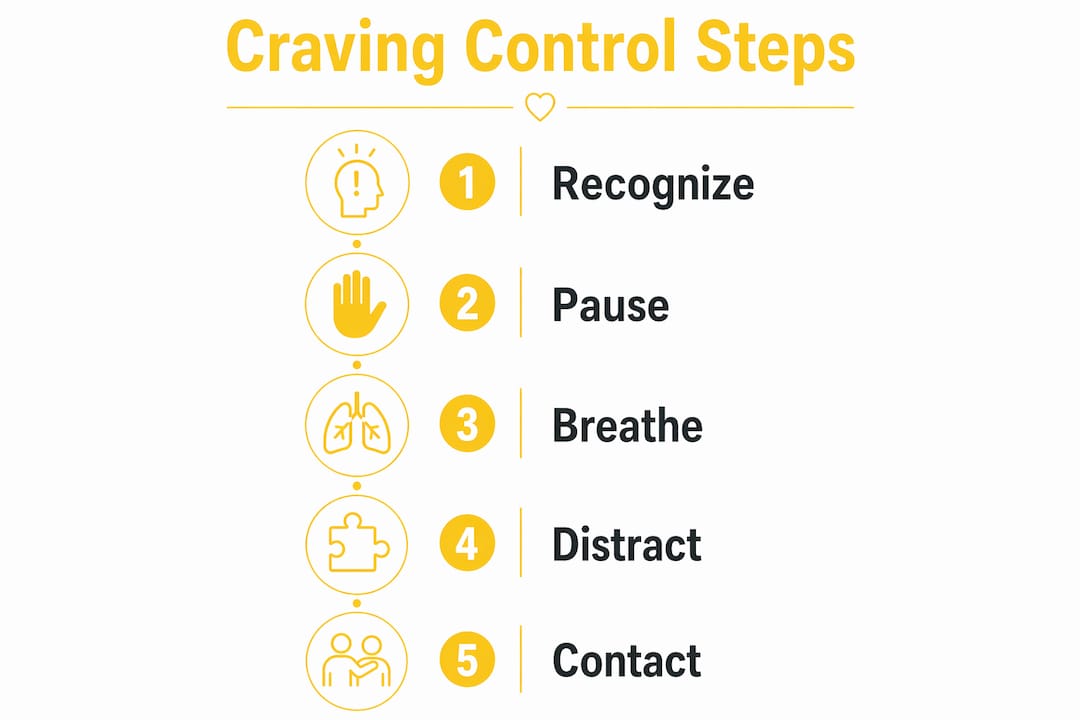
A sudden craving at work does not have to derail your day. The key is having a pre-built response plan so you are not making decisions under pressure. Think of it as a fire drill: you practice it before the emergency so the steps are automatic when it counts.
| Technique | Best for | Time needed |
|---|---|---|
| Box breathing | Immediate craving spike | 2–3 minutes |
| Short walk outside | Stress buildup, restlessness | 5–10 minutes |
| Calling a support contact | Emotional triggers, isolation | 5–15 minutes |
| Cold water on wrists | Physical tension, anxiety | Under 1 minute |
| Grounding exercise (5-4-3-2-1) | Dissociation, overwhelm | 3–5 minutes |
Under the ADA, employees have rights to reasonable accommodations for medical treatment, including MAT appointments. You do not need to explain your diagnosis to get this protection. A note from your prescriber stating you require periodic medical appointments is typically sufficient. Schedule those appointments during low-stakes work windows, like early mornings or late afternoons, to minimize disruption.
Discretion about your medication is your right. You are not required to tell coworkers or your manager that you take Suboxone. Keep your medication in its original prescription bottle in a private location, such as a locked desk drawer or your personal bag. Taking your dose in a private space, like a bathroom or your car, is a practical and common approach.
Build your personal craving action plan around three elements: a physical response (breathing, walking), a cognitive response (a phrase you say to yourself), and a social response (one person you can text). Having all three ready means you always have an exit from the craving, regardless of where you are or what you are doing.
Pro Tip: Save your recovery support contact under a neutral name in your phone, like “Dr. Smith” or a friend’s name. This protects your privacy if a coworker glances at your screen while you reach out for support.
How to navigate workplace drug testing and privacy while on Suboxone?
Standard workplace drug tests do not usually detect buprenorphine. Most standard panels screen for opioids like heroin and prescription painkillers, not buprenorphine specifically. A specialized test is required to detect Suboxone, and these are not routine in most industries.
When a positive result does occur on a specialized test, a Medical Review Officer (MRO) steps in. The MRO is a licensed physician whose job is to verify whether a positive result has a legitimate medical explanation. Your prescription information is shared only with the MRO, not with your employer. This process is confidential by design.
Key legal protections to know:
- The ADA classifies opioid use disorder as a disability when a patient is in active treatment and not currently using illegal drugs.
- Employees in safety-sensitive roles, such as commercial drivers regulated by the Department of Transportation, face stricter testing rules. Know which category applies to your job.
- Disclosure to your manager is not required. You can request ADA accommodations through HR without naming your specific diagnosis.
For a full breakdown of your rights, the Mdmatt article on Suboxone and drug testing covers the legal landscape in plain language. Knowing your rights removes one major source of workplace anxiety, which itself reduces craving triggers.
Key takeaways
Handling Suboxone cravings at work requires consistent medication management, proactive stress control, and a pre-built craving action plan tailored to your specific work environment.
| Point | Details |
|---|---|
| Optimize medication timing | Take Suboxone before your workday starts to reduce sedation and early cravings. |
| Address persistent cravings with your provider | Breakthrough cravings often signal a dose that needs adjustment, not treatment failure. |
| Identify and plan for triggers | Know your top workplace triggers and have a physical, cognitive, and social response ready. |
| Combine medication with therapy | CBT and DBT skills give you tools to manage psychological triggers that medication alone cannot address. |
| Know your legal rights | ADA protections and MRO confidentiality mean your treatment status stays private at work. |
What I’ve learned from patients managing recovery in demanding jobs
Working in addiction treatment, I have seen patients hold demanding careers while managing opioid use disorder with Suboxone. The ones who do it well share one trait: they treat craving management as a skill, not a character test. They do not blame themselves when a craving appears. They execute their plan.
The hardest part for most people is accepting that cravings will still show up, even on the right dose, even with therapy. Stress is a biological craving trigger. A difficult boss or a brutal deadline can activate the same neural pathways as drug exposure. That is not a moral failure. That is neuroscience.
What I have found is that patients who communicate openly with their prescriber, even about small changes in craving frequency, get better outcomes. Most persistent craving problems are solvable with a dose adjustment or a therapy technique. The patients who struggle most are the ones who go quiet and try to manage everything alone.
Self-compassion is not a soft concept here. It is a clinical tool. Shame increases stress, and stress increases cravings. Treating yourself with the same patience you would offer a close friend is not weakness. It is one of the most effective craving management strategies available.
Recovery and a productive career are not in conflict. With the right support, they reinforce each other.
— Cory
Mdmatt’s Suboxone treatment fits around your work schedule
Recovery does not pause for work, and your treatment should not have to either.
Mdmatt’s Suboxone treatment clinic is built for working patients. Appointments are structured to minimize time away from your job, and the care team understands that life does not stop during recovery. For patients who cannot make it in person, Mdmatt’s telehealth treatment services provide confidential, flexible access to prescribers and counselors from wherever you are. If you are ready to build a treatment plan that works with your schedule, contact Mdmatt to get started.
FAQ
Does Suboxone stop cravings completely?
Suboxone significantly reduces cravings at the right dose, but psychological triggers can still cause urges even on stable medication. Combining Suboxone with therapy produces the most complete craving control.
Will my employer know I take Suboxone if I fail a drug test?
Standard drug tests do not detect buprenorphine, and if a specialized test is used, a Medical Review Officer handles the result confidentially. Your employer does not receive your prescription details.
Can I request time off work for Suboxone treatment appointments?
Yes. ADA protections entitle employees in active MAT treatment to reasonable accommodations, including time for medical appointments. You do not need to disclose your specific diagnosis to HR.
What should I do if a craving becomes overwhelming at work?
Step away to a private space and use a grounding or breathing technique immediately. If the craving does not ease, contact your recovery support person or call the SAMHSA National Helpline at 1-800-662-4357.
How long does it take for Suboxone to stop causing drowsiness at work?
The adjustment period typically lasts 1–2 weeks. Talking to your prescriber about dose timing can reduce sedation during work hours while the body adjusts.