Finding a medication-assisted treatment clinic that offers same-day access, transparent pricing, and coordinated counseling often leads to frustration and delays. Many clinics require waiting lists, do not post clear insurance or self-pay costs, or separate counseling from medication visits, which makes timely care harder. This list details advantages, insurance coverage, and access timelines for each top alternative so patients and families can choose a clinic that truly fits their needs.
Table of Contents
- MD M.A.T.T.
- Comprehensive Treatment Centers (CTCs)
- Addiction & Psychotherapy Services
- Better Life MD
- South Hills Recovery Project
- Addiction Outreach Clinic
- Comparison of alternatives
MD M.A.T.T.
At a Glance
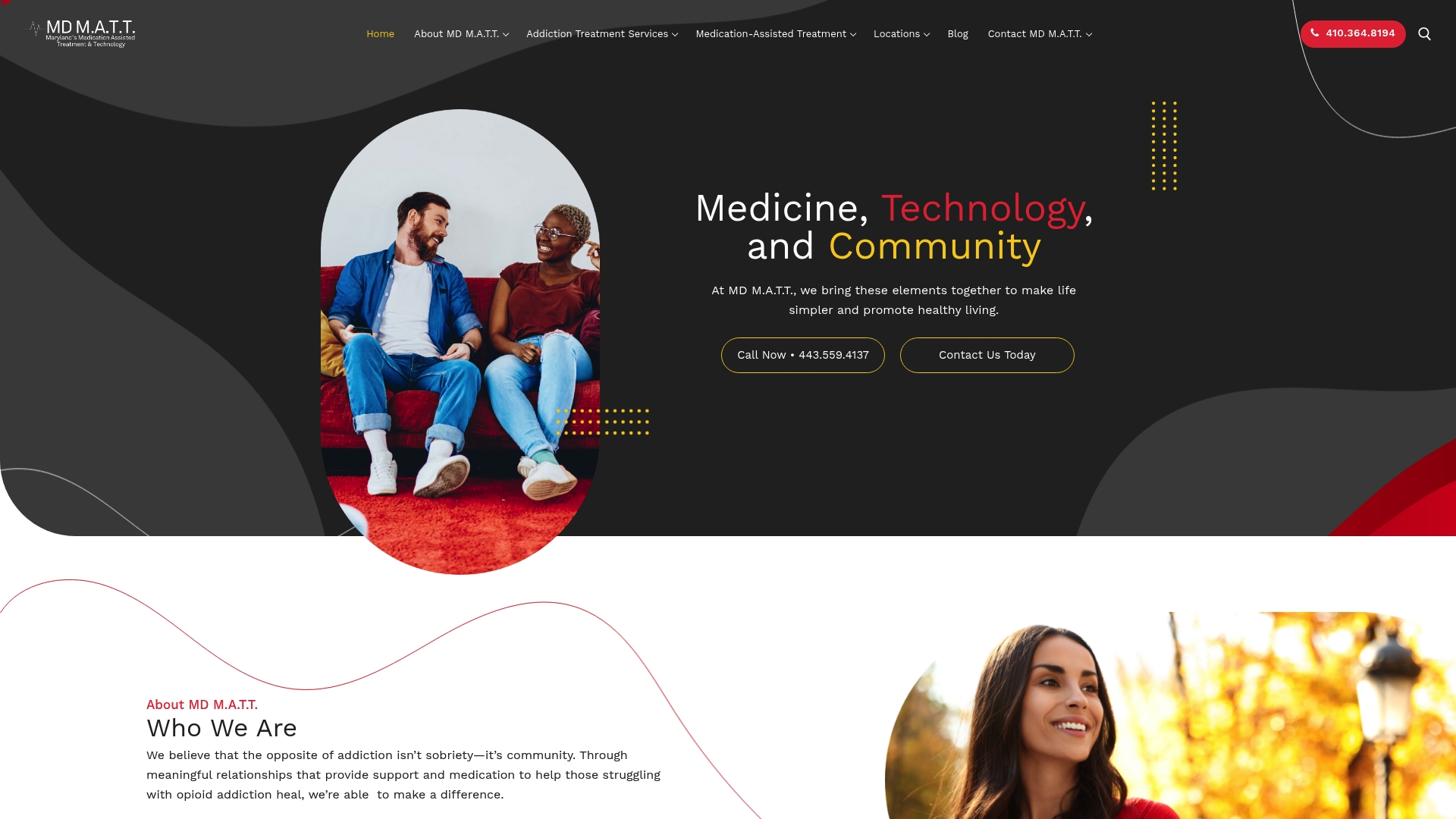
Same-day appointments and walk-in access across multiple Maryland outpatient clinics make starting treatment faster than typical referral routes. The clinics combine medication-based care with counseling and peer support groups. Services emphasize dignity, trauma-informed practice, and inclusivity for LGBTQ+ people.
Core Features
According to the organization, clinic services include FDA-approved medications such as Suboxone, Vivitrol, and Sublocade, paired with counseling and behavioral therapies. Clinics use technology for appointment scheduling, secure communication, and basic progress tracking to keep patients connected between visits. Multiple community-based outpatient locations offer flexible hours and walk-in options to reduce barriers to care.
Key Differentiator
The strongest distinction is the blended model of local peer support and digital communication. That mix reduces friction when people try to start or continue outpatient medication-assisted treatment. Clinics coordinate medication, counseling, and community activities so care feels consistent across visits.
Pros
Accessible same-day visits and walk-in availability shorten the time from decision to first dose, which matters for people in acute need. The model pairs medication treatment with counseling and peer groups, creating social supports alongside clinical care. Multiple locations and tech tools for scheduling and messaging make follow-up less likely to slip through the cracks.
Cons
- Service availability depends on local clinic capacity and individual insurance coverage, which can affect how quickly a person gets continuing care.
Who It’s For
People in Maryland seeking outpatient medication-assisted care and peer support will find a practical option here. Those who need flexible scheduling or prefer walk-in appointments gain immediate access. The clinics also fit people who value trauma-informed, inclusive services.
Unique Value Proposition
Same-day clinic access combined with in-clinic peer groups and digital appointment tools reduces the friction that often delays treatment starts. That configuration helps clinicians initiate medication quickly and keep patients engaged with counseling and community supports. For practices managing follow-up across locations, this lowers no-shows and simplifies basic coordination.
Real World Use Case
A Maryland resident with opioid dependence can walk into a nearby clinic and receive an evaluation, start Suboxone, and book counseling for the same week. Staff add the person to a local peer group and enable appointment reminders through clinic messaging. The combined approach supports early retention and ongoing contact with counselors and peers.
Website: https://mdmatt.com/
Comprehensive Treatment Centers (CTCs)
At a Glance
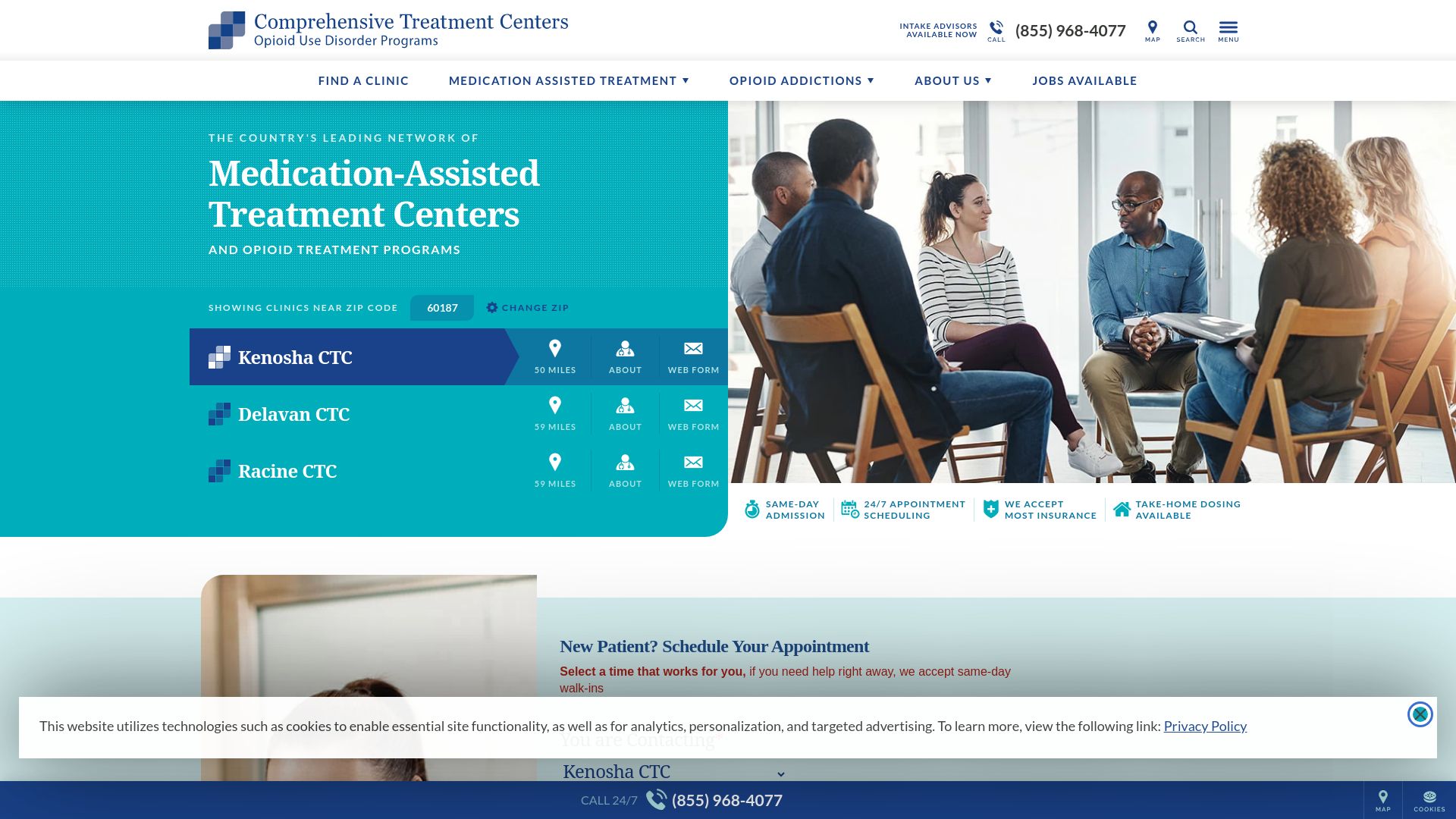
Many locations offer same day admission, letting adults begin Medication Assisted Treatment and counseling on the day they contact the clinic. CTCs combine prescriptions such as methadone, Suboxone®, buprenorphine, and Vivitrol with individual and group counseling. Most locations report accepting a wide range of insurance plans, which lowers an immediate financial barrier.
Core Features
CTCs deliver outpatient Medication Assisted Treatment (MAT) alongside individual and group counseling so medication and therapy run together. Personalized treatment planning adapts medication choice, counseling intensity, and follow-up scheduling to each patient. Flexible scheduling includes same day admission and take home dosing options for clinically eligible patients.
Key Differentiator
CTCs focus on whole person outpatient care by pairing medication and counseling across multiple clinic locations. That emphasis on coordinated clinical care and flexible access fits adults who need ongoing outpatient support rather than brief interventions. The model prioritizes dignity and respect in clinical interactions.
Pros
Personalized care aligns medication selection, counseling frequency, and follow up to a person’s needs, which helps maintain engagement. Combining medication with counseling addresses both physical dependence and behavioral factors that sustain opioid use. Flexible scheduling and same day admission cut wait times and lower entry barriers for people in crisis. Accepting most insurance plans reduces out of pocket cost for many patients. The clinics emphasize a respectful treatment environment that supports patient dignity throughout care.
Cons
- Some locations may have limited appointment availability or may not support same day scheduling. This can delay intake for people in areas with high demand.
- Eligibility for take home dosing depends on clinical assessment and patient compliance. Not every patient will qualify for take home medication.
- Treatment duration varies and may be lengthy, so this option is not a quick fix for intermittent problems.
When It May Not Fit
If you need inpatient detox or round the clock medical supervision, CTCs are not the right setting. People seeking a very short, one off medication consult without counseling components will find the integrated model more than they require. If you cannot meet clinic attendance or compliance expectations, access to some services such as take home dosing will be limited.
Who It’s For
Adults aged 18 and older with opioid use disorder who want outpatient, individualized treatment benefit most from CTCs. This model works for people who can attend scheduled counseling and medication visits and who prefer a clinic that combines pharmacotherapy with therapy. It suits those seeking ongoing support rather than a single visit.
Real World Use Case
A person using heroin calls a nearby CTC, completes an intake assessment, and starts a tailored program that includes buprenorphine and weekly counseling. The clinic schedules follow up appointments and offers flexible times to fit work or caregiving commitments. Over months, the plan adjusts medication and therapy based on progress and safety.
Pricing
Most insurance plans are accepted, and costs vary by plan and services used. Exact copays and coverage depend on the insurer and the specific clinic location. Self pay options and sliding scale fees vary by site.
Website: https://bostonctc.com
Addiction & Psychotherapy Services

At a Glance
Operating since 1982, this family owned clinic combines methadone and buprenorphine medication assisted treatment with onsite psychiatric care. The clinic reports a full time onsite psychiatrist and offers psychiatric, psychological, and rehabilitative services. The location sits in South Austin near public transit, and funding comes mainly from client fees with some insurance acceptance.
Core Features
The clinic delivers short and long term medication assisted treatment using methadone and buprenorphine, paired with psychiatric evaluation and follow up. A full time onsite psychiatrist manages medication decisions and coordinates psychological and rehabilitative care with clinic staff. The practice emphasizes a patient focused, nonprofiteer approach and serves people locally in South Austin.
Key Differentiator
The clearest distinction is the clinic’s full time onsite psychiatrist working inside a family owned program that has operated since 1982. That staffing model keeps psychiatric assessment and medication management tightly linked to daily treatment. For people who need both addiction medication and psychiatric care in one place, this single site model reduces handoffs.
Pros
Having a full time psychiatrist on site supports coordinated medication management and timely psychiatric follow up, which matters when patients need rapid adjustments. The clinic offers both methadone and buprenorphine, giving clinicians flexibility to match treatment to a patient’s medical needs and preferences. Longstanding family ownership since 1982 suggests institutional continuity and local experience, and the South Austin location is reachable by public transit for many people. The stated commitment to operate without profit signals a focus on patient care rather than revenue generation.
Cons
- Limited public detail on specific treatment protocols or measurable success rates.
- No clear, itemized pricing or standard fee schedule is published, which reduces cost transparency.
- Services focus on addiction and related mental health, not on primary care or unrelated medical specialties.
When It May Not Fit
If you need an explicit price list or an online billing portal, this clinic may not match your needs because no detailed pricing is published. If you require integrated primary care or specialty medical services outside addiction and psychiatry, the clinic’s scope may be too narrow. People who prefer remote only telehealth options should confirm availability before committing.
Who It’s For
This clinic fits people in Austin seeking medication assisted treatment for opioid dependence who also need psychiatric assessment and therapy at the same location. It suits patients who prefer a local, family owned provider with decades of local presence and staff continuity. It also serves those able to attend in person at the South Austin site.
Real World Use Case
A person living in South Austin with opioid dependence schedules an intake for methadone and sees the onsite psychiatrist the same day for a psychiatric evaluation. Clinic clinicians coordinate dosing, counseling referrals, and follow up visits, allowing medication and mental health care to proceed together. The patient uses nearby public transit to reach appointments.
Pricing
The clinic states it is funded mainly by client fees and accepts some insurance. No detailed tiered pricing or fee schedule is publicly listed, so anticipate asking staff for service rates and insurance coverage during intake.
Website: https://austinmethadone.com
Better Life MD
At a Glance
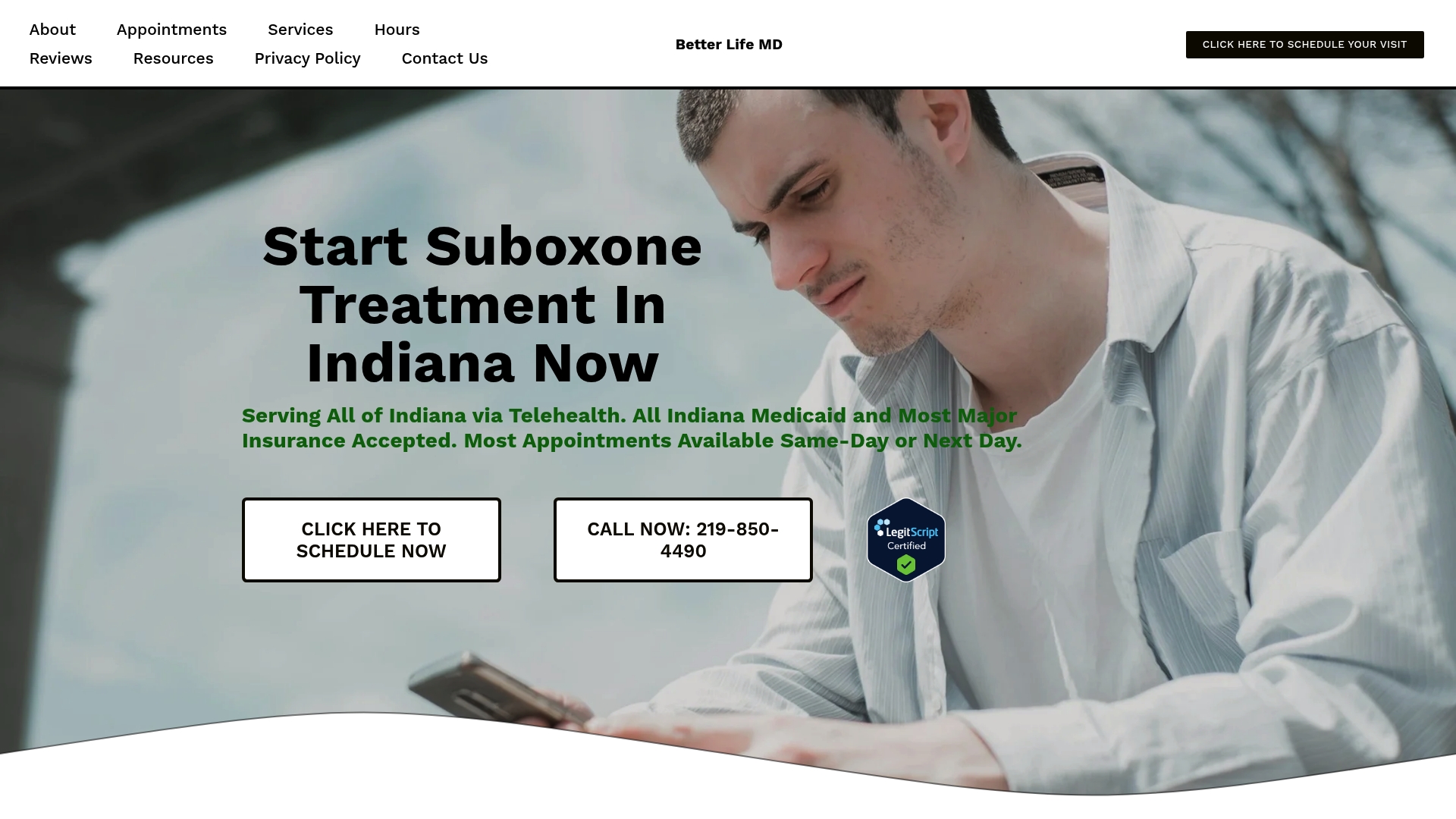
Better Life MD accepts all major insurance, including Medicaid and Medicare, and offers appointments most days on the same day or the next day. According to the company, the practice focuses on saving lives through evidence-based interventions and compassionate care. Founded in 2020, the clinic serves residents of Indiana with both telehealth and in-person visits.
Core Features
Better Life MD combines telehealth and clinic visits with medication-assisted treatment options such as Suboxone, Sublocade, Brixadi, and Vivitrol, all managed by licensed clinicians. The practice provides individualized clinical oversight from physicians and nurse practitioners and actively manages symptoms and side effects. Staff coordinate medical advocacy with primary care providers to keep treatment aligned with other health needs.
Key Differentiator
Clinical leadership anchors care at Better Life MD, with physicians or nurse practitioners overseeing medication and follow-up. That clinician-led oversight pairs with proactive symptom management and coordination with a patients other clinicians. The focus on rapid access for Indiana residents narrows the practice to local, insurance-covered care.
Pros
The practice accepts broad insurance coverage, which reduces financial barriers for patients using Medicaid or commercial plans. Rapid appointment availability lowers the wait time to start medication-assisted treatment. Physician-led oversight and active symptom management give patients regular clinical touchpoints during the early phases of treatment.
Cons
- Limited public detail on therapy modalities beyond medication management. The website lists few specifics about counseling approaches.
- No transparent pricing or self-pay cost information is posted, so out-of-pocket estimates are not available online.
- The site emphasizes medical treatments more than peer support or group therapy options, which may matter to people seeking social recovery resources.
Who It’s For
People who live in Indiana and need confidential, clinician-led treatment for opioid dependence will find this practice relevant. It fits patients who rely on Medicaid, Medicare, or commercial insurance and who prefer quick access through telehealth or local clinic visits. Those who want strong medical oversight and medication options will benefit most.
Real World Use Case
A patient in Indiana calls with recent opioid dependence and requests help. They schedule a same day telehealth visit, receive an initial assessment, and start Suboxone under physician supervision. The clinic arranges follow-up calls for symptom checks and coordinates care with the patients primary care provider.
Pricing
Pricing is listed as not applicable for public display. The practice accepts major insurance plans and typically bills Medicaid, Medicare, or commercial insurers, so most patients will have costs handled through their coverage. No self-pay rates or sliding scale figures are posted on the website.
Website: https://betterlifemdpc.com
South Hills Recovery Project
At a Glance
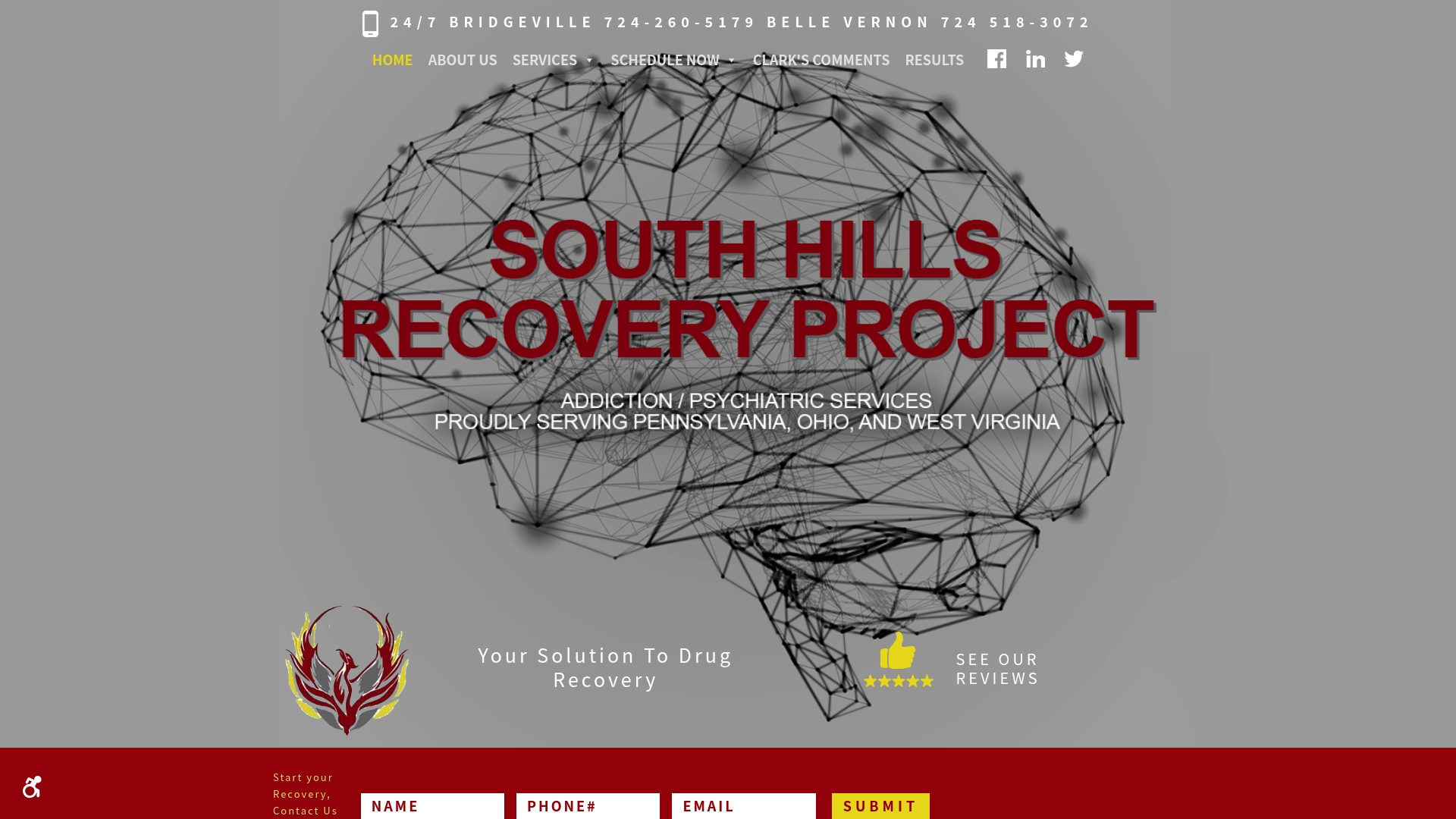
Founded by Yale trained psychiatrist Dr. Allan Clark, South Hills Recovery Project operates clinics in Bridgeville and Belle Vernon, Pennsylvania. The vendor advertises proven recovery outcomes and highlights both addiction and psychiatric care. The practice emphasizes personalized, patient centered treatment in local offices.
Core Features
The clinic provides psychiatric diagnosis and ongoing therapy for anxiety, depression, and adult ADHD, and it offers medication-assisted treatment for opioid dependence. Staff handle medical marijuana certification and renewals, and they maintain local appointment and contact options for patients. Multiple physical locations support in-person follow up and local community connections.
Key Differentiator
The clinic’s founding by Dr. Allan Clark gives it a strong clinical pedigree and a clear focus on individualized care. That staffing background frames clinical decisions and treatment planning for both addiction medicine and psychiatric conditions. The practice positions itself as a local, clinician led option rather than a remote or corporate clinic.
Pros
Patients report a welcoming, patient centered clinical environment with experienced clinicians and a mix of addiction and psychiatric services. The practice groups medication, therapy, and certification services under one roof, which simplifies scheduling and record continuity for people with overlapping needs. Local offices in the Pittsburgh area make repeated in person visits more practical for community members.
Cons
-
Pricing and insurance details are not listed on the website, which makes cost planning difficult before contacting the clinic.
-
The site does not specify staffing ratios or exact treatment modalities, so service intensity is not transparent.
-
The clinic does not advertise telehealth or virtual options, which may limit access for patients who cannot travel.
When It May Not Fit
If you need clear, prepublished pricing or online intake and telehealth care, this clinic may not match your needs. Patients outside the Pittsburgh area will face geographic limits because services appear tied to in person visits. Practices that require published staff to patient ratios or granular protocol details should look elsewhere.
Who It’s For
Adults in the Pittsburgh area who want clinician led addiction treatment and psychiatric care in a local, office based setting will find this clinic relevant. People seeking medication assisted treatment alongside therapy and local community support are the best match. Those who require remote care or transparent online pricing are less likely to fit.
Real World Use Case
A person with opioid dependence and coexisting anxiety can book an in person evaluation, start medication assisted treatment, and receive coordinated psychiatric therapy at the same clinic. The team can also manage medical marijuana certification if clinically appropriate. Local follow up visits and community resources support ongoing outpatient care.
Pricing
The website lists pricing as not applicable and functions mainly as informational. No public fee schedule or insurance coverage details are available on the site, so contacting the clinic is necessary to get cost and billing information.
Website: https://shrecoveryproject.com
Addiction Outreach Clinic
At a Glance
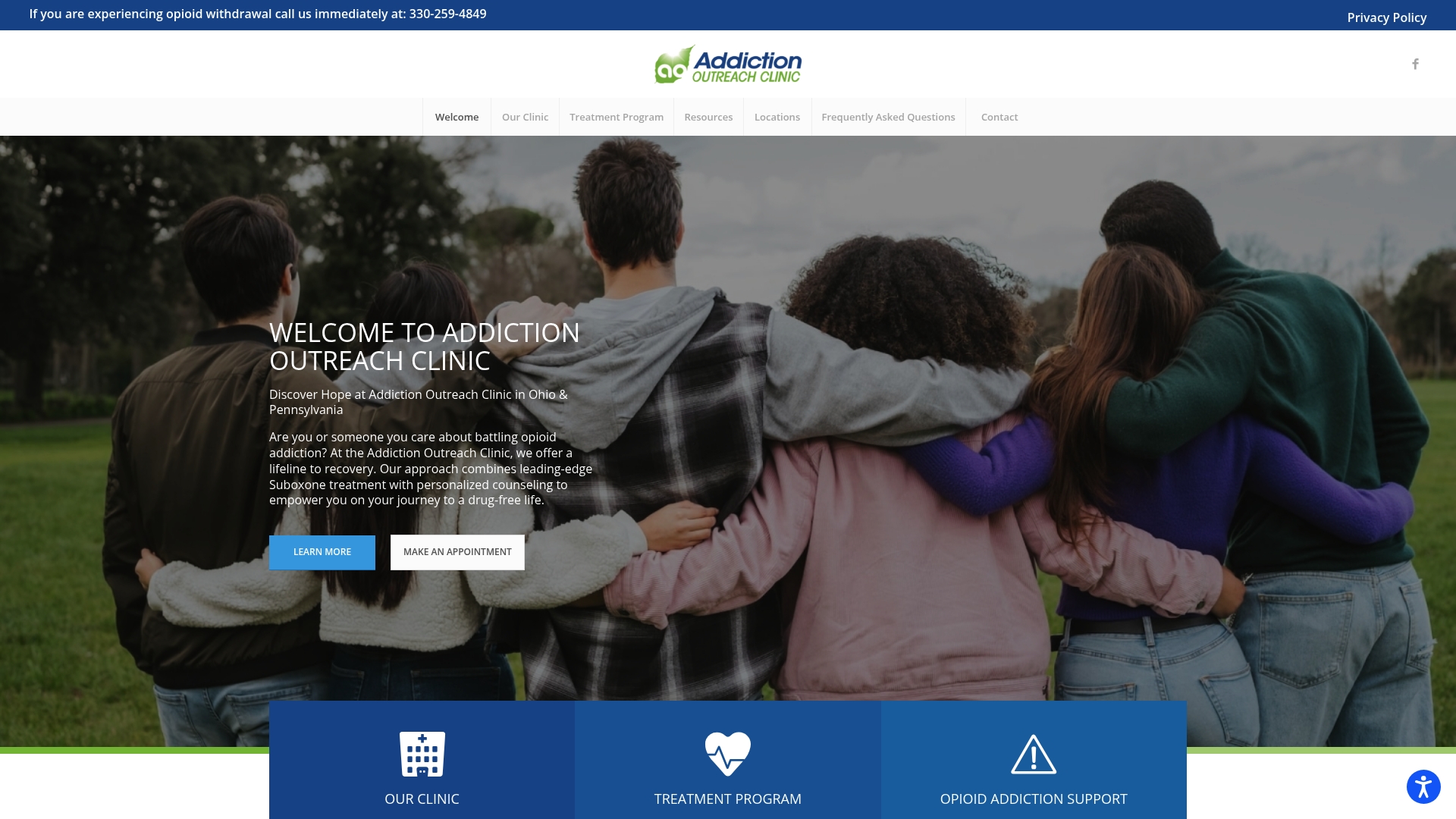
According to the clinic, patients can often begin treatment within 24–48 hours. The program pairs buprenorphine-based medication with individualized behavioral counseling across multiple outpatient sites. The provider accepts most insurance plans and emphasizes rapid stabilization followed by monthly follow up care.
Core Features
The offering centers on medication-assisted treatment using buprenorphine formulations such as Suboxone, Zubsolv, and Subutex, combined with one-on-one behavioral counseling. Appointments are scheduled quickly when capacity allows, and monthly outpatient visits include medical assessment, counseling, and urine drug testing. Multiple locations across Ohio and Pennsylvania make ongoing visits more practical for people who work or have family duties.
Key Differentiator
The clinic’s main distinction is the focus on fast initiation of outpatient medication-assisted care at several regional sites. That model aims to lower the delay between diagnosis and first dose while keeping treatment in a predictable outpatient rhythm. The combination of rapid entry and local access distinguishes it from programs that require inpatient placement.
Pros
Multiple locations improve geographic access for adults in Ohio and Pennsylvania, and the clinic accepts a broad set of payers including Medicaid and Medicare. The vendor advertises that combining medication and counseling supports long-term recovery, and the program structure reinforces that approach with monthly medical and counseling touchpoints. Quick appointment availability means people who decide to seek help do not face long wait times for an initial visit.
Cons
-
Specific to opioid addiction; it does not treat stimulants, alcohol, or other substance use disorders.
-
Requires patient compliance with scheduled visits and clinic protocols, which may be difficult for people without reliable transportation.
-
Limited to outpatient care; not appropriate for severe withdrawal or cases needing inpatient medical management.
When It May Not Fit
This program will not fit people who need medically supervised inpatient detox or round-the-clock monitoring. It is also a poor match for people who cannot commit to regular monthly visits or follow testing requirements. Those seeking treatment for non-opioid substance disorders should look for providers with broader addiction services.
Who It’s For
Adults with opioid use disorder who live in Ohio or Pennsylvania and want outpatient medication-assisted treatment with counseling will get the most from this program. It suits people who need fast access to a prescriber and who can attend monthly follow up visits. It also fits those who rely on insurance coverage for care.
Real World Use Case
Jane, a 30-year-old in Ohio with a recent opioid dependence diagnosis, called and scheduled a visit within a few days. She started buprenorphine at her first outpatient visit and began weekly counseling that transitioned to monthly follow ups. The clinic’s local site allowed her to keep work and family commitments while attending treatment.
Pricing
The clinic does not publish a standard price list online and lists pricing as informational only. Most insurance plans are accepted, so out-of-pocket cost depends on individual coverage and copays. Contacting the clinic or your insurer is necessary to confirm specific billing and coverage details.
Website: https://addictionoc.com
Comparison of alternatives
When evaluating alternatives for medication-assisted treatment, MD M.A.T.T. offers a highly coordinated outpatient care model that leverages community support alongside clinical treatment. Comparing available providers reveals key distinctions, notably in access methods, geographic flexibility, and breadth of care offered.
Access to care and flexibility
Among the alternatives, both MD M.A.T.T. and Addiction Outreach Clinic excel in reducing the time between seeking help and starting treatment. MD M.A.T.T.’s same-day access and walk-in options are critical for individuals in Maryland, while Addiction Outreach Clinic achieves rapid onboarding across its locations in Pennsylvania and Ohio, fitting those requiring expedited care onset.
Depth of clinical and support services
Addiction & Psychotherapy Services uniquely provides integrated psychiatric support via an onsite psychiatrist, offering advantages to patients needing immediate and continuous mental health management. Meanwhile, MD M.A.T.T. prioritizes coordinated care utilizing peer support groups and digital interaction tools, enhancing consistency across visits.
Best fit
- Maryland residents seeking same-day access to medication-assisted treatment combined with peer support groups will find MD M.A.T.T.’s clinics highly effective.
- Indiana residents prioritizing clinician-led care with rapid telehealth availability may prefer Better Life MD for its insurance acceptance and versatility.
- Those needing dual integrated psychiatric and addiction care will appreciate the full-time psychiatrist availability at Addiction & Psychotherapy Services.
- Adults requiring swift enrollment in outpatient treatment plans across multiple states should consider Treatment Centers.
Our pick
MD M.A.T.T. excels in bridging digital and community support systems, especially for Maryland residents seeking immediate access to care options. While other providers feature unique strengths, MD M.A.T.T. distinctly combines accessibility, peer support, and digital engagement, facilitating a streamlined path to medication-assisted recovery for those within its service regions.
Here is a table comparing available medication-assisted treatment clinics based on their feature sets and strengths.
| Clinic Name | Best For | Key Differentiator | Pricing | Notable Limitation |
|---|---|---|---|---|
| Mdmatt | Maryland residents seeking immediate access | Same-day walk-in appointments and peer support | Price not published | Dependent on clinic capacity and insurance coverage |
| Comprehensive Treatment Centers (CTCs) | Adults needing tailored outpatient medication-assisted care | Coordinated care across locations with flexible scheduling | Price not published | Take-home dosing eligibility depends on patient compliance |
| Addiction & Psychotherapy Services | South Austin residents needing integrated psychiatric and addiction care | On-site psychiatrist since 1982 for medication management | Price not published | Limited pricing transparency |
| Better Life MD | Indiana residents seeking rapid clinician-led care | Physician-led symptom management with telehealth options | Price not published | Minimal public specifics on therapy modalities |
| South Hills Recovery Project | Pittsburgh residents preferring local clinics and personalized care | Yale-trained psychiatrist anchoring the program | Price not published | No public pricing details, limited to local visits |
| Addiction Outreach Clinic | Ohio and Pennsylvania residents needing fast outpatient services | Rapid medication initiation services across locations | Price not published | Specific to opioid addiction treatments only |
What Challenges Do Providers Face Finding astmat.com Alternatives?
Providers searching for astmat.com alternatives often need quick access to outpatient opioid treatment combined with mental health support. Many face frustration with slow starts or scattered services that lack a dignified, patient-centered approach. Mdmatt offers same-day visits and walk-in options that help reduce delays while offering medication-assisted treatment with counseling and peer support.
Key benefits of Mdmatt include:
- Flexible appointment scheduling across multiple Maryland locations
- Integration of Suboxone and behavioral therapies
- Focus on treating opioid use disorder with kindness and respect
If you seek local care emphasizing both medication and holistic support, visit Mdmatt today. See how fast access to trusted outpatient services can help start treatment and maintain ongoing progress.
FAQ
How does Mdmatt facilitate same-day appointments for new patients?
Mdmatt offers same-day appointments and walk-in access across multiple Maryland outpatient clinics. These features help reduce the delays often associated with starting treatment, allowing individuals to begin their Medication-Assisted Treatment promptly.
What is the difference between Mdmatt and Better Life MD in terms of insurance coverage?
Better Life MD accepts all major insurance plans, including Medicaid and Medicare, providing broad financial access for patients. Mdmatt also accepts multiple insurance types, which can help individuals navigate initial costs, especially if they are looking for immediate, local options for treatment.
How does the technology used by Mdmatt enhance patient communication?
Mdmatt utilizes technology for secure communication and basic progress tracking between visits, ensuring patients remain connected with their clinicians. This approach helps keep patients engaged with their treatment plan and can facilitate more coordinated care overall.
In what scenarios might a provider consider clinics other than Mdmatt?
If a health provider requires a clinic that offers robust psychiatric services alongside addiction treatment, they may prefer options like Addiction & Psychotherapy Services, where a full-time psychiatrist is available on-site. Mdmatt primarily focuses on outpatient medication-assisted care, which may not align with every patient’s needs.
How does the peer support model at Mdmatt benefit patients?
Mdmatt integrates local peer support alongside medication-assisted treatment, which enhances social support and continuity of care. This model can create a more supportive environment for patients, particularly for those at the beginning of their recovery journey.