Will They Judge Me at a Suboxone Clinic? What Dignity-First Care Looks Like
You rehearse the phone call in your head. What you will say about how long you have been using. Whether you will mention the relapse last week. Whether they will even take your insurance or make you wait three weeks for an intake. The question underneath all of it is simpler: will they treat me like a person, or like a problem? Put plainly, will they judge me at a suboxone clinic, or will they actually help? You deserve a straight answer to that before you ever dial the number.
The Real Question Behind “Will They Judge Me at a Suboxone Clinic”
The fear is not irrational. It is the sane response to how you have been treated before. When people ask “will they judge me at a suboxone clinic,” they are usually remembering a real moment, not imagining a bad one.
Maybe you went to an emergency department in withdrawal and got discharged before the sickness even peaked. Maybe an intake coordinator asked why you waited so long to call, as if you had been sitting on the decision for fun. Maybe a clinic told you that you could only stay enrolled if you showed up to groups scheduled at 10 a.m. on a Tuesday, right in the middle of your shift. Each of those experiences teaches the same lesson: this system was not built for you, and it will find a way to make you feel it.
Suboxone itself carries old baggage. For years, people were told that needing medication meant they were not really in recovery, a myth the research has worked to unwind. So the question you are carrying is not weakness. It is memory. And the honest answer is that in a lot of places, yes, you would be judged. That does not mean every place works that way. It means you have to know what to look for.
What Does Judgment Actually Look Like Inside a Clinic?
Judgment rarely shows up as someone saying something cruel. It shows up in the rules. It hides inside policy, where nobody has to look you in the eye to push you out the door.
Look at how it operates. A clinic discharges people for continued use, which punishes the exact behavior treatment is supposed to address. A clinic requires mandatory group attendance and schedules those groups during working hours, so you either lose your job or lose your treatment. A clinic hears you say you cannot do inpatient because you have kids and a job, then refers you to inpatient anyway. A clinic makes you wait weeks for a first appointment while you are still using every day. None of that involves a single harsh word, yet all of it says the same thing: your life is not the priority here.
Those barriers do the damage that a rude comment never could. If you cannot get seen the same day, the window where you were finally ready closes, and you use again. If a clinic will drop you for testing positive, you learn to lie, which can damage the one honest relationship that could support you. Dignity-first care means addressing those barriers from the start. It is not a nicer tone laid over the same broken machine. It is a different approach.
How MD M.A.T.T. Built a System That Strips Away Shame Instead of Managing It
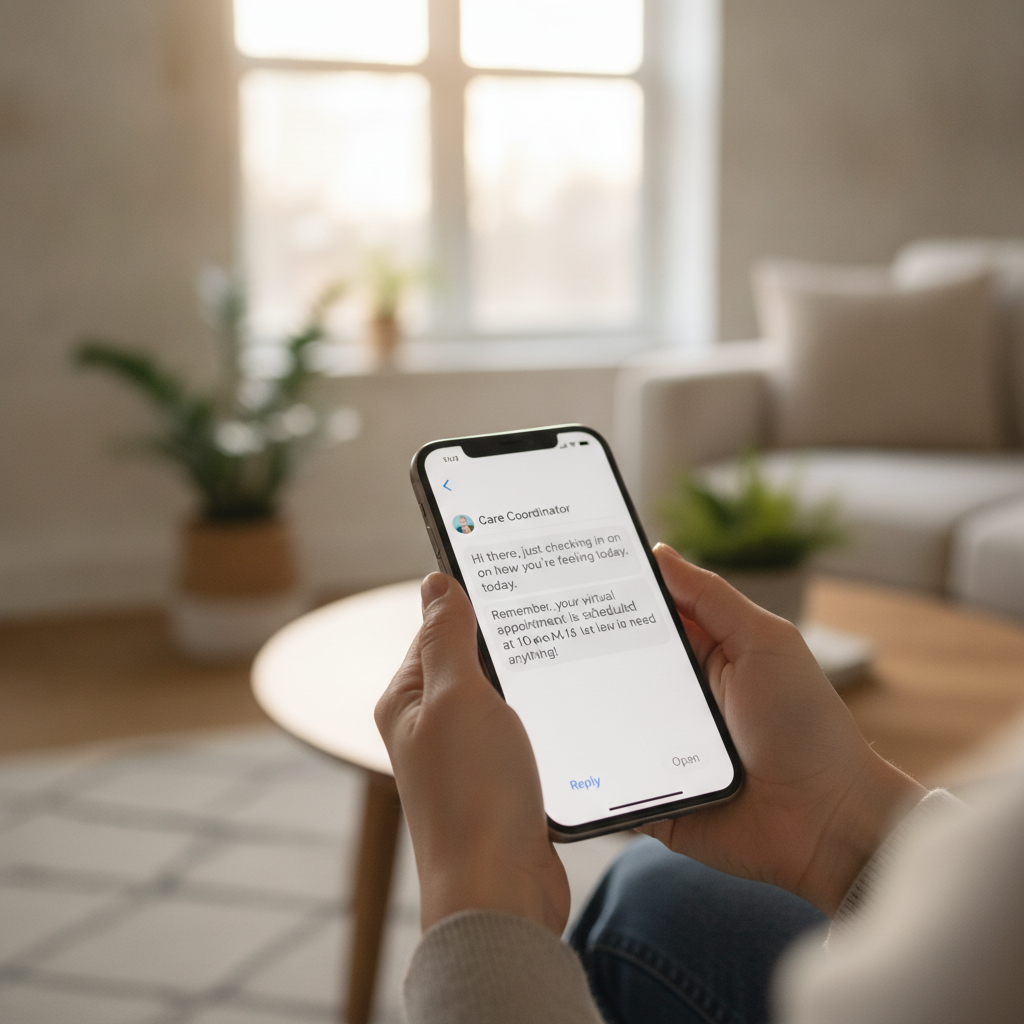
At MD M.A.T.T., the shame is designed out at every step, starting with the phone. When you call, our new patient coordinator works to book your appointment during that call and texts you the details when scheduling is complete. You are not left waiting for a callback that may never come.
Here is what that first visit looks like in plain sequence. You arrive, and the front desk coordinator already knows your name and already has your information ready, because it was passed over before you walked in. You do not stand at a window explaining yourself to a stranger. You go back and meet with the doctor, and the doctor sends your Suboxone prescription to your pharmacy. A staff member stays available for any question you have, before you leave and after. We work to welcome you, not process you through a clinical intake queue like a number in line.
That word choice matters. Most clinics are built to move bodies through a system. This one is built to make you feel expected and welcome. Federal law changed so that any licensed prescriber can start you on buprenorphine, the medicine in Suboxone, without the old special waiver requirement, which means the barrier is no longer the medicine. The barrier was always whether a place actually wanted to help you. We do.
What Happens When You Still Use After Starting Treatment?
We do not discharge you for continued use, and we will not force you into inpatient or intensive outpatient programs you do not want. Getting kicked out for a setback can send someone back to the thing that hurt them.
Our whole approach is community over sobriety alone. That means we work to keep you engaged with psychiatry, counseling, and resource support instead of pushing you out when you slip. The operating principle is simple: the recovery that works is the one you will actually participate in. A program you get thrown out of helps no one. Lower-barrier care can help keep more people in treatment, and a person who stays in care has a chance, while a person who gets discharged is left with none. If you use again, that is a reason to keep you close, not a reason to let you go.
One Patient Just Out of Prison Called Expecting to Be Turned Away
Dignity is not a slogan. It is what you actually do when someone shows up with nothing. One patient called us right after being released from prison. He had no insurance and no way to get to the office, and he fully expected to be told to come back another day.
We did not turn him away. We gave him a ride to the office, and once he arrived we worked to get him enrolled in coverage. Think through the alternative for a second. If we had told him to sort out his insurance and his transportation first, then call back, he would have hung up the phone with no medication and no appointment. Someone in that spot, on that day, might use. The refusal would not have protected anyone.
Economic well-being can support physical well-being. A person with no ride and no coverage is not a person you cannot help. They are a person who needs help most. We work to get people seen, because the moment someone is willing is the moment that counts, and it does not wait around for paperwork to catch up.
Why Does Follow-Up Matter More Than the First Appointment?
The first appointment gets you the medication. The follow-up is what can help you stay engaged long enough for the medication to work. The day after your first visit, our team texts you to confirm you picked up your Suboxone prescription, and we ask the real-life questions too: did you make it to the food pantry, did the transportation get set up.
That is deliberate. Opioid use disorder recovery is not only about whether the medicine helps with your cravings. It is about whether you can get to the pharmacy, afford groceries, and show up next week. So we work the whole problem. We help arrange rides through your insurance when available, and when that is not in place yet, we have helped provide the first ride ourselves. We connect people to the Office of Economic Development for job support. We link patients to housing through multiple 3.1 level programs, and we work with a long list of organizations that help with whatever you actually need.
If you cannot get to your appointment, the treatment fails, no matter how good the prescription is. That is why we treat transportation, food, and housing as part of the care, not as your problem to solve alone before we will see you.
When Anxiety, Depression, or Life Circumstances Surface
When anxiety or depression comes up, or when life gets hard enough to shake your footing, you are not handed a referral and told to call someone else. We keep psychiatrists and counselors in the same building, working alongside the same team.
This matters more than it sounds. When most clinics hit a co-occurring condition, they send you off to find a separate provider, book a separate appointment, and repeat your whole story to a new stranger. Most people never make that second call. The handoff itself is where people can fall out of care. By handling anxiety, depression, and other co-occurring conditions internally, we work to keep you engaged with psychiatry, counseling, and resource support in one place, with people who already know you.
Medication assisted treatment is called that for a reason: it works alongside counseling. The medicine can help with the withdrawal and the cravings, but the reasons you started using in the first place do not disappear on their own. Keeping the mental health care under the same roof is how you may stay connected instead of getting lost in the gap between two systems that never talk to each other.
What Does Maryland Medicaid Cover, and Why Cost Should Not Stop You?
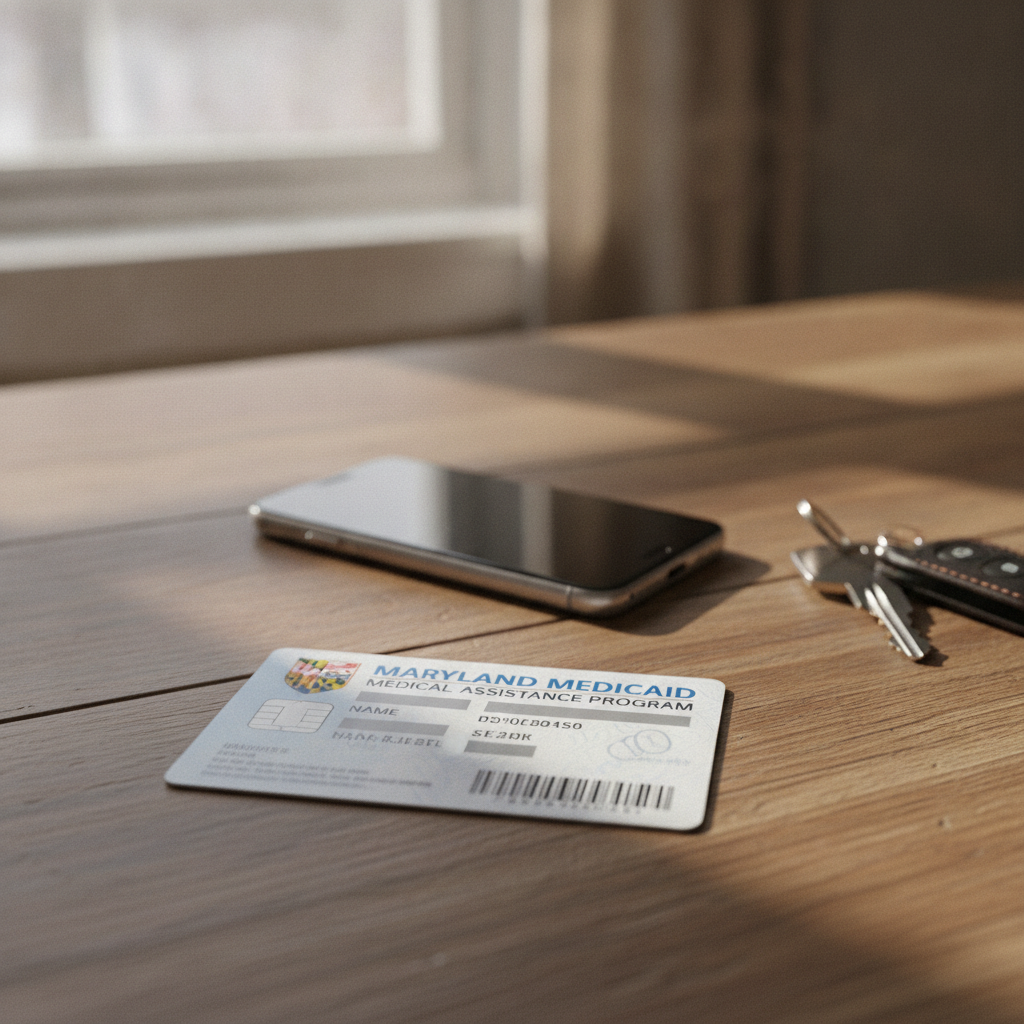
Maryland Medicaid covers the full continuum of medication-assisted treatment, including your Suboxone, your counseling, and care coordination. So if your insurance situation is what has kept you from calling, understand that the coverage is built to pay for exactly this.
All five MD M.A.T.T. locations, in Owings Mills, Linthicum Heights, Nottingham, Baltimore, and College Park, accept Medicaid. We also accept Medicare and most major commercial plans, including Blue Cross Blue Shield, Aetna, Cigna, and UnitedHealthcare. And if you walk in with no coverage at all, like the patient just out of prison, we help you work on getting enrolled once you are here rather than sending you away to figure it out first.
Here is the part worth sitting with. A lot of people put off treatment for months because they assume cost is the wall standing in their way. Then they finally call and find out the cost was never the real barrier. Judgment was. The fear of how they would be treated kept them out far longer than any bill ever would have. Do not let the wrong barrier decide your next month.
What Should You Expect When You Call?
You will talk to someone who works to book your appointment during that call, not someone who takes your information and promises a callback. That is the difference you may feel in the first sixty seconds.
Call MD M.A.T.T. at (443) 559-4137, and we work to get you on the schedule, often the same day if you reach us early enough. You will get a text with the appointment details, the address, and what to bring. When you arrive, the person at the front desk will already know your name and have your information ready. That is not luck and it is not a nice touch. It is a system built to make the question “will they judge me at a suboxone clinic” beside the point, because there is no moment in the process built to make you feel small.
If you have been delaying the call because you are not sure what kind of response you will get, call MD M.A.T.T. at (443) 559-4137. We work to book you during that call, and the appointment details will be texted to you as soon as scheduling is complete. The willingness you feel right now is the thing that matters most, and the right place will move to meet it.
You deserve care that sees your courage, not your past
If you’ve been wondering whether reaching out means facing judgment, the team at MD M.A.T.T. understands that concern completely. Medication-assisted treatment works best when you feel respected from the first conversation, and that starts with how you’re welcomed when you call.
Individual experiences vary. Every person’s recovery looks different, and outcomes depend on many personal factors.