Cravings in recovery are defined as intense, automatic urges produced by brain circuits that were permanently altered by repeated substance use. Understanding why cravings occur in recovery is not just reassuring. It is the first step toward responding to them with skill instead of fear. These urges are not a sign of weakness or failure. They are a predictable biological response rooted in how addiction reshapes the brain’s reward and memory systems. Triggers can be internal, like stress or loneliness, or external, like a familiar place or smell. Research confirms that cravings can persist long after substance use stops, which means preparation and understanding matter at every stage of recovery.
Why cravings occur in recovery: the brain science behind them
Addiction rewires the brain’s reward system in ways that outlast the last use. Every time a substance is used, the brain releases a surge of dopamine, the chemical tied to pleasure and motivation. Over time, the brain learns to associate that dopamine surge with specific people, places, sounds, and emotions. Those associations become hardwired into the basal ganglia and memory centers, two brain regions that drive habit and automatic behavior.
The result is that cravings fire faster than conscious thought. You do not decide to crave. Your brain detects a cue, activates a learned pathway, and the urge arrives before your rational mind has a chance to weigh in. This is why cravings can feel so overwhelming, even when you are fully committed to recovery.

The neurological impact of recent use is significant. Treatment-seeking patients with recent substance use are over six times more likely to experience intense cravings than those who have maintained abstinence. That gap reflects how powerfully active use reinforces these brain circuits.
Key brain changes that drive cravings include:
- Dopamine pathway sensitization: The reward system becomes hypersensitive to substance-related cues, making ordinary triggers feel urgent.
- Memory consolidation: The hippocampus stores detailed memories of the substance experience, which get activated by sensory cues.
- Weakened impulse control: The prefrontal cortex, which governs decision-making, is less effective after prolonged substance use.
- Conditioned responses: The brain builds automatic associations between environmental cues and the expectation of a substance.
Pro Tip: When a craving hits, remind yourself that it is a brain circuit firing, not a command you must obey. That mental reframe creates space between the urge and your response.
Why do cravings persist and sometimes get stronger?
Many people expect cravings to fade steadily after they stop using. The reality is more complicated. Cravings often intensify after the initial crisis phase of recovery, not because something is going wrong, but because the brain now has more capacity to process stored memories of substance use. Early recovery is often consumed by physical withdrawal and crisis management. Once that stabilizes, the brain turns its attention to memory consolidation, and cravings can become louder.
A large-scale study of over 51,000 participants confirmed that craving triggers remain consistent across all stages of recovery, not just early sobriety. This finding matters because it challenges the assumption that cravings are only a short-term problem. Even people who are stable, employed, and socially connected can experience strong cravings triggered by subtle emotional states or unexpected environmental cues.
Euphoric recall also plays a role. The brain tends to remember the relief or pleasure a substance provided while filtering out the consequences. This distortion makes cravings feel more compelling than they should be.
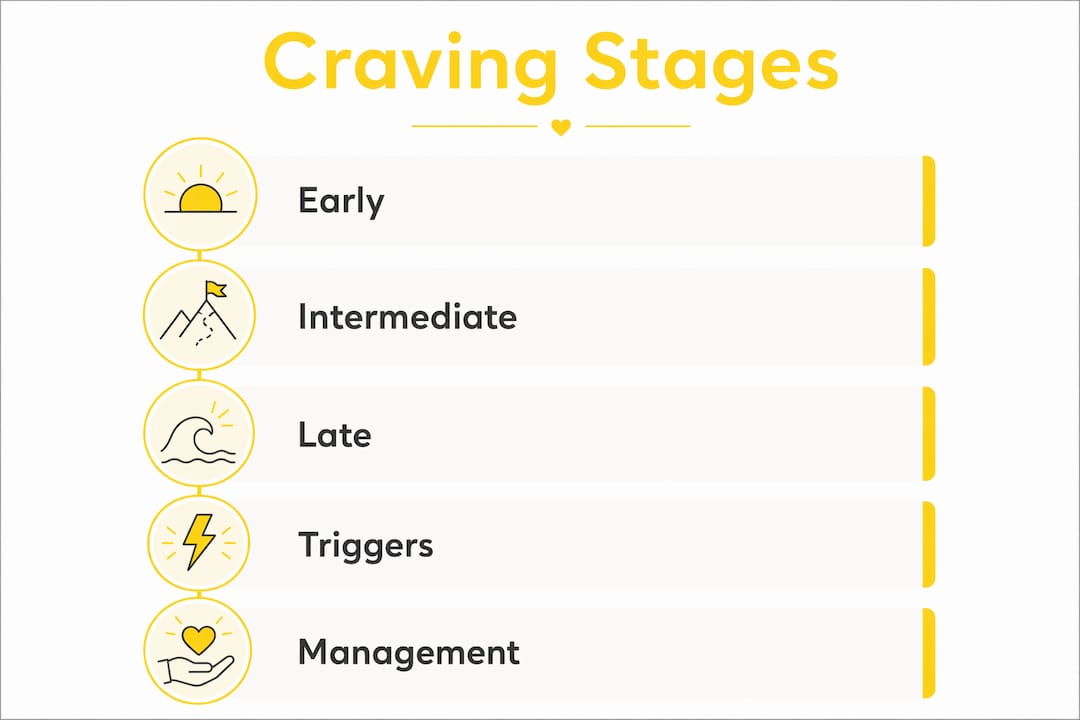
| Recovery stage | Craving pattern | Key challenge |
|---|---|---|
| Early (weeks 1–4) | Frequent, physically intense | Physical withdrawal overlapping with urges |
| Middle (months 1–6) | Can intensify as brain processes memories | Emotional triggers become more prominent |
| Later (6+ months) | Less frequent but can be triggered suddenly | Complacency and euphoric recall |
| Long-term | Occasional, often stress-related | Life stressors and major transitions |
Relapse rates for people in recovery are estimated between 40% and 60%. That number reflects how persistent and powerful craving triggers remain, not a lack of effort or commitment from the people experiencing them.
Pro Tip: If your cravings seem to get worse a few months into recovery, that is normal. It means your brain is healing and processing. Talk to your treatment provider about adjusting your support plan.
What are the most common craving triggers?
Craving triggers fall into two categories: external and internal. Both are equally powerful, and both require attention.
External triggers are the environmental cues your brain has linked to substance use. These include:
- People you used with or who still use
- Places where you used, such as specific neighborhoods, bars, or homes
- Smells, songs, or objects associated with past use
- Situations like parties, celebrations, or stressful social events
- Times of day or seasons that were part of your use pattern
Internal triggers are often less obvious but just as potent. Internal states like boredom, fatigue, and positive emotions can all activate craving pathways. This surprises many people in recovery. You might expect stress to trigger a craving, but a celebration or a moment of deep relaxation can do the same thing. The brain learned to associate the substance with relief, reward, and comfort across a wide range of emotional states.
The craving cycle follows a predictable path. A trigger activates a thought, which produces an emotion, which creates a physical sensation in the body, which builds into a full urge. Recognizing where you are in that cycle gives you more options to interrupt it. Knowing your personal triggers is not about avoiding life. It is about building awareness so you are not caught off guard.
A recovery support guide can help you map your specific triggers and build a personalized response plan with your care team.
How to manage cravings effectively in recovery
The goal in managing cravings is not to eliminate them immediately. The goal is to create a conscious choice between the urge and the action. That gap is where recovery lives.
Here are five approaches that research and clinical practice support:
-
Treat cravings as temporary body events. A craving is not an emergency. It is a wave that rises and falls, typically within 15–30 minutes. Treating it as a passing physical sensation rather than a crisis prevents the anxiety that can make urges stronger.
-
Practice urge surfing. Urge surfing means observing a craving rise and fall without acting on it. You watch the urge the way a surfer watches a wave, without being pulled under. This technique builds tolerance and confidence over time.
-
Respond with self-compassion. Self-compassion significantly reduces the stress that intensifies cravings. Judging yourself harshly for having a craving adds emotional fuel to the fire. Acknowledging the craving without shame keeps the stress response from amplifying the urge.
-
Use mindfulness to create a gap. Mindfulness practices, including focused breathing and body scans, slow the automatic response cycle. They give your prefrontal cortex time to re-engage before you act. Even three slow breaths can shift the trajectory of a craving.
-
Activate your support system. Calling a sponsor, texting a trusted friend, or reaching out to a counselor interrupts the craving cycle by shifting your attention and activating social connection. Building a strong support network before a craving hits is far more effective than trying to build one in the middle of an urge.
Pro Tip: Keep a craving log for two weeks. Write down the time, the trigger, the intensity, and what you did. Patterns will emerge quickly, and those patterns become your roadmap for prevention.
Viewing cravings as biological signals rather than moral failures shifts the entire experience. Curiosity replaces shame. And curiosity is a much better foundation for making a healthy choice.
Key Takeaways
Cravings in recovery are automatic brain responses rooted in neurological changes caused by addiction, and managing them requires consistent coping skills, self-compassion, and professional support.
| Point | Details |
|---|---|
| Cravings are neurological, not moral | Addiction rewires brain reward circuits, making cravings automatic and intense. |
| Cravings can intensify mid-recovery | The brain processes memories after early crisis, causing urges to peak unexpectedly. |
| Triggers are internal and external | Stress, fatigue, celebrations, and familiar places all activate craving pathways. |
| Urge surfing builds resilience | Observing cravings without acting on them reduces their power over time. |
| Self-compassion lowers craving intensity | Responding without self-judgment reduces the stress that amplifies urges. |
What I’ve learned about cravings that most people aren’t told
Most people enter recovery expecting cravings to get easier in a straight line. That expectation sets them up for unnecessary shame when cravings spike at three months or six months or even a year in. The truth is that the non-linear nature of cravings is not a sign of failure. It is a sign that the brain is actively healing and reorganizing.
What I find most powerful in working with people through this process is the moment they stop fighting the craving and start getting curious about it. That shift from “why is this happening to me” to “what is my brain trying to tell me right now” changes everything. It takes the emergency out of the experience and puts the person back in the driver’s seat.
The other thing worth saying plainly: cravings do not mean you want to use. They mean your brain has a learned pathway that got activated. Those are very different things. You can have a craving and choose not to act on it, every single time. That choice gets easier with practice, with support, and with the right treatment tools in place. A complete recovery timeline can help you understand what to expect at each stage so you are never blindsided.
Recovery is not about being craving-free. It is about building a life where cravings lose their grip, one day at a time.
— Cory
How Mdmatt supports craving management with medication-assisted treatment
Understanding why cravings happen is powerful. Pairing that understanding with the right medical support is even more powerful.

At Mdmatt, we treat opioid use disorder with both compassion and clinical precision. Suboxone, a medication-assisted treatment that reduces craving intensity and withdrawal symptoms, is a cornerstone of what we offer. When cravings are less overwhelming, the coping skills you are building actually have room to work. Our Suboxone treatment program is designed around your full picture, not just your diagnosis. We also offer individual counseling to help you identify triggers, build coping strategies, and address the root causes that contributed to opioid use disorder in the first place. You deserve care that treats all of you.
FAQ
What causes cravings during recovery?
Cravings are caused by brain circuits that were rewired by repeated substance use. When a trigger activates these circuits, an automatic urge fires before conscious thought can intervene.
How long do cravings last in recovery?
Individual cravings typically peak and subside within 15–30 minutes. Cravings as a pattern can persist across all stages of recovery, though their frequency and intensity often decrease with time and consistent coping practice.
Why do cravings sometimes get worse after early recovery?
The brain processes stored memories of substance use once the initial crisis phase stabilizes, which can cause cravings to intensify. This is a normal part of the healing process, not a sign of regression.
Can positive emotions trigger cravings?
Yes. Positive emotional states like celebrations or deep relaxation can trigger cravings because the brain learned to associate substances with reward and relief across many emotional contexts.
Does medication help reduce cravings?
Medication-assisted treatment, including Suboxone, directly reduces craving intensity by acting on the same brain receptors affected by opioids. Combined with counseling and support, it significantly improves recovery outcomes.