Suboxone is defined as a combination of buprenorphine and naloxone used to treat opioid use disorder through Medication-Assisted Treatment (MAT). Knowing what to expect from your first Suboxone dose removes fear and helps you prepare. Most patients start with a 2–4 mg sublingual dose of buprenorphine on day one, with the total capped at 8 mg. Relief from opioid withdrawal symptoms typically begins within 30–60 minutes after that first dose. The key to a safe first experience is timing. Taking Suboxone too early causes precipitated withdrawal, a sudden and intense worsening of symptoms. The Clinical Opiate Withdrawal Scale (COWS) is the clinical standard used to confirm you are ready to dose safely.
What to expect from your first Suboxone dose: why timing is everything
Timing your first dose correctly is the single most important factor in a safe induction. Buprenorphine is a partial opioid agonist with a ceiling effect, meaning it binds tightly to opioid receptors but activates them only partially. When full opioid agonists like heroin or oxycodone still occupy those receptors, buprenorphine rapidly displaces them. That displacement triggers precipitated withdrawal, which is faster and more severe than natural withdrawal.
Patients must be in mild to moderate withdrawal, typically 12–24 hours after their last opioid use, before taking the first dose. Clinicians use the COWS score to measure withdrawal severity objectively and confirm the right moment to begin. A COWS score of 8 or higher generally signals that it is safe to proceed.
Signs that you are in sufficient withdrawal and ready to dose include:
- Yawning frequently and tearing up without reason
- Goosebumps or chills not explained by temperature
- Muscle aches and restlessness
- Runny nose and sweating
- Nausea or stomach cramping
- Anxiety and difficulty sitting still
Patients consistently underestimate how long they need to wait. Feeling uncomfortable is the signal that your body is ready. Dosing before those signs appear is the most common cause of precipitated withdrawal during induction.
Pro Tip: Write down the exact time of your last opioid use before your appointment. Your provider will ask, and an accurate answer helps them calculate the safest time to begin your first dose.
How to take your first Suboxone dose step by step
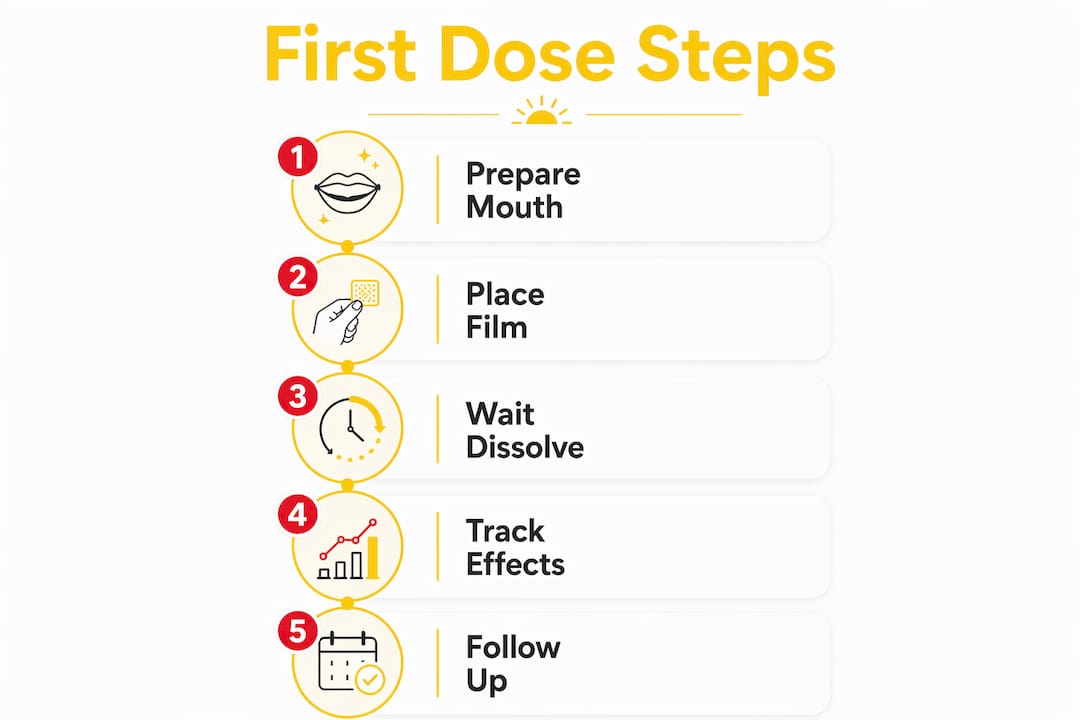
The standard first Suboxone dose is a sublingual film or tablet placed directly under the tongue. The film dissolves completely in about 5–10 minutes. Follow these steps exactly as your provider instructs:
- Confirm your COWS score. Your provider or nurse will assess your withdrawal level before handing you the first dose.
- Place the film or tablet under your tongue. Position it as far back as possible for maximum absorption.
- Keep your mouth still. Do not chew, swallow, or move the film around.
- Avoid eating, drinking, or smoking until the film has fully dissolved.
- Wait and report symptoms. After 30–60 minutes, your provider will reassess your withdrawal symptoms.
- Receive a second dose if needed. Clinicians titrate in 2–4 mg increments based on symptom control, up to a total of 8 mg on day one.
The sublingual route matters because naloxone in Suboxone is inactive when absorbed under the tongue. That design is intentional. Naloxone deters misuse by activating only if the medication is injected, which triggers immediate withdrawal in anyone physically dependent on opioids.
Pro Tip: Dry mouth reduces absorption. Rinse your mouth with water about 10 minutes before your dose, then let the film dissolve without adding more liquid.

What physical and emotional effects happen after the first dose
Relief from withdrawal symptoms is the most immediate and noticeable effect. Within 30–60 minutes, most patients report that anxiety, body aches, and nausea begin to ease. That relief is real and significant, but it does not mean you are fully stabilized. Full stabilization takes days to weeks as your provider adjusts your dose.
Common side effects on day one
Typical side effects after the first dose are mild and temporary. Most resolve within the first few days as your body adjusts.
| Side effect | What it means | When it typically resolves |
|---|---|---|
| Headache | Common as opioid receptors adjust | 1–3 days |
| Nausea | Mild receptor activation effect | 1–2 days |
| Sweating | Part of withdrawal clearing | 2–5 days |
| Constipation | Opioid receptor effect in gut | Ongoing, manageable |
| Sleep changes | Disrupted sleep architecture | 1–2 weeks |
Emotional effects to watch for
Emotionally, many patients feel a wave of calm and relief within the first hour. Cravings drop noticeably. Some patients also experience a brief period of anxiety or mood shifts as their brain chemistry begins to rebalance. This is normal and does not mean the medication is not working.
The difference between withdrawal symptoms fading and full stabilization is important to understand. Fading symptoms on day one confirm the medication is working. Stable, consistent symptom control across multiple days confirms the dose is right. If cravings or discomfort return before your next dose, that is a sign your daily dose needs adjustment, not that Suboxone has failed. Tracking signs Suboxone is working helps you communicate clearly with your provider.
Common challenges during your first Suboxone dose
The most serious challenge is precipitated withdrawal. It feels like withdrawal symptoms suddenly intensifying rather than improving within minutes of taking the dose. Symptoms include severe muscle cramps, intense sweating, agitation, and rapid heart rate. If this happens, contact your provider immediately. Do not take more Suboxone. Your provider may recommend supportive care, including hydration and comfort medications, while the buprenorphine stabilizes.
Sublingual administration errors are more common than most patients expect. Swallowing the film before it dissolves, eating right before dosing, or placing the film too far forward under the tongue all reduce absorption. Reduced absorption means less symptom relief and a higher chance of feeling like the dose did not work.
Suboxone induction works best when you treat the first dose as a clinical procedure, not just taking a pill. Every step, from waiting for the right withdrawal level to holding still while the film dissolves, directly affects how well the medication works.
Managing suboxone first dose anxiety is also a real concern. Many patients feel nervous about how their body will respond. That anxiety is understandable. Breathing slowly, staying seated, and having a trusted person nearby during the first dose all help. Read about avoiding precipitated withdrawal before your appointment so you know exactly what to watch for.
- Contact your provider if symptoms worsen sharply within 30 minutes of dosing
- Do not take a second dose without provider guidance
- Stay hydrated and avoid strenuous activity on day one
- Keep a simple log of your symptoms and their intensity every hour
Pro Tip: Bring a notebook or use your phone to track how you feel every 30 minutes after your first dose. That record gives your provider precise information to fine-tune your dose on day two.
How your Suboxone dose changes after day one
Day one is the starting point, not the destination. Most patients receive a dose increase on day two, moving toward a total daily dose that suppresses withdrawal and cravings without causing sedation. The stabilization dose typically falls between 8–24 mg daily, reached through careful titration over several days.
| Phase | Typical dose range | Goal |
|---|---|---|
| Day one induction | 2–8 mg | Relieve acute withdrawal |
| Day two to three | 8–16 mg | Reduce cravings and stabilize |
| Maintenance | 8–24 mg daily | Consistent symptom control |
Signs that your dose needs adjustment include returning cravings before your next scheduled dose, persistent nausea or sedation, or difficulty sleeping. These are clinical signals, not personal failures. Open communication with your provider is the fastest path to finding the right maintenance dose. Learning why your Suboxone dose varies helps you understand why adjustments are normal and expected.
The first month of treatment involves the most active dose management. After stabilization, most patients settle into a consistent daily dose with far fewer adjustments needed. Understanding what comes next reduces anxiety and builds confidence in the process.
Key Takeaways
The first Suboxone dose relieves opioid withdrawal symptoms within 30–60 minutes when taken at the correct time, in the correct dose, and with proper sublingual technique.
| Point | Details |
|---|---|
| Timing is critical | Wait 12–24 hours after last opioid use and confirm a COWS score of 8 or higher before dosing. |
| Starting dose is low | Most patients begin with 2–4 mg sublingually, with day one total capped at 8 mg. |
| Relief comes quickly | Withdrawal symptoms like anxiety, nausea, and body aches ease within 30–60 minutes. |
| Side effects are temporary | Headache, sweating, and nausea are common but typically resolve within 1–3 days. |
| Dose adjustments follow | Stabilization doses of 8–24 mg daily are reached through careful titration over days to weeks. |
What I have learned from watching patients take their first dose
The patients who do best on day one are the ones who come in prepared, not fearless. Fear is reasonable. What matters is that you channel it into preparation rather than avoidance.
The biggest misconception I see is that patients expect to feel completely normal after the first dose. That is not the goal of day one. The goal is to stop the acute suffering of withdrawal and give your body a foundation to stabilize. Full comfort takes a few days of dose adjustment, and that is exactly how the process is designed to work.
Patients also underestimate how much the waiting period matters. I have seen people try to rush the process because the discomfort of withdrawal feels unbearable. That urgency is completely understandable. But dosing even a few hours too early can turn a manageable experience into a frightening one. Trust the COWS score. Trust your provider. The discomfort you feel while waiting is temporary, and it is actually proof that your body is ready for the medication to work.
The first dose is also an emotional milestone. For many patients, it is the first time in months or years that they have taken a concrete step toward feeling better. That matters. Be patient with yourself on day one, monitor your symptoms carefully, and reach out to your provider with any concern, no matter how small it seems.
— Cory
Suboxone treatment support at Mdmatt
Starting Suboxone treatment is a significant step, and having the right clinical team behind you makes a real difference in how safely and comfortably that first dose goes.

Mdmatt’s Suboxone treatment clinic provides supervised induction with experienced providers who follow current clinical protocols, including COWS-guided timing and careful dose titration. Patients receive individualized care that addresses not just opioid use disorder but the underlying factors that contribute to it. Mdmatt also offers telehealth treatment services for patients who need flexible access to care. Whether you are preparing for your first dose or looking for ongoing support, Mdmatt is ready to guide you through every step with dignity and clinical expertise.
FAQ
How long does the first Suboxone dose take to work?
Relief from withdrawal symptoms typically begins within 30–60 minutes after the first sublingual dose. Full stabilization takes several days as your provider adjusts your dose.
What happens if I take Suboxone too soon?
Taking Suboxone before sufficient withdrawal has set in causes precipitated withdrawal, a rapid and intense worsening of symptoms. Waiting 12–24 hours after your last opioid use and confirming a COWS score of 8 or higher prevents this.
What is the typical first Suboxone dose?
Most patients start with 2–4 mg sublingually, with the total day one dose capped at 8 mg. Clinicians adjust in 2–4 mg increments based on symptom response.
Can I eat or drink while taking Suboxone?
Avoid eating, drinking, or smoking until the sublingual film or tablet has fully dissolved. Food and liquid reduce absorption and lower the effectiveness of the dose.
How will I feel emotionally after my first dose?
Most patients feel a noticeable reduction in anxiety and cravings within the first hour. Some experience brief mood shifts as brain chemistry begins to rebalance, which is normal and temporary.