Neuroplasticity recovery is defined as the brain’s active process of reorganizing its neural pathways to regain or improve function after injury, addiction, or mental health challenges. This capacity is not limited to childhood. The adult brain reorganizes its structure and connections in response to targeted stimuli throughout life. For anyone working through opioid use disorder, depression, anxiety, or trauma, understanding how this process works is the first step toward using it deliberately.
What is neuroplasticity recovery and how does it work?
Neuroplasticity is the nervous system’s capacity to change its structure, functions, or connections in response to experience. Recovery, in this context, means directing that change toward healing rather than harm. The brain can form over 15,000 synapses per individual neuron. That number reflects just how much rewiring potential exists inside every person’s skull.
Several biological processes drive this rewiring:
- Synaptogenesis: The brain forms new connections between neurons when a behavior or thought is repeated.
- Axonal sprouting: Surviving nerve fibers grow new branches to compensate for damaged ones.
- Dendritic remodeling: The receiving branches of neurons expand or retract based on how often they are used.
- Functional remapping: Undamaged brain regions take over functions previously handled by injured areas, which is how stroke survivors relearn speech or movement.
Brain cells that die do not regenerate. The brain compensates by rerouting. That compensation is powerful, but it requires active effort to guide it in the right direction.
The “use it or lose it” principle governs all of this. Repeated use strengthens connections while disuse weakens them over time. A skill practiced daily builds a stronger neural pathway than one practiced once a week. The same logic applies to thought patterns, emotional responses, and cravings.

Pro Tip: The early weeks after stopping opioid use represent a window of heightened brain plasticity. Starting therapy and structured activity during this period gives your brain the best conditions for building healthier pathways.
What role does neuroplasticity play in addiction and mental health recovery?
Addiction is, at its core, a neuroplasticity problem. Repeated drug use reinforces harmful neural networks that drive cravings, compulsive behavior, and emotional dysregulation. The brain adapts to the presence of opioids by restructuring reward circuits. When the drug is removed, those circuits do not simply reset. They remain wired for the substance, which is why cravings occur in recovery even after months of abstinence.
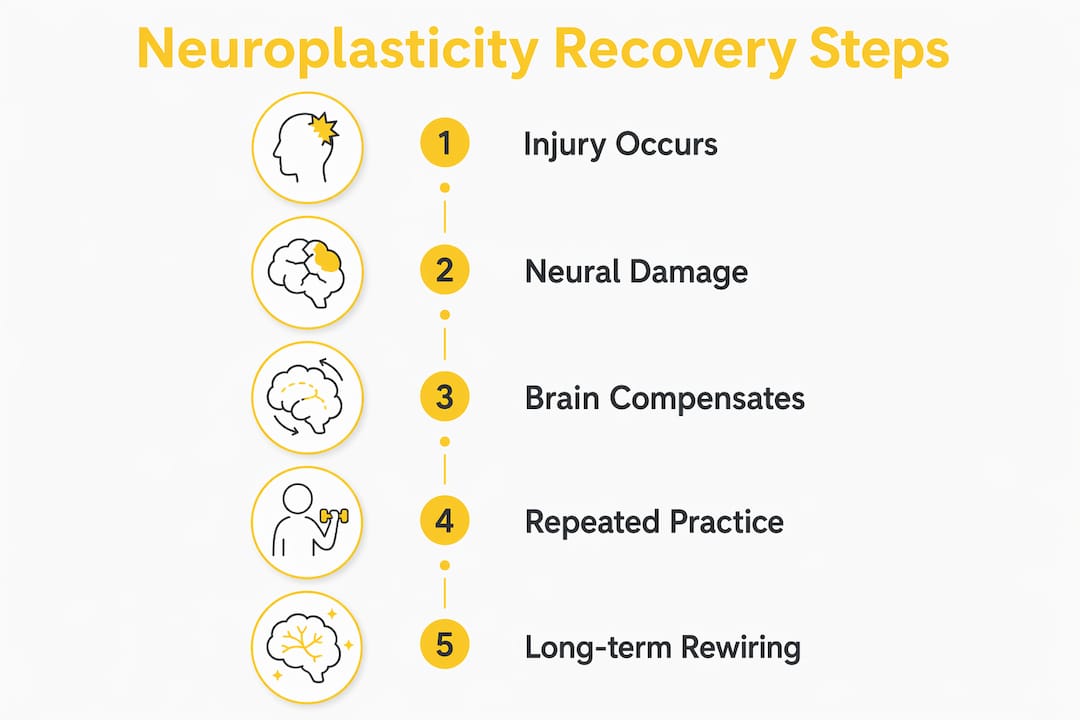
The same mechanism applies to anxiety and depression. Chronic stress reshapes the prefrontal cortex and the amygdala, making negative thought patterns feel automatic. These are not character flaws. They are learned neural configurations.
The good news is that therapy targets exactly these circuits. Effective treatment works by:
- Weakening the neural pathways that reinforce cravings, avoidance, and negative self-talk.
- Strengthening new pathways built through healthy behavior, connection, and coping skills.
- Using structured, repetitive tasks to make the new patterns more automatic over time.
Recovery requires long-term commitment because the brain does not rewire overnight. A single therapy session creates a small shift. Hundreds of sessions, combined with daily practice, create lasting structural change. Environmental support matters too. Stable housing, healthy relationships, and reduced stress all create conditions where adaptive plasticity can take hold.
Understanding this explains why addiction recovery timelines span months and years, not days. The brain needs time, repetition, and the right inputs to rebuild.
What therapeutic approaches harness neuroplasticity for recovery?
Effective neuroplasticity-based treatment is early, intensive, and progressively challenging. The brain responds to difficulty. Therapy that is too easy does not force the adaptive reorganization needed for real change.
The most evidence-supported approaches include:
- Cognitive training: Structured mental exercises that target memory, attention, and executive function. These directly rebuild circuits weakened by substance use or psychiatric illness.
- Physical therapy and exercise: Aerobic exercise increases brain-derived neurotrophic factor (BDNF), a protein that supports the growth and maintenance of neurons.
- Transcranial magnetic stimulation (TMS): A neuromodulation technique that uses magnetic pulses to stimulate or suppress specific brain regions, used in treatment-resistant depression.
- Virtual reality (VR) rehabilitation: Emerging clinical tools use VR to create task-specific environments that accelerate functional remapping after brain injury.
- Medication-assisted treatment (MAT) combined with counseling: Medications like Suboxone stabilize brain chemistry while therapy builds new behavioral pathways. MAT paired with therapy produces better outcomes than either approach alone.
Pro Tip: Ask your treatment provider about progressive difficulty in your therapy plan. If every session feels comfortable, the challenge level may not be high enough to drive meaningful neural change.
The table below compares the primary goals of each approach:
| Therapeutic approach | Primary neuroplasticity goal |
|---|---|
| Cognitive training | Rebuild executive function and attention circuits |
| Physical exercise | Increase BDNF and support new neuron maintenance |
| TMS neuromodulation | Directly modulate overactive or underactive brain regions |
| MAT with counseling | Stabilize chemistry while building behavioral pathways |
| VR rehabilitation | Accelerate functional remapping through task-specific practice |
Consistent, high-intensity engagement is what separates treatment that works from treatment that stalls. Therapy is not a one-time fix. It is an ongoing process of reinforcing the circuits you want and letting the ones you do not want fade.
Some patients also explore nervous system support supplements as part of a broader wellness plan, though these should always be discussed with a treating physician before use.
What challenges and misconceptions exist in neuroplasticity recovery?
Neuroplasticity is a neutral mechanism. It does not automatically work in your favor. Plasticity can support recovery or reinforce maladaptive habits like chronic pain, cravings, and anxiety, depending entirely on what stimuli the brain receives. This is the most important misconception to correct.
Common myths and real challenges include:
- “The brain heals passively over time.” Passive rest does not direct plasticity. Without targeted input, the brain defaults to reinforcing whatever patterns are most active, including harmful ones.
- “Recovery is complete once symptoms stop.” Symptom relief is not the same as structural change. Gains made through therapy require ongoing maintenance to prevent regression.
- “Neuroplasticity works the same for everyone.” Age, severity of injury, co-occurring conditions, and the quality of rehabilitation all affect outcomes significantly.
- “More time in recovery means less risk of relapse.” Time alone does not rewire the brain. Active practice and environmental support do.
Neuroplasticity requires deliberate, task-specific effort to direct changes toward recovery. Passive healing alone is insufficient because maladaptive pathways can stabilize and become harder to reverse without targeted intervention. The critical window after abstinence is real, and missing it makes full recovery harder.
The “use it or lose it” rule applies to gains as much as it applies to deficits. Plasticity-driven improvements need ongoing reinforcement to hold. Patients who complete a treatment program and then stop all structured practice often see their gains erode within months. Long-term recovery is not a destination. It is a practice.
Key Takeaways
Neuroplasticity recovery works because the brain actively rewires itself in response to deliberate, repeated practice, and that process requires consistent effort, early intervention, and long-term environmental support to succeed.
| Point | Details |
|---|---|
| Brain rewiring is active, not passive | Targeted therapy and repetition drive neural change; rest alone does not. |
| Early intervention matters most | A window of heightened plasticity exists after injury or abstinence. Use it. |
| Addiction reshapes brain circuits | Opioid use rewires reward pathways; recovery requires deliberately building new ones. |
| Gains require maintenance | The “use it or lose it” principle means stopping practice leads to regression. |
| MAT plus therapy outperforms either alone | Medication stabilizes chemistry while counseling builds lasting behavioral pathways. |
Why neuroplasticity is a tool, not a promise
I have worked with patients long enough to know that “your brain can change” is both the most hopeful and the most misunderstood thing you can tell someone in recovery. People hear it and assume the hard work will happen automatically. It does not.
What I have seen work is patients who treat their recovery like a training program. They show up consistently. They do the uncomfortable cognitive work in therapy. They build structure into their days because structure is what the brain needs to form stable new patterns. The patients who struggle most are the ones waiting to feel motivated before they act. Neuroplasticity does not wait for motivation. It responds to behavior.
Setbacks are part of this process, not evidence that it is not working. Every time you return to a healthy behavior after a slip, you are still reinforcing that pathway. The brain counts repetitions, not perfection. That reframe has helped more patients stay in treatment than almost anything else I have said.
— Cory
How Mdmatt supports your brain’s recovery process
Recovery that works on a neurological level requires more than willpower. It requires the right combination of medication, therapy, and consistent support from a team that understands the science behind it.

Mdmatt’s Suboxone treatment clinic combines medication-assisted treatment with counseling to address both the biological and behavioral dimensions of opioid use disorder. Suboxone stabilizes the brain chemistry disrupted by opioid use, creating the conditions where therapy can actually build new pathways. Mdmatt also offers telehealth treatment services for patients who need flexible, accessible care. If you are ready to put your brain’s capacity for change to work, Mdmatt’s team is here to support that process with dignity and without judgment.
FAQ
What is neuroplasticity recovery in simple terms?
Neuroplasticity recovery is the brain’s ability to reorganize its neural pathways to regain function after injury, addiction, or mental health challenges. It requires active, repeated practice rather than passive rest.
How long does neuroplasticity recovery take?
There is no fixed timeline. Recovery depends on the severity of the condition, the intensity of rehabilitation, and how consistently new behaviors are practiced. Meaningful structural change typically requires months to years of sustained effort.
Can the brain recover from opioid addiction through neuroplasticity?
Yes. The brain circuits altered by opioid use can be rewired through a combination of medication-assisted treatment and structured therapy. MAT combined with counseling is the most evidence-supported approach for rebuilding healthy neural pathways.
What are the best neuroplasticity exercises for mental health recovery?
Cognitive training, aerobic exercise, mindfulness practice, and structured therapy sessions are the most effective approaches. Each targets different neural circuits and works best when practiced consistently over time.
Does neuroplasticity mean recovery is guaranteed?
No. Neuroplasticity is a neutral mechanism that can reinforce either healthy or harmful patterns depending on the inputs it receives. Targeted, deliberate rehabilitation is required to direct plasticity toward recovery rather than maladaptive outcomes.