
Telling family about Suboxone treatment is the process of openly sharing your medication-assisted recovery plan so your loved ones can understand, prepare, and support you. Suboxone, the brand name for buprenorphine/naloxone, is a vital tool in treating opioid use disorder that reduces cravings and withdrawal symptoms without producing a euphoric high. Family support is one of the strongest predictors of long-term recovery success. The conversation is not easy, but it is worth having. With the right preparation, you can share your treatment plan in a way that builds understanding rather than fear.
What to prepare before telling your family about Suboxone treatment
Preparation is the difference between a conversation that builds support and one that creates confusion. Before you say a word to anyone, get clear on the facts yourself.
Know the basics of your treatment. Suboxone is a prescription medication used in Medication-Assisted Treatment, or MAT. It works by binding to opioid receptors in the brain to reduce cravings and block withdrawal. Families often worry it is just substituting one drug for another. That concern is understandable, but it is medically inaccurate. Suboxone does not produce euphoria when taken as prescribed, which is a critical fact to share early.

Prepare a plain-language explanation. You do not need medical terminology to explain your treatment. A simple version works well: “I am taking a prescription medication that stops cravings and helps my brain heal. My doctor supervises it closely.” That is enough for a first conversation. You can add detail later.
Before the conversation, work through these preparation steps:
- Write down three facts about Suboxone you want your family to know
- Anticipate the two or three questions most likely to come up
- Decide who you will tell first, whether that is a spouse, a parent, or a sibling
- Choose a calm, private setting with no time pressure
- Decide in advance what you are and are not willing to share
Pro Tip: Write a short, factual summary of your treatment and send it to your closest family members before the in-person conversation. A written message gives people time to process before they react, which leads to calmer discussions.
Deciding who to tell first matters. Starting with your core support group and sharing a consistent written summary prevents conflicting stories from spreading through the family. It also means you are not repeating yourself under emotional pressure.
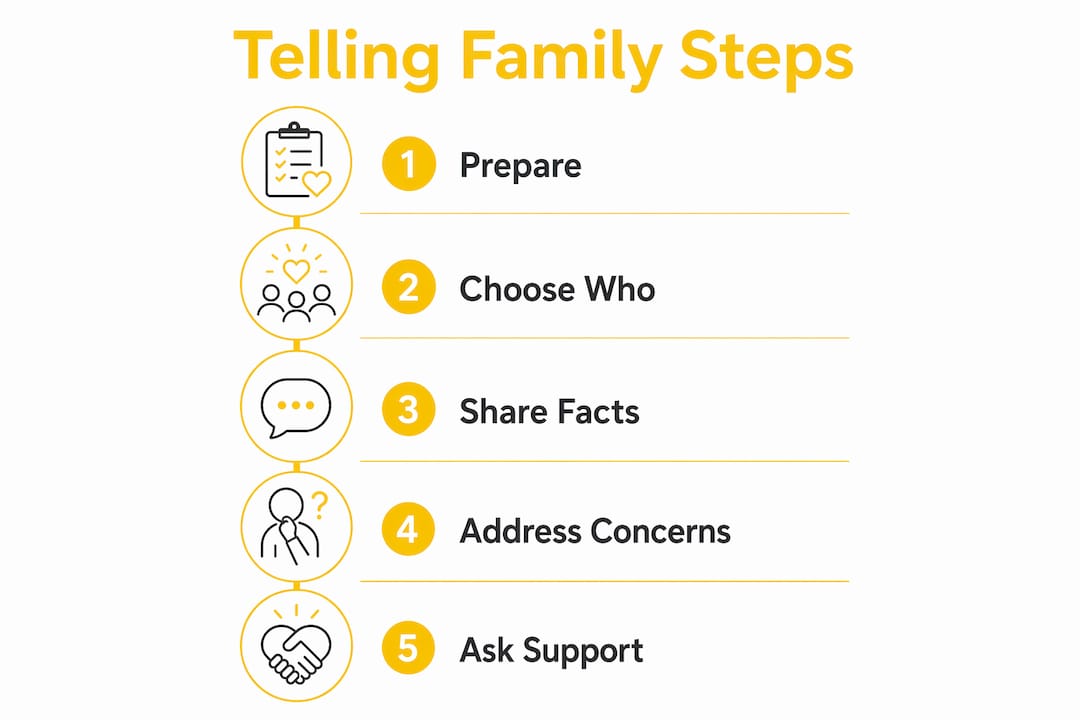
How to tell your family about your Suboxone treatment: a step-by-step approach
A clear structure makes the conversation easier for both you and your family. Follow these steps to keep the discussion focused and productive.
-
Open with a direct, factual statement. Say something like: “I want to tell you that I am being treated for opioid use disorder. My doctor has prescribed Suboxone as part of my treatment plan.” Keep it short. Resist the urge to over-explain in the first 30 seconds.
-
Cover three key points. Best practices for this type of disclosure focus on three areas: what the treatment is, how it will affect your daily life in the near term, and what kind of support you are asking for. Covering all three reduces family anxiety and prevents ambiguity.
-
Use honest, calm language. Avoid language that sounds defensive or apologetic. You are sharing medical information, not confessing a failure. Phrases like “I am taking this seriously” and “My doctor and I have a plan” communicate confidence and responsibility.
-
Anticipate questions and answer them patiently. Common questions include: “How long will you be on it?” “Will you get addicted to Suboxone?” “Does it make you high?” Prepare short, factual answers. For the addiction question, the answer is that Suboxone is a controlled medication managed by a physician, and physical dependence is different from addiction.
-
Use a prepared boundary statement for intrusive questions. A neutral phrase like “I prefer to keep some of those details between me and my doctor” protects your privacy without shutting down the conversation entirely.
-
Follow up individually. After a group conversation, check in with each family member one on one. Some people need more time or information before they can offer support.
Pro Tip: If you are nervous about the conversation, practice it out loud with a counselor or a trusted friend first. Hearing your own words helps you find the right tone before the real discussion.
Here is a simple reference for the three core points to cover:
| Topic | What to say | Why it matters |
|---|---|---|
| What Suboxone is | A prescription medication for opioid use disorder | Replaces fear with facts |
| Near-term impact | Appointments, possible schedule changes | Prepares family for practical shifts |
| Support request | Specific asks like reminders or attending visits | Gives family a clear role |
How to address family concerns and reduce Suboxone stigma
Patients in MAT frequently face stigma rooted in misunderstandings about how Suboxone works. Your family may share those misunderstandings without realizing it. Addressing them directly is more effective than hoping they go away.
Common concerns families raise include:
- “You are just trading one addiction for another.”
- “Why can’t you just quit without medication?”
- “How long will you need to be on this?”
- “What will other people think?”
Each of these concerns reflects a gap in knowledge, not a lack of love. Family education about treatment reduces stigma and builds empathy. When families understand that opioid use disorder is a chronic brain condition, not a moral failure, their response shifts from judgment to support.
Explain how Suboxone works in plain terms. Buprenorphine, the active ingredient, partially activates opioid receptors. This reduces cravings and withdrawal without producing the intense high associated with opioids like heroin or oxycodone. Naloxone, the second ingredient, blocks the effect of other opioids if someone tries to misuse the medication. The combination is designed for safety and stability.
“Recovery is not about willpower alone. Suboxone gives the brain the stability it needs to heal, the same way insulin helps a diabetic manage blood sugar. Treatment is medicine, not weakness.”
Share credible resources with family members who want to learn more. The Mdmatt blog on managing Suboxone stigma is a good starting point. You can also invite a willing family member to attend a treatment appointment, which often does more to reduce stigma than any conversation alone.
How to ask your family for specific support during treatment
Vague requests for support rarely produce real help. Specific requests do. Concrete asks like attending appointments or helping with medication reminders make it easier for family members to contribute in meaningful ways.
Practical support requests to consider:
- Ask a family member to drive you to treatment appointments when needed
- Request help setting a daily medication reminder on your phone
- Ask them not to keep opioid medications in shared spaces
- Request that they avoid discussing your treatment with others without your permission
- Ask for patience during difficult days, especially early in treatment
Emotional support matters just as much as practical help. Let your family know that listening without judgment is one of the most valuable things they can offer. You do not need them to fix anything. You need them to stay present.
Be honest about your limits too. Tell your family what kind of check-ins feel supportive versus intrusive. Some patients appreciate daily texts. Others find that level of attention adds pressure. Setting those expectations early prevents misunderstandings later.
Express gratitude clearly and often. Family members who feel appreciated are more likely to stay engaged over the long term. A simple “thank you for showing up for me” goes further than most people realize.
Common mistakes to avoid when discussing Suboxone with family
Even well-prepared conversations can go sideways. Knowing the most common mistakes helps you avoid them.
- Oversharing too soon. You do not need to share your full medical history in the first conversation. Stick to the three core points and add detail over time.
- Trying to convince everyone at once. Managing multiple storytelling threads simultaneously increases stress and confusion. Start with one or two trusted people, then expand.
- Getting defensive when questioned. Questions usually come from concern, not judgment. Staying calm and factual keeps the conversation productive.
- Skipping the boundary statement. Without a prepared response for intrusive questions, you may feel pressured to share more than you intended. A neutral phrase like “I prefer to keep that between me and my doctor” protects your privacy and ends the line of questioning without conflict.
- Expecting immediate acceptance. Some family members need time. Telling them once is not the end of the conversation. Plan for follow-up.
If your family’s reaction is negative or unsupportive, seek outside help. A counselor, a support group, or a treatment team at a clinic like Mdmatt can provide the encouragement your family may not be ready to offer yet. Recovery does not require unanimous family approval. It requires your commitment and at least one or two people in your corner.
Key takeaways
Telling family about Suboxone treatment works best when you lead with clear facts, cover near-term impact, and make specific support requests from the start.
| Point | Details |
|---|---|
| Prepare before the conversation | Know the facts about Suboxone and decide who to tell first before any discussion. |
| Cover three core points | Share what the treatment is, how it affects daily life, and what support you need. |
| Address stigma with education | Explain how Suboxone works medically to replace fear and judgment with understanding. |
| Make specific support requests | Concrete asks like appointment rides or medication reminders give family a clear role. |
| Use a boundary statement | Prepare a neutral phrase to handle intrusive questions without shutting down the conversation. |
What I have learned from watching patients have this conversation
The patients I have seen struggle most with this conversation are not the ones who lack courage. They are the ones who wait too long, hoping the right moment will appear on its own. It rarely does. The right moment is the one you create.
What surprises most patients is how much their family already suspects. By the time someone is in treatment, the people closest to them have usually noticed something is wrong. The conversation does not reveal a secret so much as it gives everyone permission to stop pretending. That shift alone can reduce the tension in a household dramatically.
The other thing I have noticed is that families respond better to facts than to emotions in the first conversation. Tears and apologies have their place, but they can overwhelm people who are already anxious. A calm, factual opening gives your family something to hold onto while they process the emotional weight of what you are sharing.
Pacing matters. You do not have to resolve everything in one sitting. The first conversation plants a seed. The follow-up conversations are where real understanding grows. Give your family time, and give yourself credit for having the courage to start.
— Cory
Suboxone treatment support at Mdmatt
Mdmatt treats patients with opioid use disorder at outpatient clinics in Maryland, with telehealth options available for patients who need flexible access to care. The practice takes a patient-centered approach that addresses not just the physical side of addiction but the life circumstances that contribute to it.

If you are ready to start or continue Suboxone treatment, Mdmatt’s Suboxone treatment clinic offers compassionate, medically supervised care. Family members are welcome to be part of the process. Reaching out is the first concrete step toward building the support system your recovery deserves. You do not have to figure this out alone.
FAQ
What is Suboxone and how does it treat opioid use disorder?
Suboxone is a prescription medication combining buprenorphine and naloxone that reduces opioid cravings and withdrawal symptoms. It is a core component of Medication-Assisted Treatment and is supervised by a licensed physician.
Does Suboxone get you high?
Suboxone does not produce euphoria when taken as prescribed. Buprenorphine partially activates opioid receptors at a level that manages cravings without creating a high.
How do I handle a family member who reacts negatively to my treatment?
Stay calm, provide factual information, and give them time to process. If the reaction remains unsupportive, seek guidance from your treatment team or a counselor who can help you build alternative support.
When should I tell my family about starting Suboxone treatment?
Telling family early helps them prepare for near-term changes and gives you a stronger support network from the start. Starting with one or two trusted people before broader family discussions reduces stress and keeps information consistent.
What if my family thinks Suboxone is just another addiction?
Explain that physical dependence on a prescribed medication is medically different from addiction. Share credible resources, and consider inviting a willing family member to attend a treatment appointment where your care team can answer their questions directly.