Medication-Assisted Treatment (MAT) Program | MD M.A.T.T.
When you call MD M.A.T.T. before 2pm, you may be able to be seen the same day, and in some cases within an hour, with your first prescription sent to the pharmacy if clinically appropriate. That speed reflects the philosophy behind medication assisted treatment for opioid addiction when access barriers are reduced. When someone is in withdrawal or facing another day of use, asking them to wait a week for an intake appointment can present challenges, because willingness to engage in care can be fragile. So we built our program around one idea: work to get people seen the same day when possible, treat them with dignity, and start the medicine that may help with cravings when the clinical window is open.
If you are the one making the calls for someone you love, this page walks you through what happens, how the process moves, and what may be different from other programs.
What Medication Assisted Treatment Actually Is
Medication assisted treatment is outpatient care that pairs an FDA-approved medication for opioid use disorder with counseling, psychiatry, and behavioral health support for the challenges that can contribute to ongoing use. It is not a pill handed out in isolation. We call it medication assisted treatment because medication works alongside counseling. The medicine can address the physical pull, and the rest addresses the reasons a person may have turned to substance use in the first place.
At MD M.A.T.T. we prescribe medications approved for opioid use disorder except methadone. That includes buprenorphine/naloxone (Suboxone), Sublocade, naltrexone (Vivitrol), and other approved formulations. The CDC explains that medication for opioid use disorder is used to treat the disorder and support recovery, and that is central to what we do. We also provide comfort medications to help ease the first days physically.
Here is the part some clinics skip. Many people who come in are managing more than an opioid problem. There may be anxiety. There may be depression. There may be trauma. So a comprehensive plan pairs the prescription with counseling and psychiatry, combining FDA-approved medication with the support services that help maintain engagement in care. Patients with a co-occurring condition receive integrated care. We approach you as a whole person.
How Quickly Can You Be Seen?
In many cases, same day or the very next day. If you call before 2pm, you may be able to come in that same day, sometimes within an hour of the call. We work to accommodate people quickly.
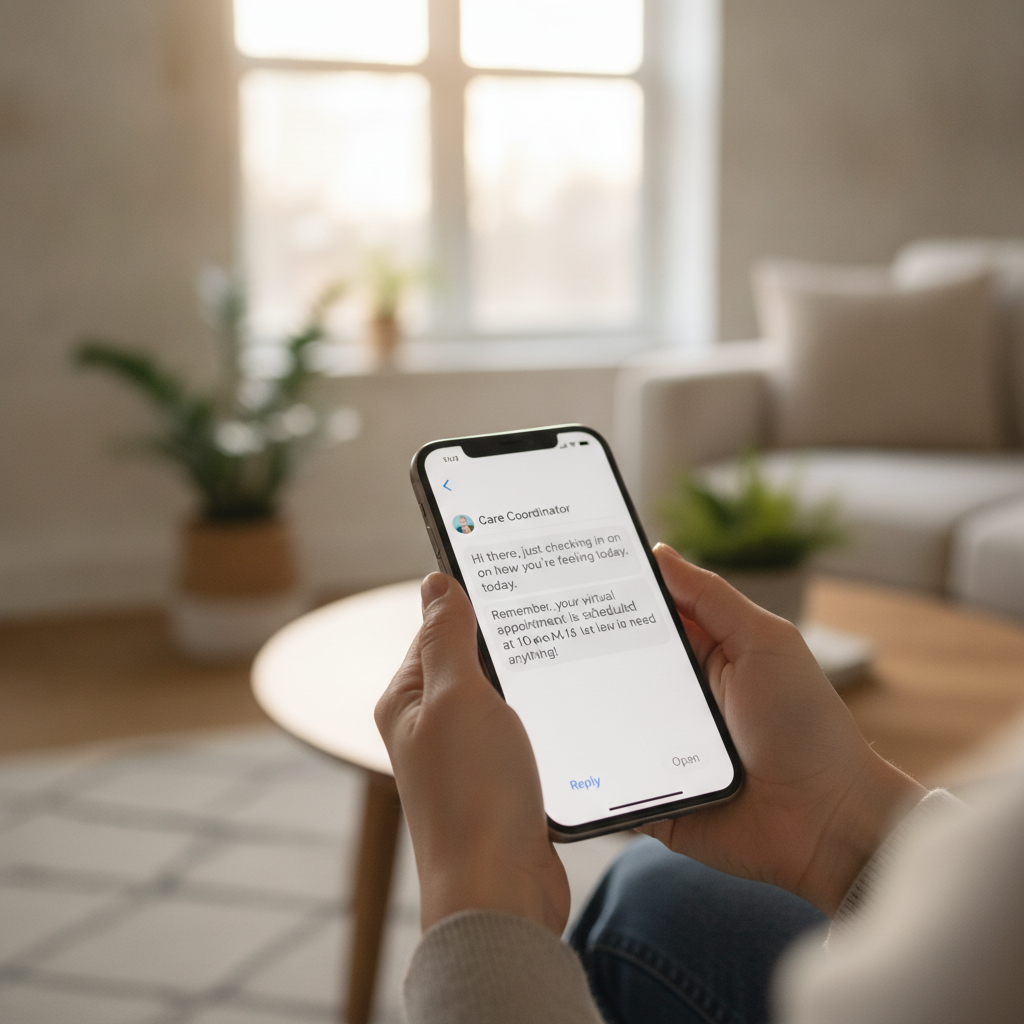
When you call, you reach our new patient coordinator, Thomas. He is a real person, not a menu. He explains how the process works, books the appointment, and collects the information we need up front. By the time you arrive, our front desk coordinators already know your name. You meet with the doctor, and if clinically appropriate, the doctor sends the prescription to your pharmacy that day. Thomas sends a confirmation text message with your appointment details, then follows up the next day to check that you received your medication.
If you call after 2pm and same-day scheduling is not available, we keep relationships with local doctors and emergency rooms who may be able to provide an emergency dose to help someone through the night, and then we work to see you the next day.
This matters. The gap between deciding to get help and actually starting medication can be a vulnerable time. It is a window where people may relapse, and where overdose risk can increase. Reducing that gap is not just about convenience, it is a clinical priority for overdose prevention, which is why we work to move someone from a phone call into the office quickly when the situation calls for it.
What Happens at Your First Visit and the Weeks That Follow
Your first visit is straightforward. You meet the front desk staff, you provide a urine sample that gives us useful clinical data, you see the doctor, and if appropriate, you leave with a prescription sent to your pharmacy. New patients typically come in weekly for the first four weeks, then move to monthly visits once stable. One thing to know up front: you do need to come into the office in person to begin, so plan on being there for that first visit.
Many people we see are already familiar with buprenorphine, so induction is handled at home. We have not done an in-office induction in over a decade. We provide comfort medications, walk you through the timing, and you take that first dose at home once you are in the appropriate stage of withdrawal. If someone is new to buprenorphine, we approach it more carefully. In some cases, a patient may pick up a dose from the local pharmacy, come back to the office, and take a small test dose here so we can monitor for precipitated withdrawal. That step can help reduce risk of a difficult first-day experience.
Those weekly visits early on allow us to adjust your dose. You are not set and forgotten. You can call us between appointments if the dose is not holding, and we adjust. Cravings that break through do not mean the treatment has failed. They may mean the number needs tuning, and that is our job, not yours. Staying in treatment long enough for the medication to help is part of the process, and the weekly rhythm at the start is designed to support that.
Once you are stable, monthly visits keep the medication going and allow for ongoing monitoring without requiring the intensity of an inpatient setting you may not need. Outpatient means you may be able to keep your job, your home, and your life while you engage in care.
What If There’s Anxiety, Depression, or PTSD Too?
We treat those conditions in-house. We have psychiatrists on staff, so you are not referred out and left to find a second provider on your own. Many patients present with anxiety, depression, PTSD, or fentanyl-complicated opioid dependence, so we are familiar with addressing these concerns.
For a long time, some providers acted more like gatekeepers than healthcare professionals. Someone would finally ask for help and be directed toward a level of care they did not want and might not complete. We take a different approach. We will work to help you in the setting you are most comfortable with before recommending inpatient or an intensive outpatient program you may not be ready for.
The reason is simple. The care a person struggling with addiction is willing to engage with is the care that has the best chance of helping them. If you will not do inpatient, then inpatient may not be helpful for you. The most useful care is the care you will actually show up for. So we build psychiatry and counseling into your plan, keep monitoring you, and adjust as your needs change. When fentanyl is involved and the dependence is more complex, that internal care becomes even more important, because there is less risk of you falling through the cracks.
How Do You Stay in Treatment Without Shelter, Food, or Income?
It can be very difficult, and we know it. Someone may struggle to stop using if they have no food, no money, no safety, and no place to sleep. So we do not just hand you a prescription and say goodbye. We work to connect you to resources that may make engagement in care more feasible.
For transportation, we help set up rides through your insurance when possible, and in some cases, we have covered that first ride ourselves so someone can get to their appointment. For housing, we work with multiple 3.1 level programs that offer a place to stay. For food insecurity, we connect you with community food resources in the areas we serve. And for income, we connect people with the Office of Economic Development and other local organizations, because economic stability can support physical and mental well-being. A more stable life may allow someone to build something better for themselves.
Here is what that looked like for one patient. A gentleman came to us straight out of prison, newly out of the criminal justice system, with no insurance and no way to get to the office. We gave him a ride in, then helped him sign up for insurance once he arrived. We accept patients regardless of their insurance situation, we work to help them get enrolled, and we prioritize getting them seen. Follow-up happens through text reminders and wellness checks, so people are less likely to quietly disengage.
MD M.A.T.T. accepts Medicaid, Medicare, and major commercial insurance including Blue Cross Blue Shield, Aetna, Cigna, and UnitedHealthcare. If you have no coverage, our new patient coordinator will start the enrollment process for you the day you come in.
Will You Be Discharged for Relapsing?
No. We do not discharge patients for a relapse or a missed dose. This is where our approach differs from many other programs. Some programs discharge people the moment they relapse, or the moment a patient declines the setting the program recommended. We do not.
If you relapse, you stay in care. That may be when you need support most. We meet you where you are and keep working. If you will not do inpatient or an intensive outpatient program, we are not going to remove you from care for declining that recommendation. We help you in the setting you are actually willing to be in.
The thinking behind it is consistent. The care you will participate in is the care that has the best chance of helping. Discharging someone for relapsing does not support their wellbeing. It may send them back to higher-risk circumstances. Our job is to help you access what you need to reduce use, then keep showing up with you, week after week, until stability begins to feel more normal.
Frequently Asked Questions
Can I start medication assisted treatment the same day I call?
In many cases, yes. If you call before 2pm, you may be able to be seen the same day, sometimes within an hour, and receive your first prescription that day if clinically appropriate. If you call after 2pm and same-day scheduling is not available, we work to connect you with a local doctor or emergency room for an emergency dose, then see you the next day.
Does treatment include counseling and mental health care?
Yes. MD M.A.T.T. has psychiatrists on staff and builds counseling and behavioral health care into treatment plans. Co-occurring anxiety, depression, and PTSD are treated in-house, not referred out.
What medications does MD M.A.T.T. prescribe for opioid use disorder?
We prescribe buprenorphine/naloxone (Suboxone), Sublocade, naltrexone (Vivitrol), and other approved formulations. We prescribe FDA-approved medications for opioid use disorder except methadone.
Will I be discharged from the program if I relapse?
No. We do not discharge patients for a relapse or a missed dose. We continue working with you in the setting you are most comfortable with.
Does MD M.A.T.T. help with transportation or housing?
Yes. We coordinate rides through your insurance when possible or have covered the first one ourselves in some situations, connect patients with 3.1 level housing programs and community food resources, and link people to economic support resources.
What insurance does MD M.A.T.T. accept?
We accept Medicaid, Medicare, and major commercial insurance including Blue Cross Blue Shield, Aetna, Cigna, and UnitedHealthcare. If you are uninsured, we work to start your enrollment process.
Call MD M.A.T.T. before 2pm today to inquire about a same-day appointment, or call anytime at (443) 559-4137 to be connected with a local doctor or emergency room for an emergency dose and to schedule a next-day visit. We serve Owings Mills, Linthicum Heights, and Baltimore, and we work to ensure every person in the community who reaches out is seen, and that medication is started when clinically appropriate and the person is ready to engage.
Ready to explore whether medication-assisted treatment could support your recovery?
If you’ve been wondering whether MAT might be right for you or someone you care about, the team at MD M.A.T.T. can walk you through what treatment looks like and answer your questions honestly. Whether you’re in Owings Mills, Linthicum Heights, or Baltimore, reaching out today means you don’t have to figure this out alone.
Individual experiences with treatment vary considerably. Every patient’s situation is different, and the examples here describe individual experiences, not typical or guaranteed outcomes.